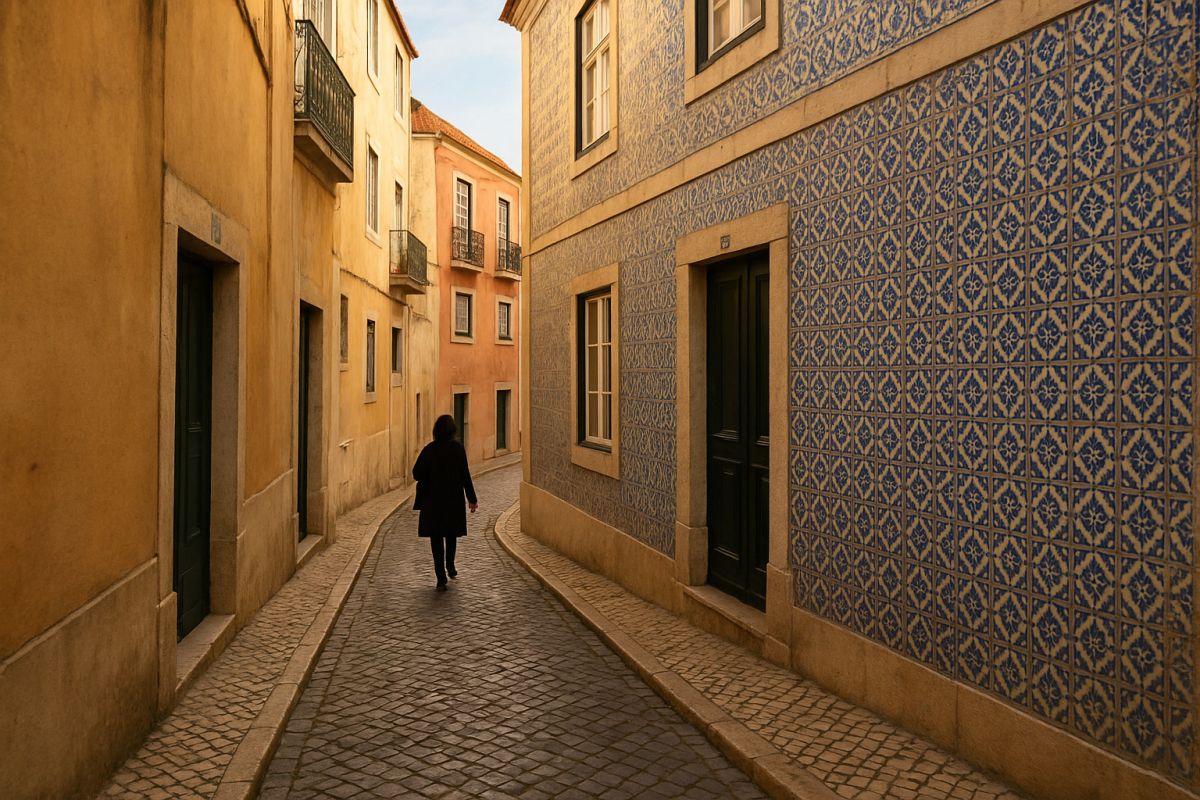
Most guides to Lisbon recommend the exact same loop: stand in the middle of Pink Street, queue for the Santa Justa Lift, and wait on a crowded incline for the yellow tram to roll down Rua da Bica. The reality of those locations is noise, delivery vans parked in your frame, and dozens of onlookers watching you try to look natural. When you are not a professional model, that kind of environment immediately creates tension in your shoulders and an artificial expression on your face. Finding aesthetic places in Lisbon is not about hunting for famous landmarks, but about finding quiet spaces with clean light and timeless architectural character where you can actually breathe.
I prioritize locations where the background complements you rather than distracts from you. Lisbon is full of quiet courtyards, textured azulejos, and residential streets that feel worlds away from the cruise ship crowds. Here are ten non-touristy Lisbon locations that offer refined light and complete visual tranquility.
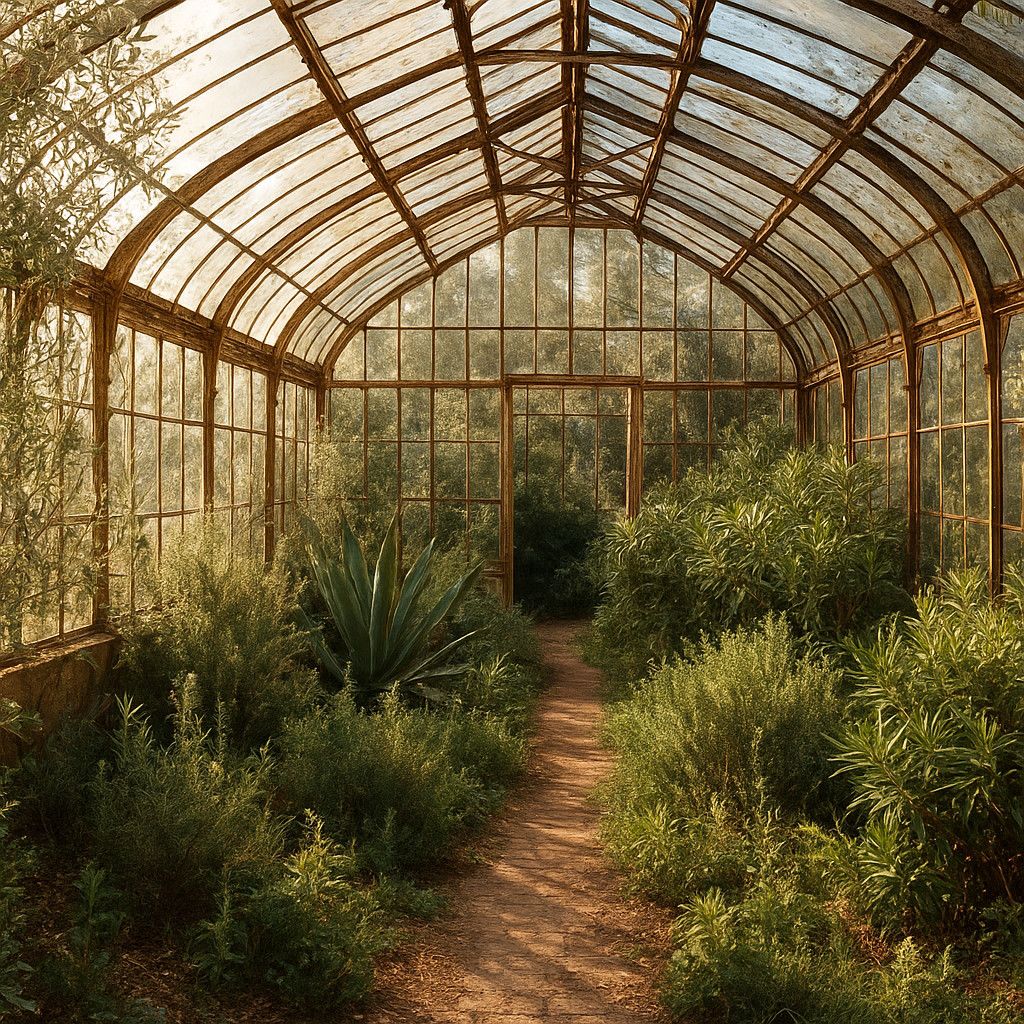
The Abandoned Glasshouse at Tapada das Necessidades
Tapada das Necessidades, Alcântara
While the tour groups crowd into Parque Eduardo VII, this walled park in Alcântara remains remarkably peaceful. The royal family once used it as private hunting grounds, but today it is home to a sprawling collection of rare cacti and a massive 19th-century wrought-iron greenhouse. The glass panes are mostly gone, leaving an intricate metal skeleton surrounded by wild botanical textures. The light filters through the old ironwork in late afternoon, producing warm, natural geometric shadows without a single tourist walking through your frame.
The Residential Tile Alleys of Madragoa
Madragoa, the quiet neighbour of Alfama
Alfama has become an open-air museum, which makes it nearly impossible to shoot unhurried portraits there after nine in the morning. Madragoa, just west of Santos, maintains the authentic soul of Lisbon's old fishing neighborhoods. Its narrow streets are lined with geometric 19th-century ceramic tiles in deep greens, ochres, and navy blues that haven't been scrubbed into sterile backdrops. Walking through these alleys feels private, giving you the physical space to relax while the weathered stone and historic patterns create subtle, rich depth.
The Industrial Backstreets of LX Factory
The back lanes of LX Factory
The main thoroughfare of LX Factory is often packed with visitors browsing weekend markets, but the perimeter tells a very different visual story. If you walk behind the main printing warehouse toward the back alleys beneath the 25 de Abril Bridge, the space opens up into raw industrial architecture. You get weathered steel beams, quiet brick courtyards, and clean, architectural concrete that balances Lisbon's softer, historic elements. It is an ideal spot for modern, grounded portraits that avoid traditional travel postcard clichés.
Miradouro do Monte Agudo
Miradouro do Monte Agudo
Lisbon's famous viewpoints, like Miradouro de Santa Luzia, are often crowded three people deep along the balustrades. Monte Agudo is tucked away above the Anjos neighborhood, requiring a walk through quiet residential streets to reach it. There is a small, unpretentious kiosk shaded by mature pine trees, offering an open panoramic view over the western hills of the city. Because it is frequented primarily by locals reading or drinking an espresso, you can take your time and work with the evening golden hour without feeling watched.
The Lower Terraces of Jardim do Torel
Jardim do Torel
Perched on one of Lisbon's seven hills, Jardim do Torel is rarely discovered by first-time visitors because its main entrance is hidden behind private palace gates. While the upper promenade has benches and views of Avenida da Liberdade, the lower stone terraces offer secluded pockets of light framed by neoclassical balustrades and towering trees. The stone walls are painted in a muted terracotta that bounces flattering, warm light into portraits, even when the midday sun is otherwise too harsh across the rest of the city.
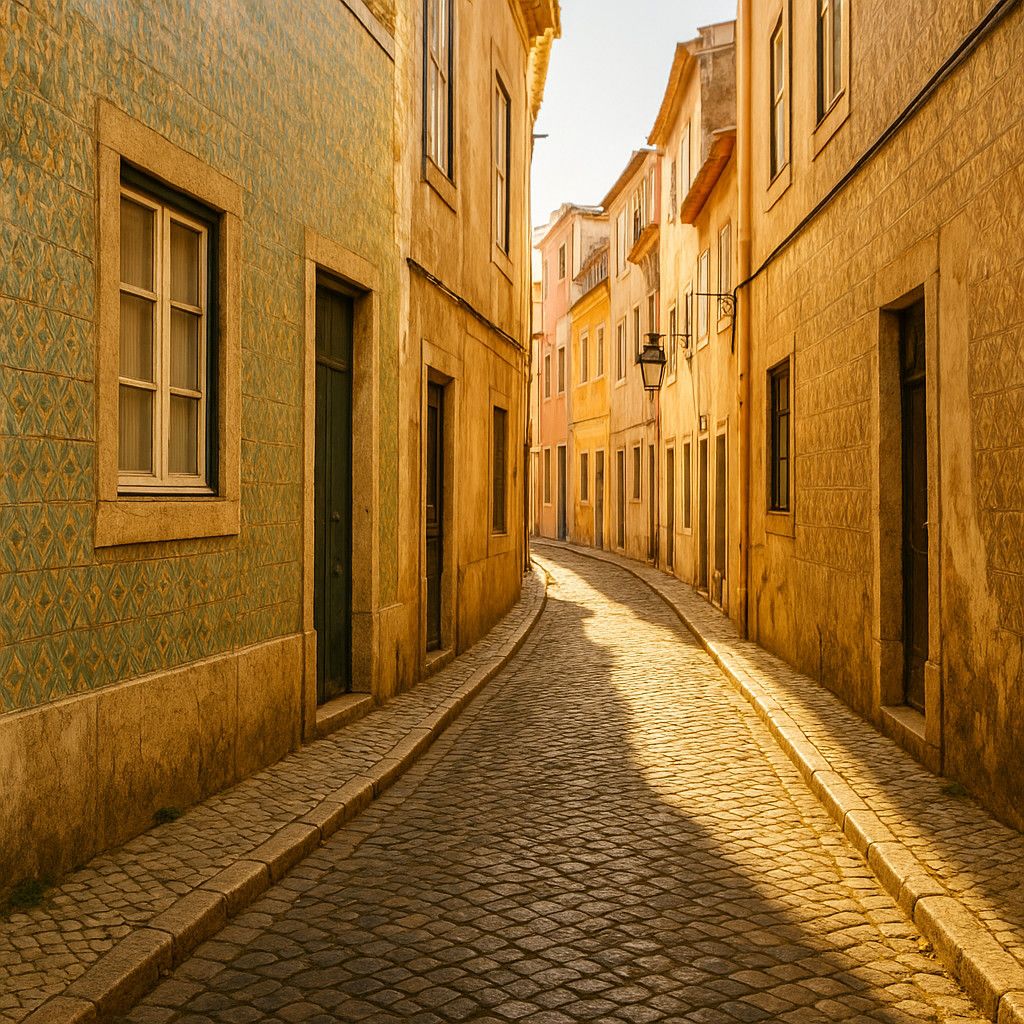
Vila Berta in Graça
Vila Berta, Graça
Built at the beginning of the 20th century as a quiet residential enclave for working-class families, Vila Berta is a singular dead-end street hidden right in the heart of Graça. It features distinctive wrought-iron balconies and Art Nouveau decorative tiles that look completely different from the standard Pombaline architecture found elsewhere. Because it is not a through-road for traffic, the street remains exceptionally calm throughout the day. It provides an intimate, cinematic backdrop that looks thoughtful and distinctly European without screaming tourist attraction.
The Moorish Courtyards of Casa do Alentejo
Casa do Alentejo
From the busy exterior of Rua das Portas de Santo Antão, this building looks like a standard, unassuming townhouse. Once you step inside the heavy doors, it opens into an extraordinary two-story courtyard inspired by North African Moorish architecture, complete with intricate archways, geometric tile patterns, and lush palms. While the restaurant upstairs gets busy around dinner, the ground-floor atrium is often silent during the day. It offers indirect, softly diffused skylight that works beautifully for close-up portraits.
Palácio dos Marqueses de Fronteira
Palácio dos Marqueses de Fronteira
Located on the northern edge of the city next to the Monsanto Forest, this 17th-century private estate requires a short taxi ride, which successfully filters out nearly all mass tourism. The private gardens feature grand tile panels depicting mythological scenes, stone staircases overgrown with ivy, and calm reflecting pools. The blue and white ceramic work here is among the finest preserved in Portugal, providing a refined, historical aesthetic that feels dignified and spacious. It is an exceptional choice if you appreciate classical balance and symmetry.
Calçada do Lavra
Calçada do Lavra
Most travelers crowd onto the street of the Bica funicular, where taking a photo without dozens of pedestrians in the background is nearly impossible. Calçada do Lavra is home to Lisbon's oldest funicular, yet it sits on a steep, quiet hillside tucked away behind Largo da Anunciada. The street is lined with traditional pastel buildings, cascading bougainvillea, and dramatic stone stairs that climb steeply upward. It delivers the quintessential hillside character of Lisbon, but with enough solitude to pause, adjust your posture, and work without pressure.
The Quiet Square Behind Carmo Convent
The terraces behind the Carmo Convent
While the front facade of the ruined Carmo Convent draws long queues, the small pedestrian terrace directly behind it offers a remarkably serene perspective. Shaded by ancient jacaranda trees that bloom purple in late spring, this elevated stone plaza overlooks the rooftops of Baixa without the ground-level noise. The weathered Gothic buttresses of the convent frame one side of the square, creating strong vertical lines and clean structural depth for lifestyle portraits.
Why Location Selection Dictates Your Comfort
Why the place changes how you stand
When someone tells me they feel awkward in front of a camera, the issue is almost never their appearance or their ability to pose. The real problem is usually their environment. Trying to relax while strangers bump into your shoulder or pause to watch you creates defensive body language that cannot be edited out later. Choosing secret photo spots in Lisbon is not about keeping places exclusive for the sake of it; it is a practical tool to give you privacy. When a location is calm, your shoulders drop, your breathing slows down, and we can focus on natural movement rather than managing the crowd around us.
Working in these non-touristy Lisbon locations also shifts the visual tone from generic vacation snapshots to thoughtful, intentional imagery. The textures of weathered limestone, unpolished historic tiles, and dappled park light provide an organic context that ages gracefully over the years. Photography works best when the setting feels like a quiet stage for your personality, rather than a busy attraction you are merely standing in front of.
These are the places I use for couples, men's and women's sessions when the brief is "Lisbon, but not the Lisbon everyone has already photographed". Which of them suits you depends on the hour as much as the place – the neighbourhood guide and the best time of day are the two companions to this list.