Yes – every session includes close-ups, full-length pictures and the framings in between, and a finished set is built from all three. It is one of the first things people ask, usually because a previous session gave them twenty near-identical head-and-shoulders frames. This is how the three framings differ, what each one is for, and how I decide the mix.
The three framings and what each does
Close-up: the face, and what it is doing
Head and shoulders, or tighter. Everything else is gone and the expression is the picture. This is the framing for the profile photo, the About page, the headshot, the print that goes on a parent's shelf – anywhere a face has to do the work on its own. It is also the most demanding one for the subject, because there is nowhere to hide, which is why I never start with it. Close-ups come after the first half hour, when the face has stopped bracing.

Full length: the whole person in a place
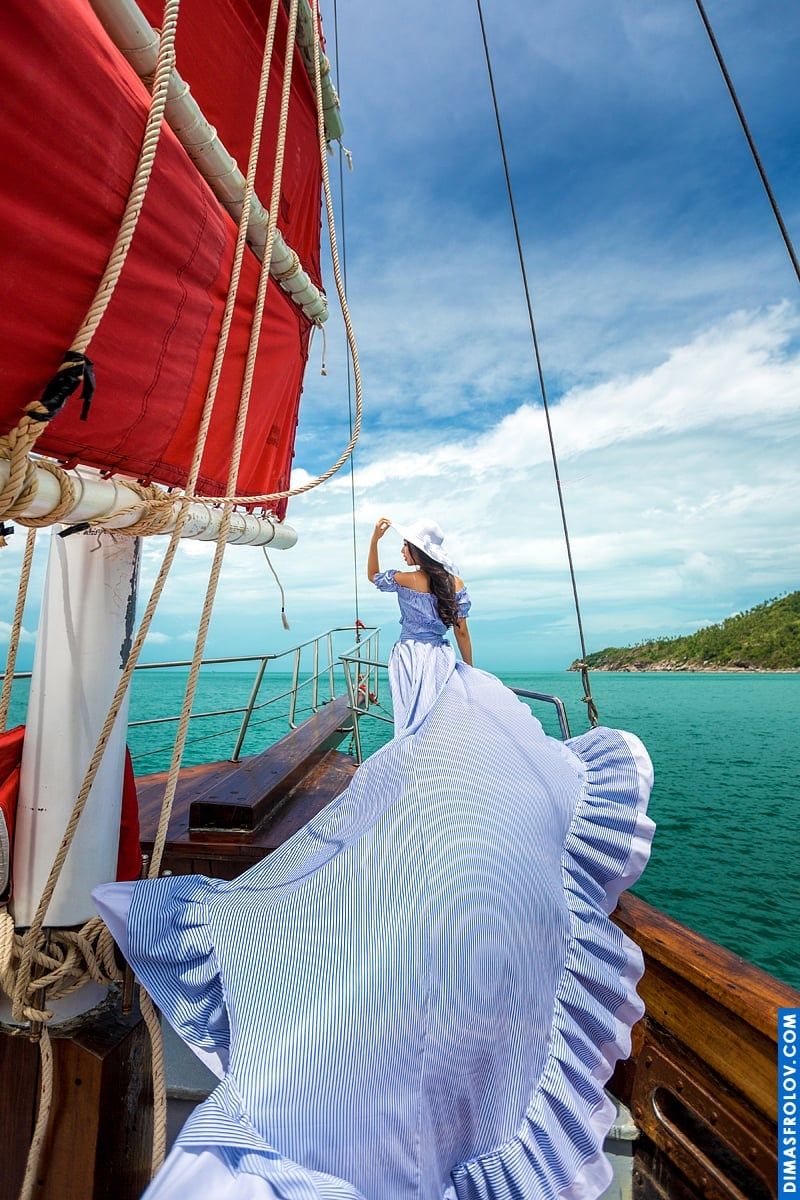
Head to feet, with room around you. Now posture, clothes, how you stand and the place you are standing in are all part of the picture, and the face is one element among several. Full-length frames are what make a set feel like it was taken somewhere real rather than in front of a wall, and they are the pictures people are quietly checking for on a dating profile. They are also the easiest to be in: you are given something to do – walk, lean, sit on a step – rather than something to hold on your face.
Mid-length: the one that gets used most
Waist-up or knee-up. Close enough that the expression reads, wide enough that hands, clothing and a bit of background are in. This is the framing that ends up on websites, in bios and across social feeds more than either of the others, because it carries the most information per frame. Most of a set's workhorse pictures are mid-length.

How a set is put together
A finished gallery from a two-hour session is roughly a third mid-length, a third close-up and a third full-length, with the balance shifted by what the pictures are for. A headshot brief tilts toward close-ups. A couples session tilts toward full-length and mid-length, because the thing being photographed is the space between two people and it needs room. A dating-profile set needs at least one clear close-up and at least one honest full-length frame, and then variety in between.
Within each framing there is variety too: looking at the camera and looking away, standing and sitting, still and moving. Two pictures that say the same thing are one picture, so I would rather hand over thirty different frames than sixty repeats.
What you can ask for
Anything specific. If there is a picture you need – a square headshot for a particular platform, a full-length shot in a particular outfit, a frame with a specific building behind you – say so before we start and it will be in the set. If you are self-conscious about something, say that too; a framing can be chosen to keep the picture honest and still kind, and that is part of the job. And if you do not know what you want, that is the normal case. We start wide, move in as you relax, and build the mix as we go.
The men's, women's and couples sessions all work this way. If you want to see what the finished pictures look like at each framing, the galleries on those pages are sorted so you can tell.