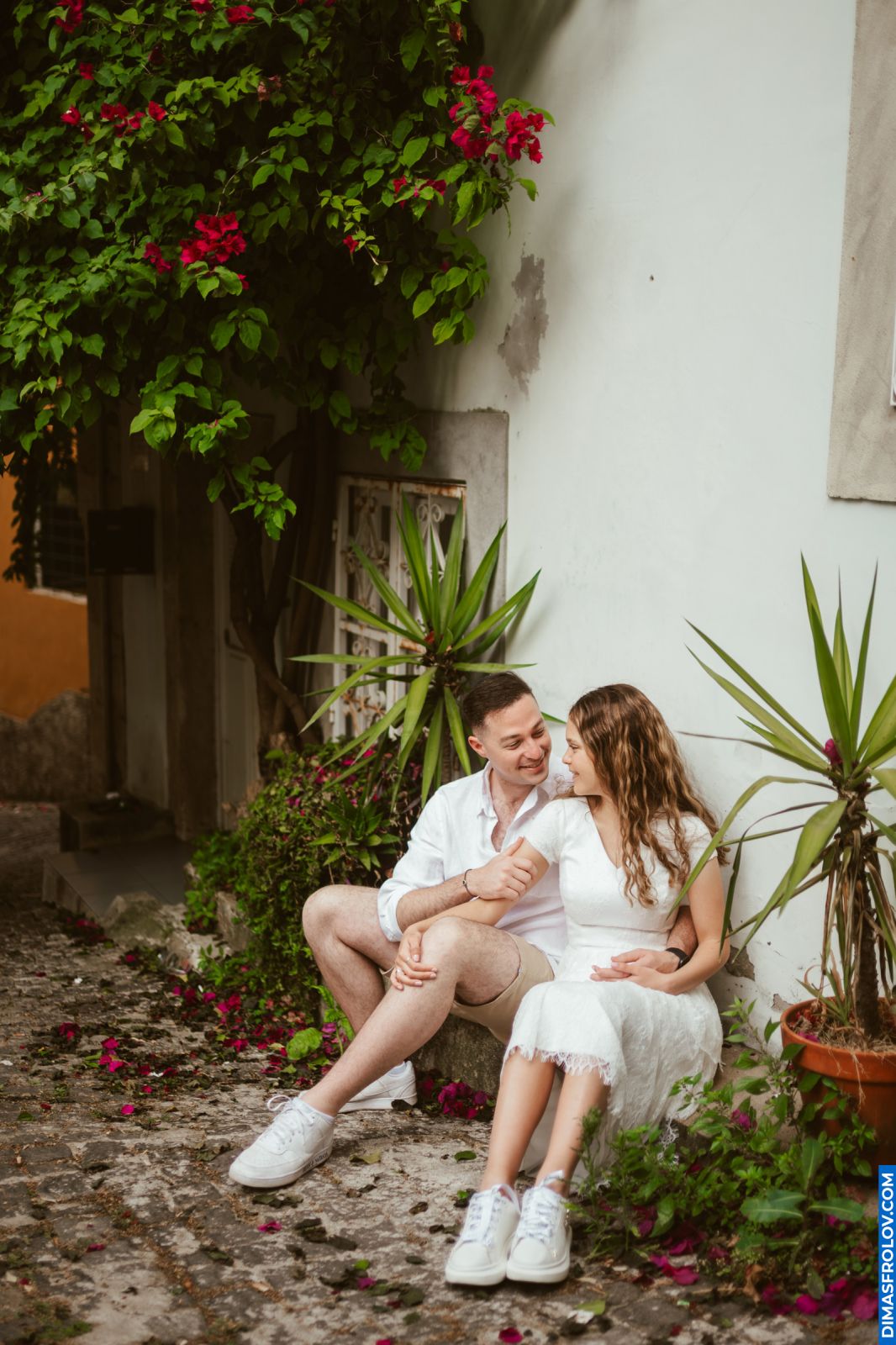
A natural smile moves the eyes; a forced one moves only the mouth. That is the whole difference, and everyone can see it without knowing what they are seeing. When a smile is real, the muscle that circles each eye tightens, the lower lids rise, and small lines appear at the outer corners. When someone is told to smile, the mouth does its part and the eyes stay exactly as they were. The result is the photo you have in your passport, and the reason most people believe they are "not photogenic". They are. They have just been asked to perform something that cannot be performed.
Why "say cheese" produces the wrong smile
Three things happen in the second after someone says it. You anticipate the shutter, so your face freezes on the expression instead of passing through it. You start watching yourself – is this right, is my chin up, are my teeth showing – and self-monitoring is the enemy of every natural expression. And you hold it, because you do not know when the click is coming, and a smile held for more than a second or two collapses into a grimace from the inside out.
None of that is a flaw in you. It is a flaw in the instruction. Asking for a smile is asking for the shape of an emotion rather than the emotion, and the face knows the difference even when the person giving the instruction does not.
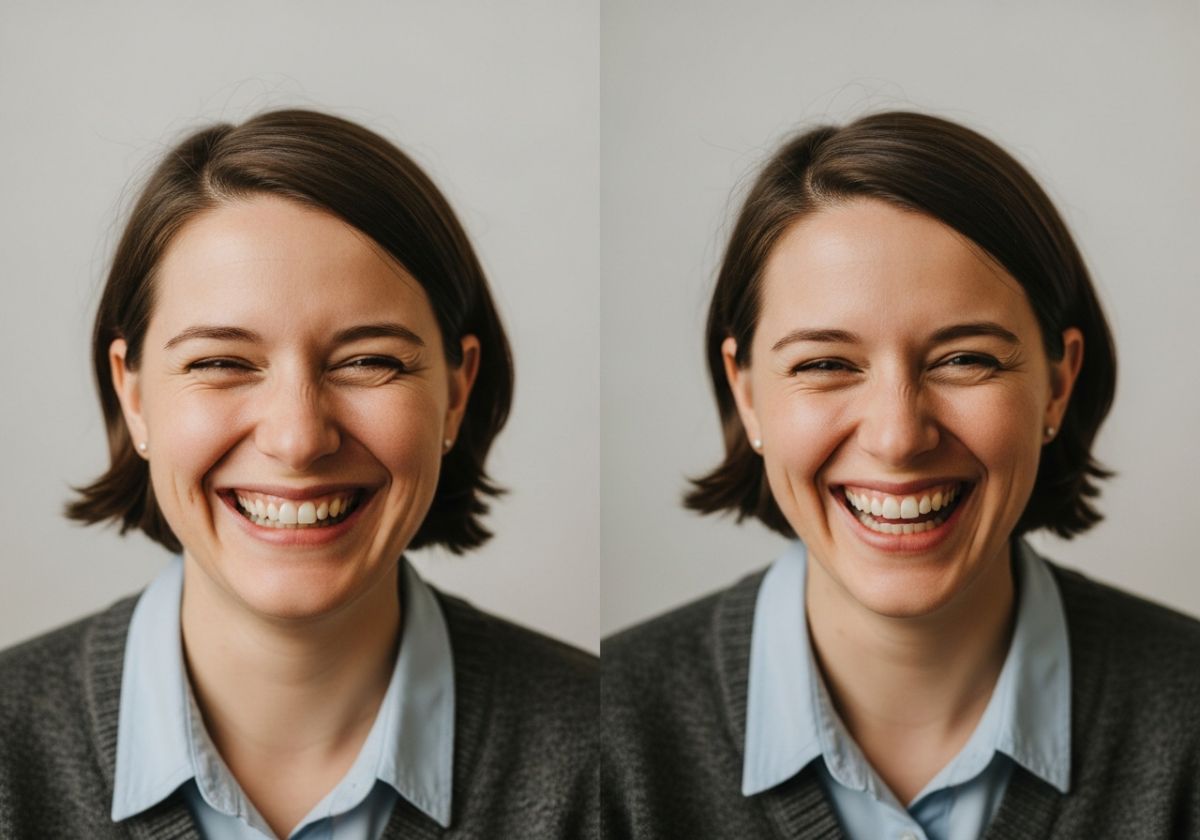
What a natural expression actually needs
It needs a cause. A real smile is a reaction – to something said, something seen, something remembered – and it lasts about as long as the thing that caused it. So the job, whether you are behind the camera or in front of it, is not to produce the expression but to produce the situation that produces it, and to be ready when it arrives.
This is also why the best expression in most sessions is not a smile at all. It is the face a second after the laugh, when the eyes are still lit and the mouth has relaxed. Or the concentration of someone actually looking at something. Or the plain, open, unforced face of a person who has forgotten the camera for a moment. These read as "natural" because they are: nothing in them was requested.
If you are the one being photographed
Do not hold anything. Let expressions come and go. A good photographer shoots continuously through the moment; you do not need to freeze it for them.
Breathe out. Most people hold their breath the instant a lens points at them, and a held breath lifts the shoulders and tightens the jaw. An exhale before the frame undoes both.
Think of something specific. Not "happy thoughts" – a particular person, a particular thing they said. The face responds to specifics, not to categories.
Look away and come back. Looking off to the side and then returning to the lens resets the face. The first half-second after you come back is almost always better than the ten seconds of staring that preceded it.
Allow neutral. A relaxed, unsmiling face, eyes engaged, is one of the strongest portraits there is. Nobody is obliged to grin.
What I do on my side
I do not say "smile". I say things – questions, nonsense, an observation about the man across the street – and photograph what your face does with them. I shoot during the conversation, not after I have arranged you and stepped back. When someone arrives braced for the camera, I sometimes open with a deliberately terrible fake smile of my own, the widest and worst I can manage; the point is not that frame, it is the laugh at the absurdity of it, and the real expression that follows the laugh. That one I keep.
I also watch everything below the face. Shoulders up around the ears, hands gripping each other, a stance with the weight locked on both feet – those tell me the expression above them will be forced whatever I say, so I fix them first: a step, a lean against a wall, something to hold. Relax the body and the face follows. It rarely works the other way round.
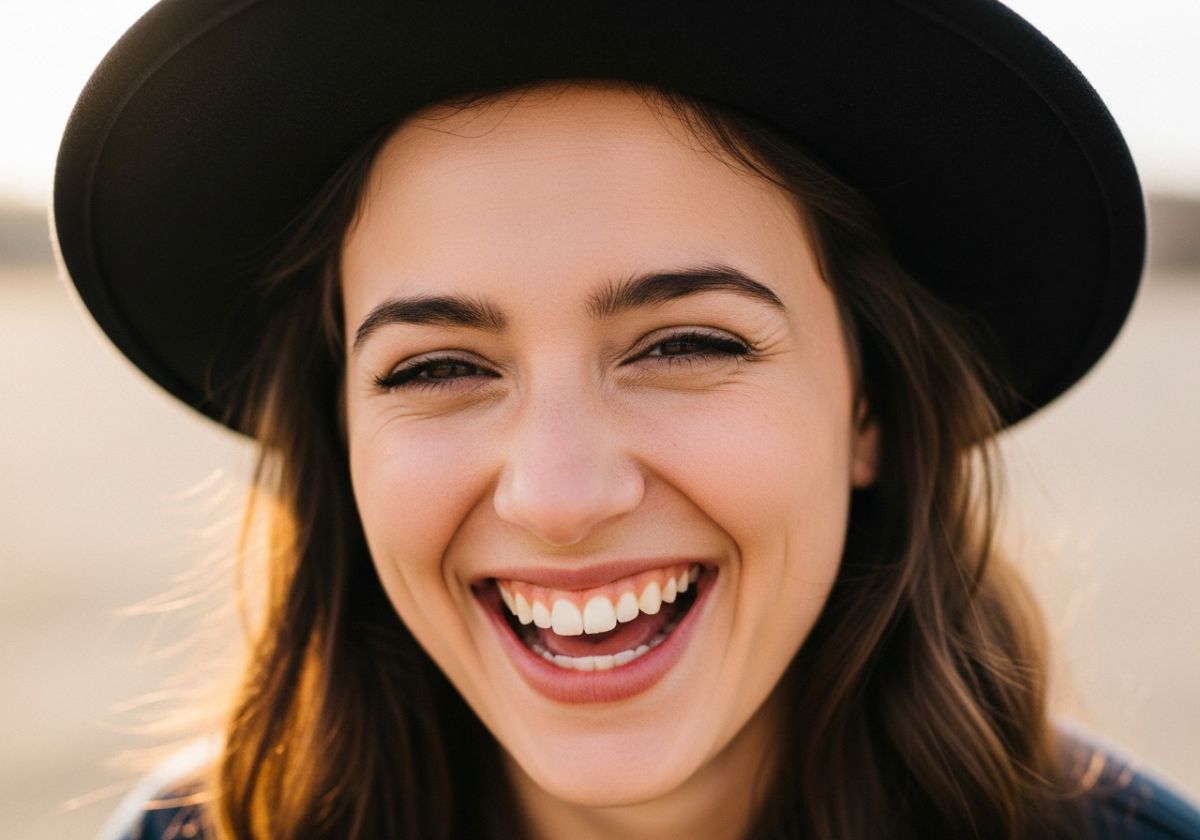
The picture you are actually after
It is not the one where you look like you are smiling for a photograph. It is the one where you look like you – on a good day, mid-conversation, caught rather than posed. That is what a men's or women's portrait session is built to produce, and with two people it is easier still, because the cause of the expression is standing right there. If you want to see how the whole session is shaped around this, I have written about it in what lifestyle photography is. The short version is that nobody will be asked to say cheese.