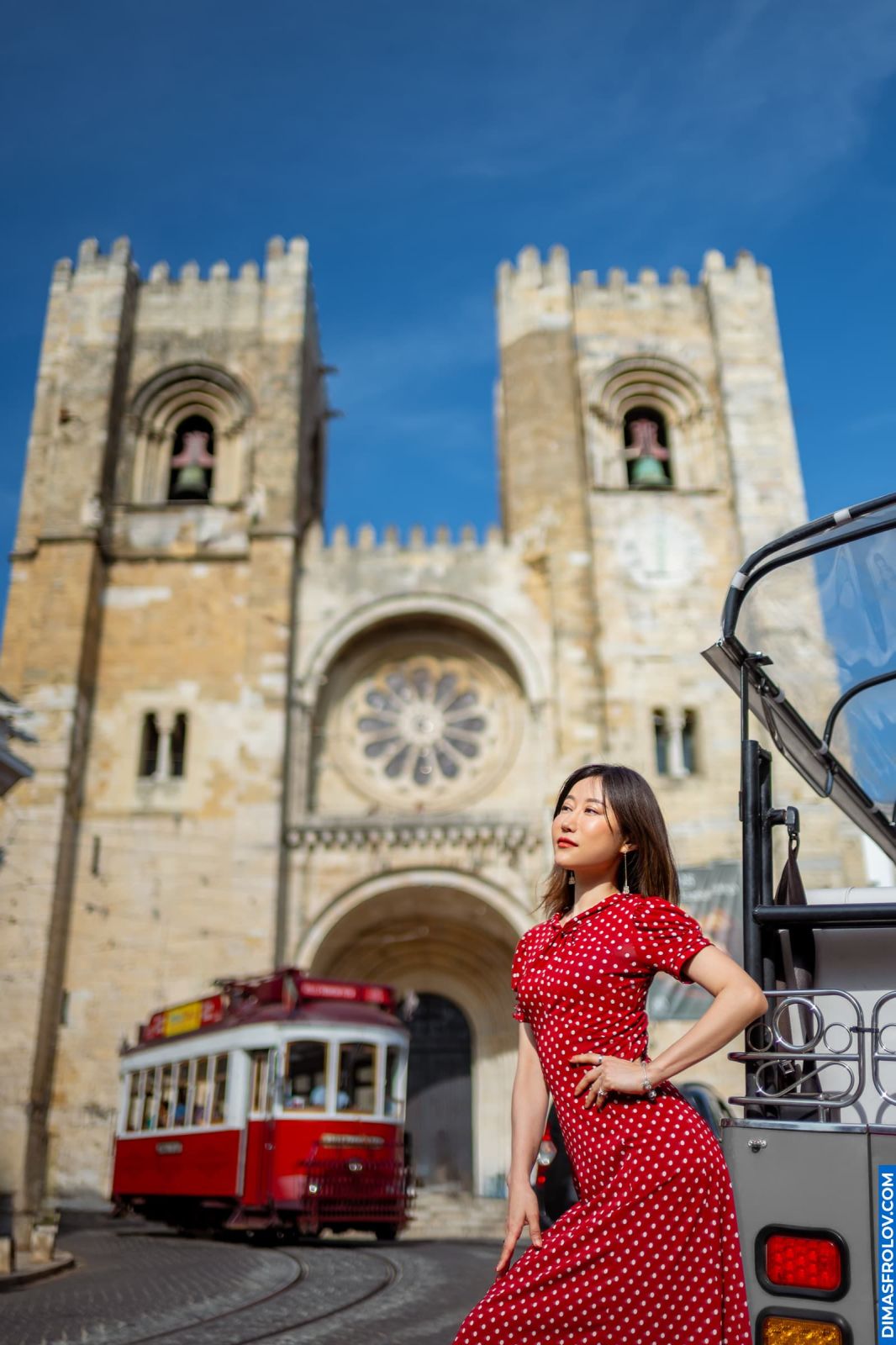
A lifestyle portrait is a picture of one person, in a real place, doing something real – as opposed to a classical portrait, which is a picture of one person, in a chosen setting, doing nothing but being photographed. The subject is the same; what changes is that the setting and the activity are allowed into the frame and asked to say something. It is the single-person branch of lifestyle photography, and in a city like Lisbon it is most of what a portrait session ends up being.
What makes a portrait "lifestyle"
Three things, and the picture needs all of them.
- The place is real and it is yours. Not a studio backdrop and not a location chosen only because it is pretty, but somewhere you actually go – your street, your café, the river path you run on, your own kitchen. The setting is part of the portrait's meaning, which is why the style is sometimes called environmental portraiture.
- You are doing something. Walking, reading, making coffee, talking to someone just out of frame. The activity gives your body something to do and your face something to react to, and both look better for it. A lifestyle portrait of someone standing still and looking at the camera is a classical portrait in an interesting location.
- The direction is light. The photographer chooses the time, the light and the situation, and then steps back. Prompts, not poses. You are not told where to put your hands; you are given a reason to be using them.
The result reads as candid, and in the way that matters it is. But it is not a snapshot: the light was chosen, the place was chosen, and the moment was waited for.
Lifestyle portrait versus classical portrait
A classical portrait isolates you. Background simplified or removed, light built rather than found, expression held. It is the right picture when the face has to stand alone – a headshot for a firm, an official photograph, anything that will sit in a grid of similar pictures. Its strength is control; its limit is that it can only tell the viewer what you look like.
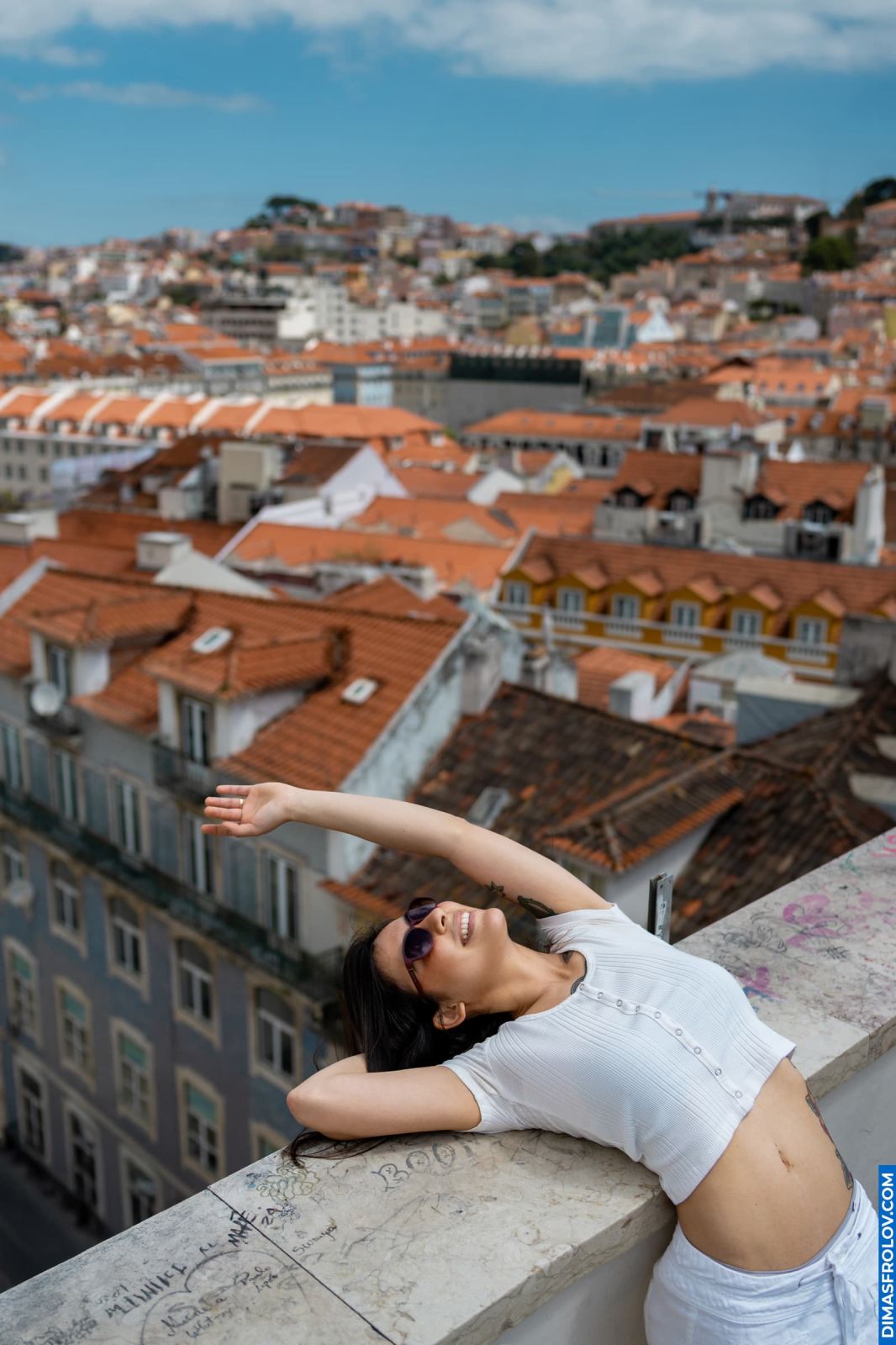
A lifestyle portrait puts you in context. It tells the viewer what you look like and where you are, what you do, what a day with you might be like. It gives up some control – the light is the day's light, the street is the street – and gets in return a picture people recognise you in. For a profile, a personal website, a book jacket, a wall at home, it is almost always the better choice. For a corporate directory it is almost always the wrong one.
Lifestyle portrait versus lifestyle session
The wider lifestyle genre is often about groups – families at home, couples in the city – where the subject is the relationship. A lifestyle portrait narrows that to one person, and the subject becomes character rather than connection: how you carry yourself, what you pay attention to, the particular way you are at home in a place. It is more demanding on the photographer, because there is no second person to draw a reaction out of you, and that is exactly where the prompts and the activity earn their keep.
What they are used for
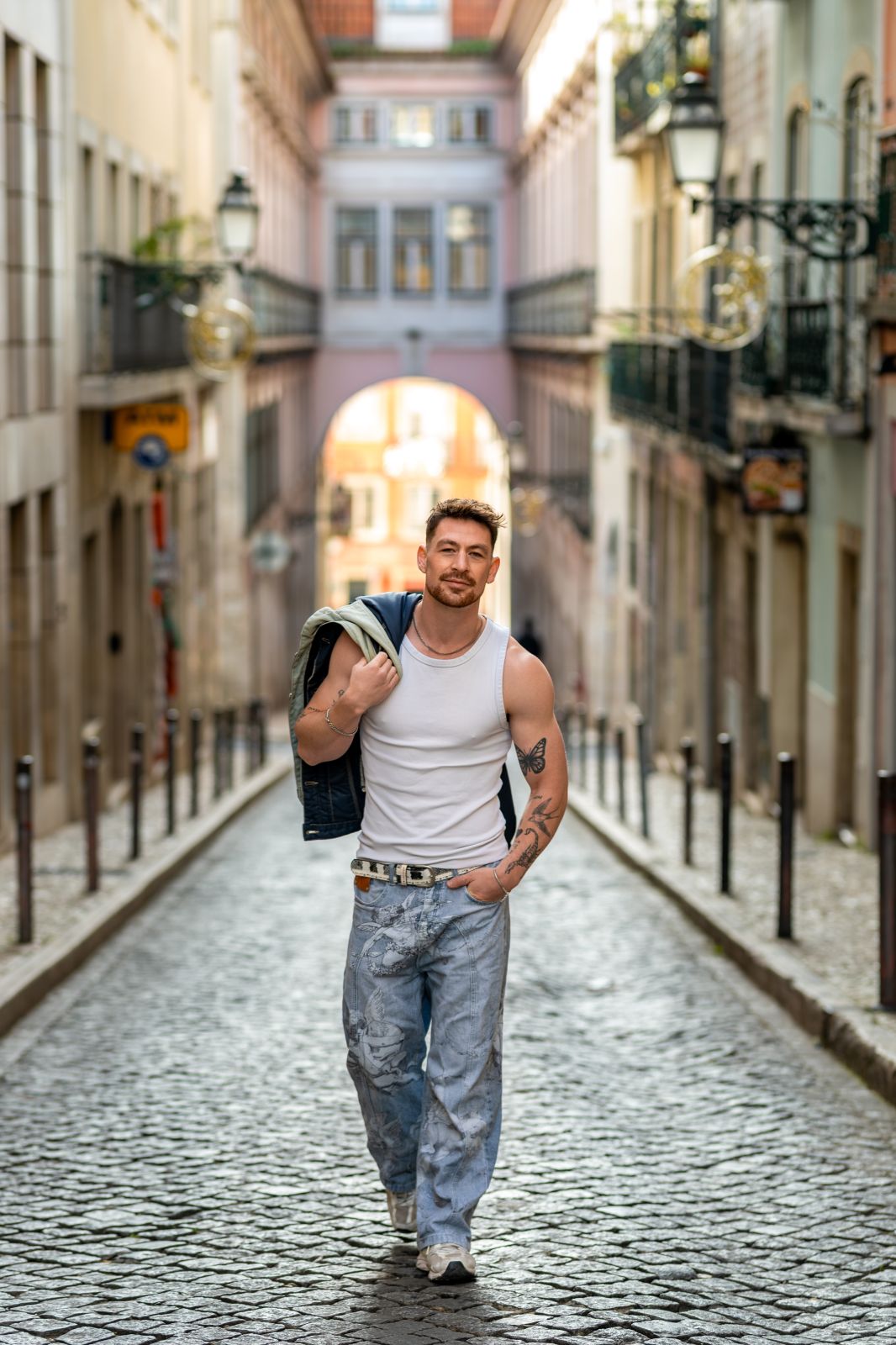
Profile pictures that look like a person rather than a passport. Personal branding sets for anyone whose work is themselves – the portrait, the at-work frames and the in-the-city frames all come from this style. Pictures for a creative's website or an author's page. And portraits that are for nobody but you: the picture of yourself at thirty-five, in the city you lived in, that you will be glad exists at sixty.
What a lifestyle portrait session in Lisbon looks like
We talk first, about what the pictures are for and where you actually spend time. From that comes a route: usually two places, sometimes three, chosen for how they fit you and for where the light will be at that hour. Lisbon offers an unfair amount to choose from – the shaded lanes of Alfama and Graça, the open light and long views of the miradouros, the riverside, a tram, a café with a good window, your own apartment. Then we walk. I give you things to do rather than ways to stand; I move around you; I shoot through the conversation rather than after it. Two hours, and most of it does not feel like being photographed. The finished set mixes close-ups, mid-length frames and full-length pictures in the place, so that it works both as portraits and as a small story about you.
That is the format of the men's and women's portrait sessions here – a lifestyle portrait by default, a classical one when the brief needs it. If you would like a broader picture of the genre, including how it works for two people and what to wear, the longer piece on lifestyle photography covers it. If you already know this is the kind of portrait you want, get in touch and tell me where you spend your days.