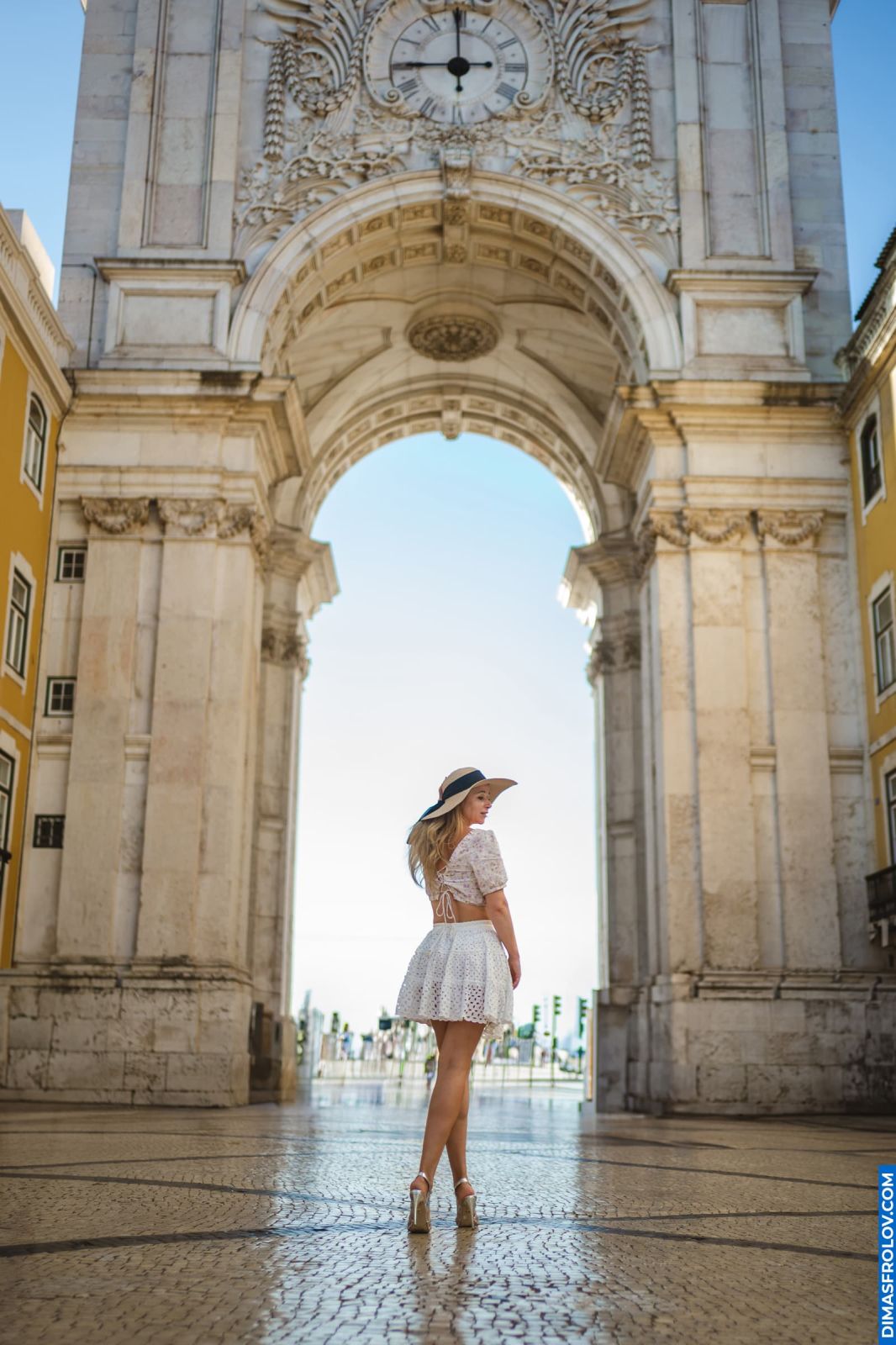
Wear something you already own, that fits, that you can walk in, in a colour that does not fight the city. That is the whole answer, and most of what follows is detail on the last part – because Lisbon has very particular backgrounds, and an outfit that looks perfect in a mirror at home can vanish against a tiled wall or shout against a pastel one. Below: what actually works in front of Lisbon's walls and light, what to avoid, and how the choice changes with the purpose of the pictures and the month.
Start from what the pictures are for
A headshot for work and a portrait for yourself want different clothes, and trying to serve both with one outfit produces a picture that does neither. For a professional portrait – LinkedIn, a company page, a speaker bio – one strong top in a solid colour, a jacket if your field wears one, and nothing that competes with your face: the frame is tight and the collar is most of what the viewer sees. For a personal portrait the frame is wider, so the whole outfit is in the picture and it can say more: a dress that moves, a favourite coat, the boots you live in. If you need both, bring both; the change takes two minutes behind a doorway, and it gives you two sets from one afternoon.
Colours against Lisbon's walls
The city's backgrounds are pale – cream, ochre, faded pink, powder blue, white – with blue-and-white azulejo tiles and terracotta roofs. Against that palette, mid-tones and earth tones work best: rust, olive, mustard, terracotta, burgundy, denim blue, camel, forest green. They sit in front of the wall instead of merging into it. Deep, saturated colours – a bottle green, a wine red – photograph beautifully in the old streets, where the walls are soft and the light is shaded.
What struggles: white and cream on a white wall (you disappear), pale pink against a pink façade (the same), and anything neon (it takes over the whole frame and throws its colour onto your skin). Black works, but it needs a lighter background behind it and it flattens in harsh sun, so it is a morning or evening colour rather than a midday one. If you love one colour and wear it constantly, wear it – the location can be chosen to suit it, which is easier than the other way round.

Fabric, fit and the thing nobody warns you about
Fit first. Clothes that skim rather than cling or hang. Anything you would pull at, tug down or hitch up will be pulled, tugged and hitched in the photographs, because that is what hands do when they are nervous. If a piece needs constant adjustment at home, it is not the piece.
Fabric that moves. Linen, cotton, silk, a soft knit, a skirt or dress with some fall to it. Lisbon sessions involve walking, wind off the river and steps, and a fabric that moves turns all three into pictures. Stiff, structured garments photograph well standing still and badly everywhere else.
Patterns. Small tight patterns – fine stripes, small checks, tiny florals – can shimmer strangely on camera and compete with the tiles. Large, soft prints are fine. Logos, slogans and visible brand names date the picture and pull the eye; leave them at home.
The thing nobody warns you about: shoes. Lisbon is cobbled, steep and slippery when polished by two hundred years of feet. Stilettos will spend the session between stones. Block heels, flats, good sandals, clean trainers or boots all work and all look right in the frame. You will walk perhaps two kilometres over the afternoon; dress your feet for that and the rest of you will look relaxed.
Two outfits, not five
Bring two. One is the outfit you feel best in – start there, because confidence in the first twenty minutes sets the whole session. The second changes the mood: smarter if the first was casual, softer if the first was structured, or simply a different colour so the second location reads as a different day. Three is acceptable; five means the session becomes about changing clothes. Layers – a jacket, a cardigan, a scarf – let you shift the look without a full change, and they are useful on the river side of the city, where the wind is real.
Hair, face, hands
Hair as you normally wear it, done as you would for an evening out rather than a wedding. A cut a week before, never the day before. Makeup that you would wear on a good day – a little more than usual is fine because the camera softens it, but a full transformation reads as a stranger in your photographs. Matte over shine, because Lisbon light on a glossy forehead is unforgiving. Hands are in far more pictures than people expect – tidy nails, or none, but not chipped polish. And sleep; it shows more than any product.

By season
Summer is hot and bright: light fabrics, no black at midday, a hat only if it is genuinely yours, sunglasses for one picture at most. Autumn and spring are the easiest – layers, a coat that photographs well, colour in the light. Winter is soft grey light and wind: a good coat becomes the outfit, knitwear photographs beautifully, and boots are the right shoe for once. If you are visiting and the weather turns, a plan for a covered location is always part of the route.
What I do before the day
I ask you to send me photographs of the outfits you are considering, on you, in ordinary light. From those and the locations we have chosen I will say which works, which does not, and why – it usually comes down to the colour of one wall. That ten minutes of messages saves the most common regret people have about their portraits, which is not the pose and not the light but the top they wore. If you are photographed with someone else, how to coordinate outfits as a couple is the companion to this article; if it is your first time in front of a camera at all, what to expect from a first session covers everything that is not clothes. The women's portrait session itself is where all of this ends up, and the wardrobe conversation is the first thing we have.