A personal portrait session in Lisbon usually begins with quiet hesitation rather than a bold creative vision. Most clients reach out because they need updated images for professional or personal use, yet their immediate concern is almost always the same: they feel inherently unphotogenic and dislike being watched by a lens. When Elena, a product manager from London, booked a morning shoot with me, her initial note contained a line I read almost weekly: "I want clean, natural photos of myself while I am in Portugal, but I freeze the moment someone points a camera at me."
First-time clients arrive with understandable defense mechanisms
Elena arrived at our meeting point in Alfama carrying the typical tension of someone about to endure a medical examination. She was dressed neatly in neutral tones – a structured beige linen trench coat over a cream shirt – but her posture was guarded, her shoulders raised, and her hands clenched around the strap of her bag. This stiffness is completely normal for anyone whose primary experience with photography consists of rushed phone snaps or stiff school portraits. Most adults have developed an instinctive dread of static posing because it forces them to perform an emotion they are not currently feeling.
My first task on any morning shoot is not to take pictures, but to de-escalate that performative anxiety. We did not start shooting immediately; instead, we walked up the quiet cobblestone slope of Calçada de São Vicente while discussing her trip, her schedule, and the differences between London drizzle and Lisbon mornings. During these opening minutes, I observe how a person moves naturally, how they shift their weight when they pause, and where their hands naturally rest when they are distracted. In my work with portrait photography for women, recognizing these spontaneous micro-habits matters far more than having a rigid storyboard in mind.
By the time we stopped near a quiet, whitewashed facade tucked away from the tram lines, the initial physical tension had dropped considerably. I kept my camera hanging at my chest, adjusting settings openly so the gear became just another piece of functional equipment rather than an intimidating tool. Once a person sees that nothing sudden or awkward is expected of them, the defensive layer begins to dissolve on its own.
[IMAGE_PLACEHOLDER: "A woman in a cream linen shirt and neutral trench coat walking slowly along a narrow, quiet Lisbon cobblestone alley in soft morning light, looking relaxed with natural posture, warm sun hitting pale stucco walls in the background"]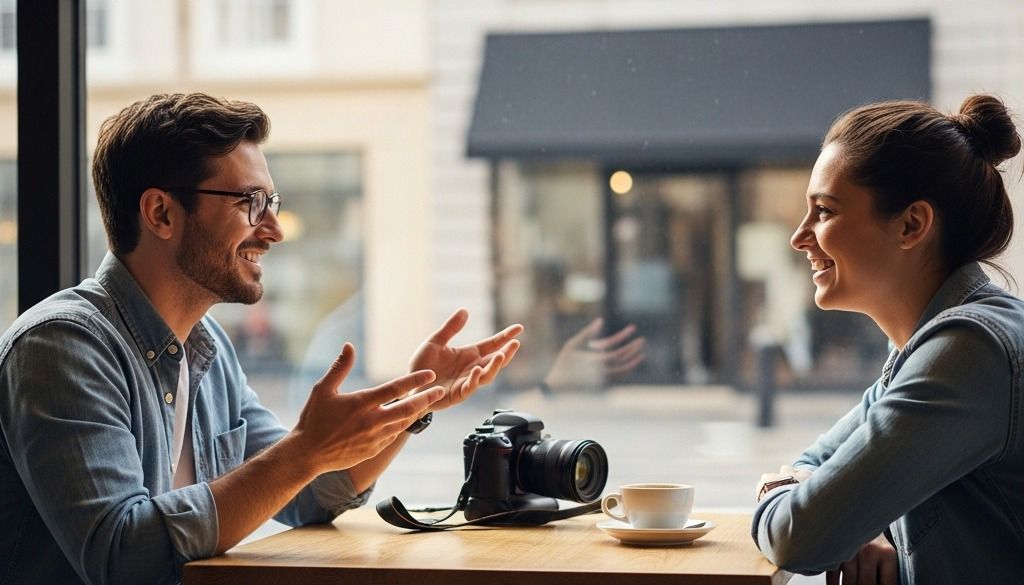
Location and timing remove the pressure of public observation
Urban photoshoots fall apart when clients feel exposed to crowds of onlookers. Standing in the middle of Praça do Comércio or outside the Santa Justa Lift at midday creates an uncomfortable stage where passersby pause and stare, which destroys genuine expression in seconds. To prevent this, I scheduled Elena's session for 8:15 AM on a Tuesday, starting in the upper residential pockets of Graça before winding our way down toward the river.
At eight in the morning, Lisbon belongs to locals sweeping their doorsteps and the aroma of roasted coffee drifting from small neighborhood tascas. The light at that hour rakes across the limestone pavement at an angle that softens facial shadows and warms pale walls without causing the client to squint. Elena did not have to worry about wandering tour groups or dodging street performers. The street was essentially ours, which allowed her to settle into the rhythm of the city instead of constantly looking over her shoulder.
When the environment feels calm and private, people forget to self-monitor. Instead of thinking about her jawline or posture, Elena could look down the narrow alleys toward the Tagus River, listening to the hum of the city starting its day. That peaceful setting gives someone permission to breathe out, drop their shoulders, and exist naturally in the frame.
Clear physical tasks eliminate the panic of posing
Telling an inexperienced subject to "act natural" is the fastest way to make them look rigid. The brain immediately tries to calculate what "natural" looks like, resulting in tight jaw muscles, unnatural smiles, and awkward hand placement. Professional lifestyle imagery relies on directing physical actions rather than demanding emotional expressions.
Instead of placing Elena against a wall and waiting for her to smile, I gave her simple, concrete tasks. I asked her to walk down the steps toward a sunlit archway, pause on the third step, turn halfway back toward me, and slide one hand into her pocket to clear her coat. Giving the body a practical assignment redirects mental focus away from the lens. Her eyes softened because she was focused on maintaining her balance on the irregular Portuguese stone steps rather than worrying about her face.
When we wanted seated frames, we stopped at a quiet stone bench overlooking the terracotta roofs of the lower district. I did not tell her to tilt her head or force a look; I simply told her to sit sideways, lean an elbow against the stone backrest, and look across the water toward the horizon. By providing clear physical parameters, I handle the composition and geometry, leaving the client free to relax into the position. That balance between precise direction and casual movement is the foundation of every session on my photography portfolio.
[IMAGE_PLACEHOLDER: "A medium portrait of a relaxed woman sitting casually on an aged stone bench overlooking tiled rooftops under gentle early morning light, captured with natural framing and authentic expression"]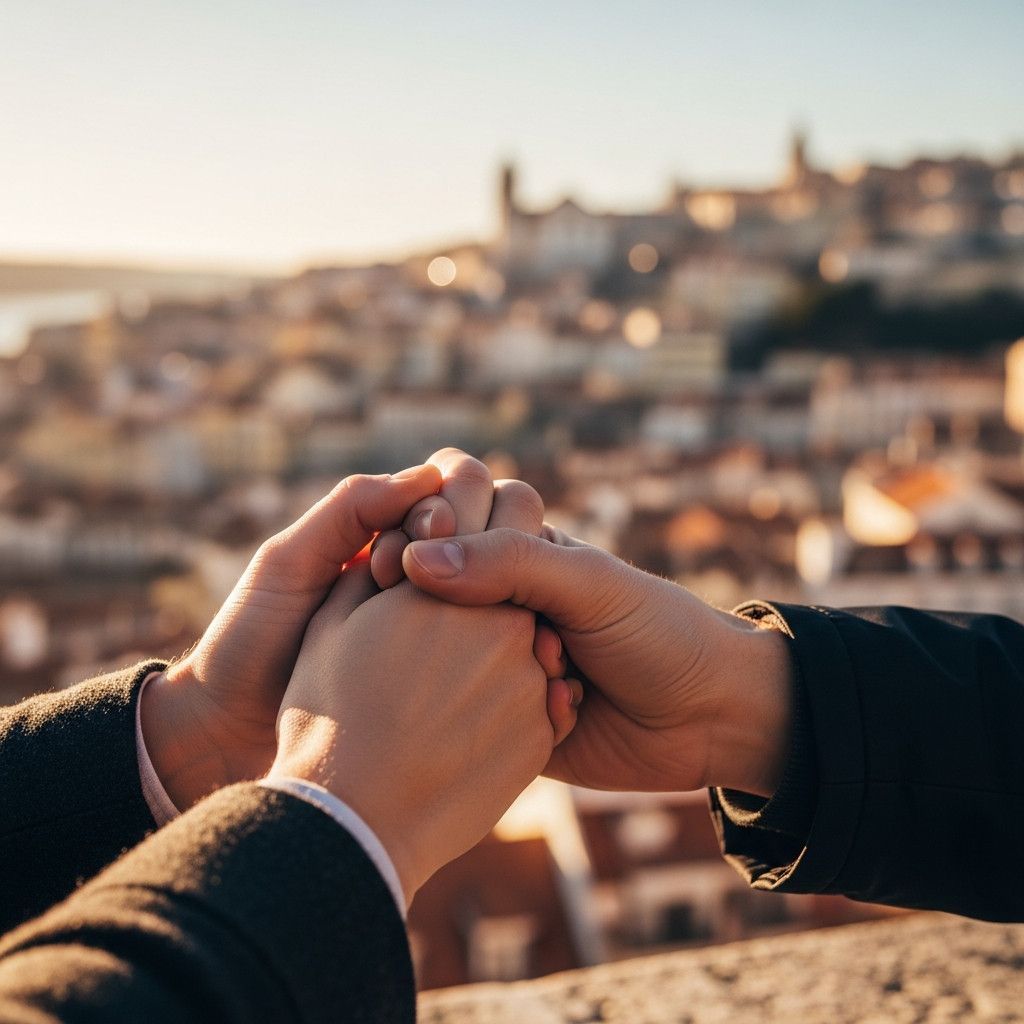
Building genuine momentum through small pauses
A portrait session should never feel like a non-stop sprint. Posing continuously for an hour is mentally exhausting for someone who does not model for a living, and that exhaustion always shows up in the eyes after forty minutes. Pacing the shoot through deliberate micro-breaks keeps the energy consistent and unforced.
Halfway through our route, we stepped into a tiny pastelaria near Largo das Portas do Sol for a bica. This was not a staging trick for a commercial shoot, but an intentional reset. We placed the coffee on the small marble counter, let the camera rest on the table, and spent ten minutes completely out of frame. Elena admitted that the first twenty minutes had felt far easier than she anticipated because there was no countdown, no flash flashing in her eyes, and no demand for a commercial grin.
When we resumed shooting in the garden corridors near Miradouro de Santa Luzia, her posture had transformed. She no longer checked where the camera was pointed before stepping forward. When I raised the lens, her body stayed fluid, and she smiled spontaneously while talking about an old tile panel we noticed on an adjacent wall. That shift – from self-conscious endurance to effortless participation – is the exact moment where the most compelling portraits are made, whether I am working with solo clients or documenting relaxed moments for couples in Lisbon.
The final gallery reveals authentic personality over perfection
Ten days after our shoot, I delivered Elena's finished gallery of sixty images. Her response reflected what almost every hesitant client discovers when they see the finished collection: "I was convinced I would look stiff, but these actually look like me on a good morning. I don't look posed; I just look comfortable."
The goal of a thoughtful portrait session is never to transform someone into a generic editorial figure. It is to create a calm, structured environment where a person can exist without feeling judged, guided by steady instructions that eliminate second-guessing. When the setting is selected with care, the timing avoids the midday chaos, and the photographer provides calm, practical direction, the camera simply records what was already there: an authentic person feeling entirely at home in their surroundings.