
Authentic couple photography is not about acting out romance on cue; it comes from directing your attention toward each other rather than toward my lens. When two people step in front of a camera, the immediate instinct is often to freeze, smile directly into the glass, and wait for instructions on where to put their hands. My role during a session is to break that reflex within the first ten minutes by turning a visual recording into a private conversation between the two of you, with me simply documenting the rhythm from a few steps away.
Tension comes from overthinking the camera rather than each other
Most couples arrive at a shoot carrying an unspoken worry that one or both of them will look awkward. Very often, one partner was convinced to join the session and feels defensive about having to pose. That hesitation is completely normal. Stiff postures happen when you try to produce an expression you think I want to see, instead of simply responding to the person standing next to you. My approach to a couple photoshoot never relies on forcing you into theatrical intimacy before you are ready.
I spend the beginning of our session establishing a calm pace. We walk, talk about your morning, and keep things entirely unscripted while your eyes and body adjust to my presence. When I notice shoulders dropping and tension easing, I introduce simple physical anchors. Having a hand resting on a jacket lapel, fingers loosely intertwined, or shoulders lightly touching gives the body a concrete point of stability. This eliminates the frantic internal question of what to do with your hands, allowing your focus to shift back to your partner.
[IMAGE_PLACEHOLDER: "A couple walking down a quiet, narrow cobblestone street with aged pastel-toned buildings in soft morning sunlight, laughing naturally together while looking at each other, captured from a candid medium distance."]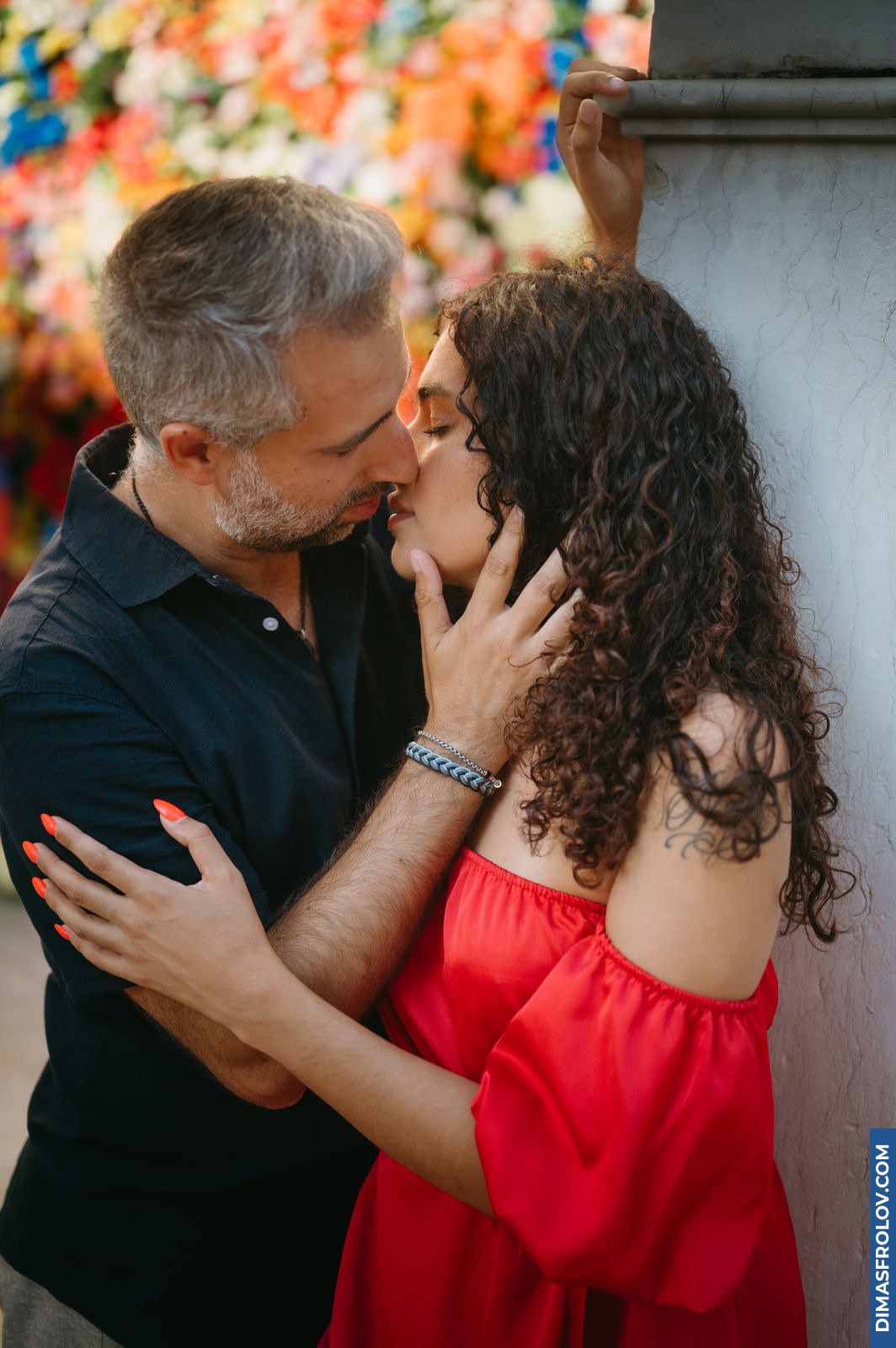
Controlled movement works better than holding static poses
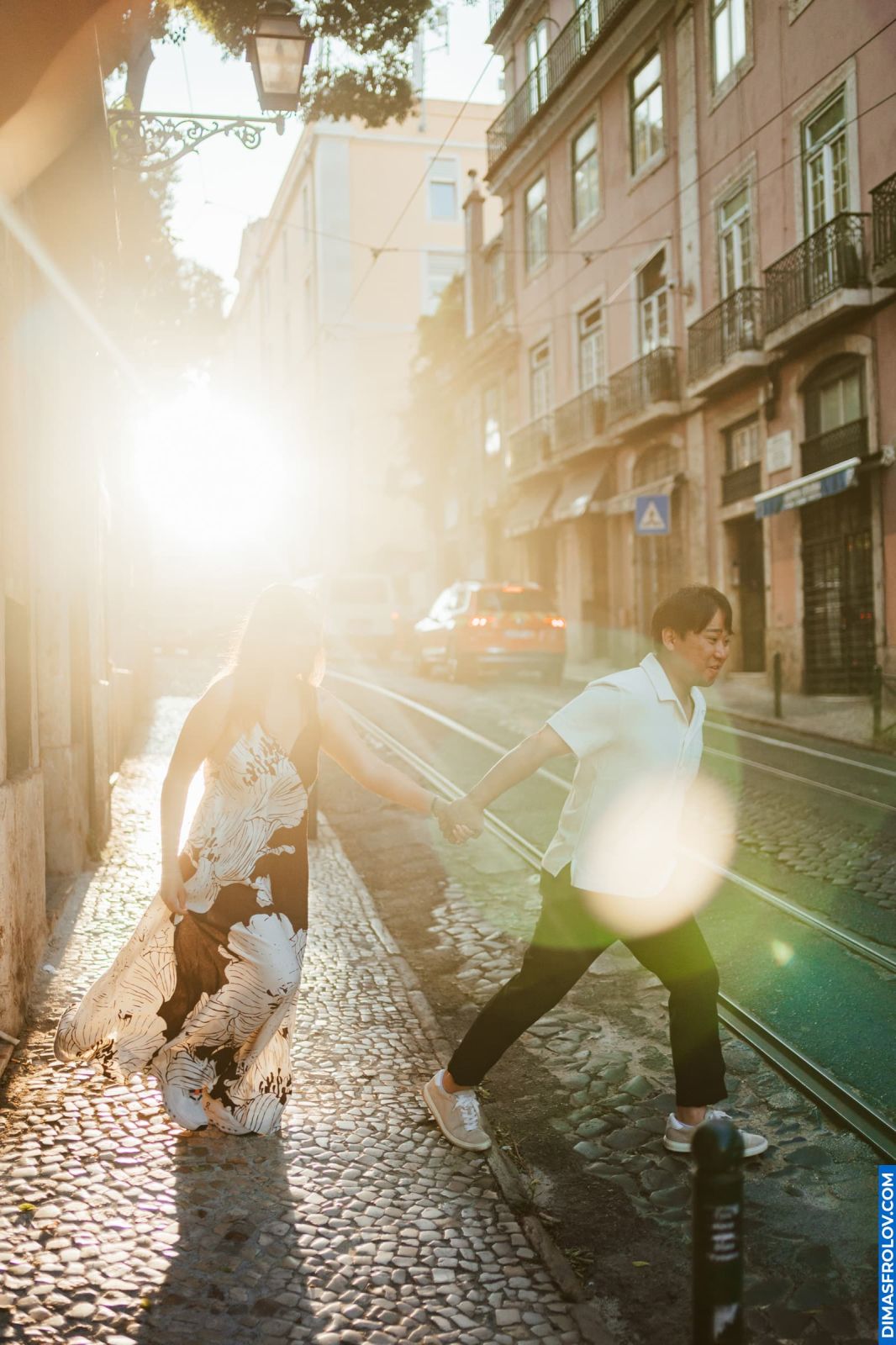
A static pose held for longer than three seconds turns brittle. Smiles fade around the edges, eyes lose their focus, and the body stiffens against the discomfort of staying frozen. Instead of locking you into place, I direct movement with clear parameters. I will ask you to take five slow steps down a quiet street, pause, turn your head slightly, or pull your partner an inch closer. These micro-adjustments give your mind a tangible task, which completely clears away self-consciousness.
When movement is controlled and slow, genuine micro-expressions happen naturally in the transitions between steps. You might brush against each other and laugh, or adjust your grip on a coat sleeve. Those fleeting, unchoreographed moments carry the honesty that static poses completely lack. If you have spent time looking at my general work as a photographer in Lisbon, you know that the frames that hold your gaze years later are never the ones where someone said cheese. They are the quiet pauses where you were simply listening to each other speak.
Lisbon locations dictate the pace and intimacy of the session
The environment plays a massive role in how relaxed you feel. Attempting an intimate couple session at midday in a crowded tourist corridor like the main square of Praça do Comércio is a recipe for guarded, self-conscious body language. People naturally pull back emotionally when fifty strangers are watching them embrace. Because of this, location selection is strictly tied to timing and foot traffic.
I schedule morning sessions shortly after sunrise, when the narrow stone alleys of Alfama and Mouraria are practically empty. At 8:00 AM, the soft light cuts low between the tiled buildings, and the only sound is the occasional resident opening a window. That quiet atmosphere acts as a protective bubble. Another great option is the shaded pathways of Jardim da Estrela or the quieter terraces of Graça away from the main observation points. When you are not constantly dodging foot traffic or feeling watched, your posture softens, and your focus stays entirely between you and your partner.
[IMAGE_PLACEHOLDER: "Close-up of a couple sitting on a stone bench in a quiet public park with soft dappled sunlight filtering through trees, the man resting his hand over hers while she leans her head slightly toward his shoulder with an unforced, gentle expression."]Wardrobe choices should support physical closeness without visual noise
What you wear directly influences how close you can stand and how your bodies interact on camera. Clothing that requires constant adjustment – such as very stiff shirts, tight skirts that ride up when walking, or shoes that make navigating historic stone calcada treacherous – will interrupt your mood every two minutes. If you are worried about your collar or struggling with balance, you cannot focus on being present with your partner.
I recommend natural textures and cohesive, understated tones. Linen, brushed cotton, knitwear, and wool drape softly against each other when you embrace. Loud logos, hyper-bright neon colors, and contrasting graphic patterns draw the eye away from your faces and break visual unity. You do not need to wear matching colors; in fact, matching outfits often look forced. Instead, aim for complementary palettes – such as warm neutrals, muted olive, navy, or soft creams. For men who want clear advice on tailoring and fit that flatters the silhouette without feeling restrictive, looking through my guide for men's portrait sessions can provide practical benchmarks before selecting outfits.
Honest interaction looks quiet rather than dramatic
Social media has popularized an exaggerated idea of couple photography that relies on massive running leaps, dramatic dips, and wide open-mouthed laughter on command. For most people in everyday life, that kind of performance feels completely unnatural. Real connection between two mature adults is usually quiet. It is found in the weight of a hand resting on the nape of a neck, a private comment whispered between steps, or a shared glance that requires no explanation.
I guide you toward positions where physical closeness happens effortlessly. Leaning back against a warm stone wall while your partner stands close, resting your forehead against a temple, or simply walking side by side while sharing an inside story generates authentic warmth. I do not ask you to fake emotion; I create the physical space and give you the room to react to one another. The camera captures what is already there once the unnecessary theatricality is stripped away.
When you look at your photographs years from now, you should not remember me telling you where to place your fingers or how wide to smile. You should look at the frame and immediately recall the temperature of the morning air, the weight of your partner's hand, and the effortless comfort of standing together in a quiet corner of the city.