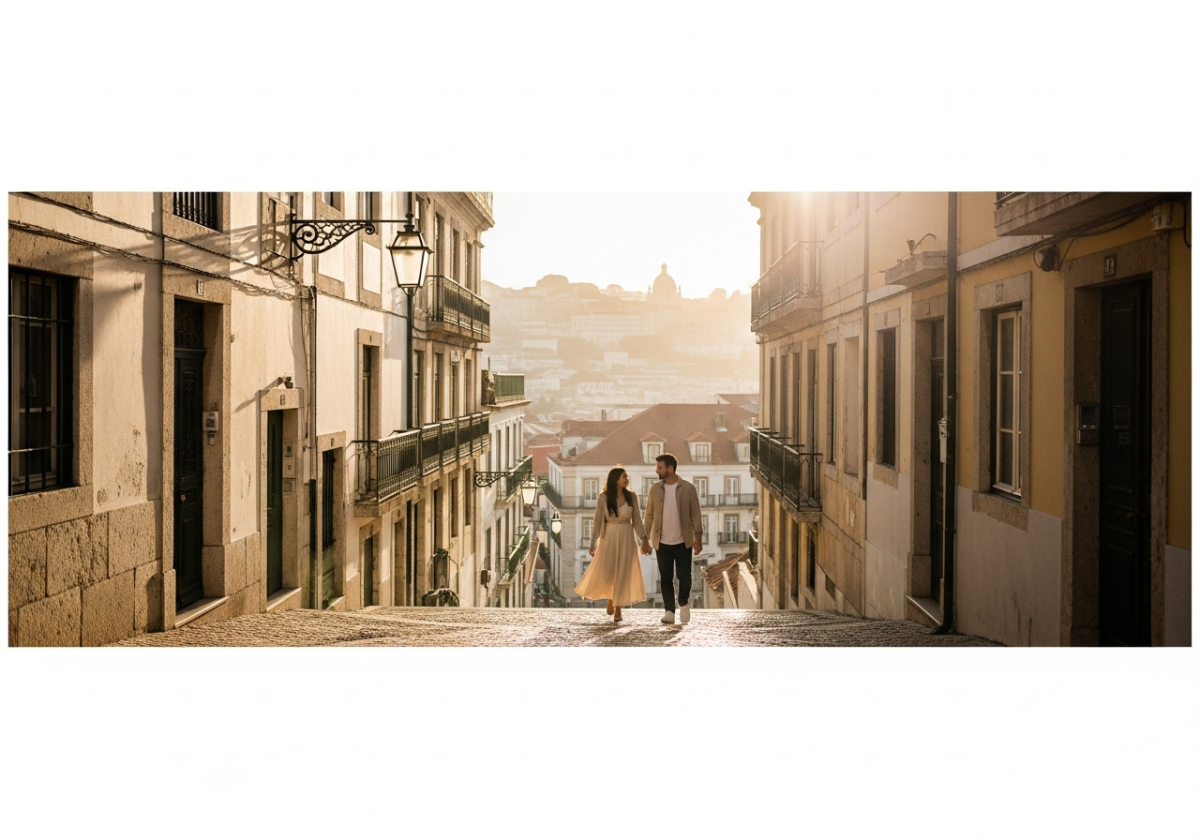
The only way to capture intimate, unhurried portraits in Alfama is to begin at sunrise, right around 7:00 AM, before the neighborhood fills with daily foot traffic. Alfama was built for medieval transit rather than modern crowds, meaning its stone staircases, narrow corridors, and scenic overlooks become congested within hours of daybreak. Arriving at dawn is not an artistic indulgence; it is a practical necessity that guarantees quiet space, clear frames, soft light reflecting off whitewashed walls, and the privacy you need to feel natural together.
Alfama belongs entirely to you before eight in the morning
By ten in the morning, Alfama turns into a maze of guided tours, rumbling tuk-tuks, delivery vans negotiating impossibly tight corners, and travelers searching for famous tram lines. In that environment, taking a photo requires waiting for crowds to clear, dodging selfie sticks, and feeling rushed every time someone needs to squeeze past your shoulder. When we begin our couple photo shoot at dawn, the district is completely dormant. The only people sharing the streets are local residents walking their dogs, bakery owners rolling up their metal shutters, and the occasional neighborhood cat resting on a warm stone ledge.
This stillness changes how you move through the city. Instead of staying vigilant about who is watching or who needs to pass by, you can stop in the middle of a steep staircase, lean against an ancient stone archway, or walk side by side down Rua dos Remédios without interrupting anyone. The empty Lisbon streets allow the historic neighborhood to serve as an atmospheric background rather than a source of stress. We get clean lines, undisturbed architectural depth, and unobstructed views toward the Tagus River that would be impossible to secure just two hours later.
[IMAGE_PLACEHOLDER: "A man and woman standing together in an empty, quiet stone alleyway in an old European district at early dawn, soft morning shadows, weathered pastel plaster walls, cobblestone steps, clean cinematic framing without any tourists or signs"]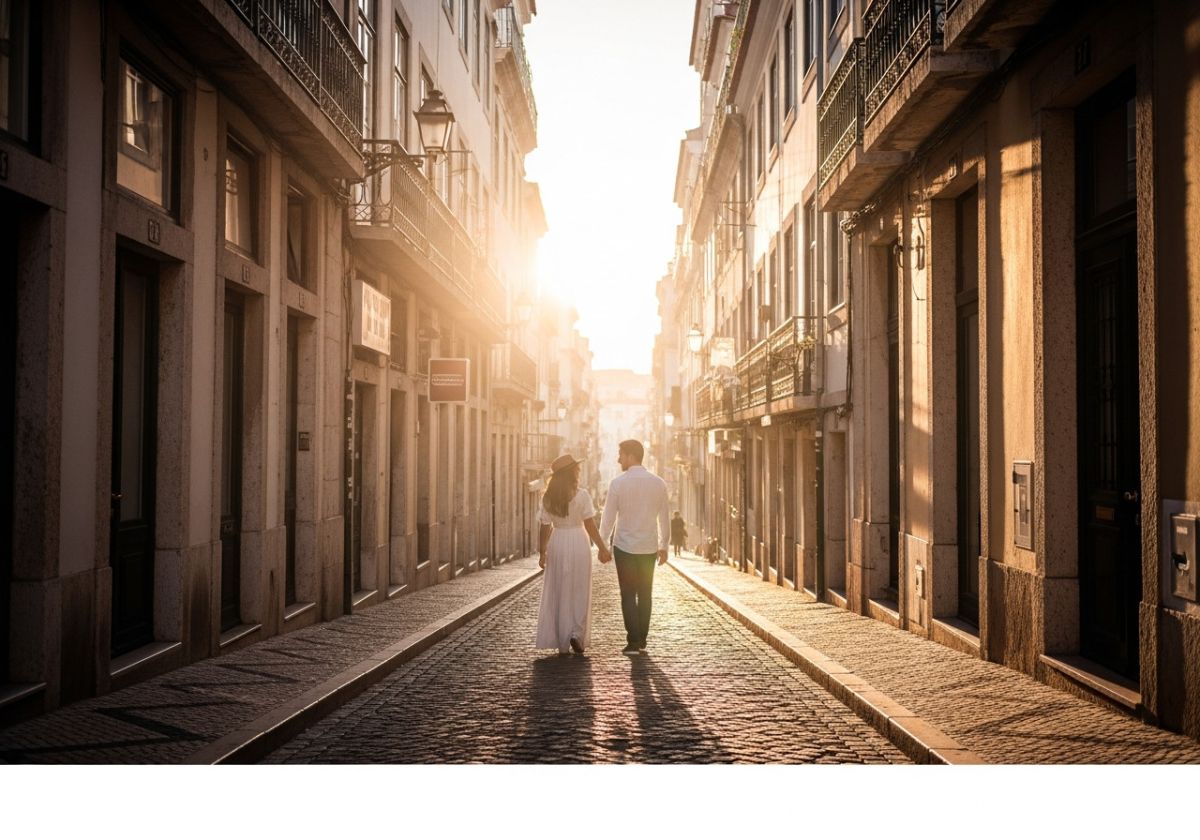
Sunrise light cuts through the alleys while sunset gets blocked by the hill
Many couples instinctively ask for golden hour in the late afternoon, assuming sunset provides the best light anywhere in Lisbon. In Alfama, geography works against the evening sun. The neighborhood sits on a steep slope facing east and south toward the river, which means that as the sun sinks into the west behind the Castelo de São Jorge, Alfama falls into a deep, flat hill shadow long before actual sundown. Afternoon light in these narrow corridors is either harsh and contrasty or dull and blue once the hill blocks the horizon.
Sunrise photography in Lisbon offers the exact opposite dynamic. As the sun rises over the Tagus estuary, low-angled golden light strikes the eastern facades directly. The rays filter through the gaps between centuries-old buildings, bouncing off pale limestone paving stones and warm yellow lime-wash plaster. This natural bounce acts like a massive, gentle reflector, creating flattering skin tones and subtle contrast without any artificial equipment. Because the light stays soft for nearly forty minutes after crossing the horizon, we can work at a steady pace without fighting harsh overhead shadows under your eyes or squinting against direct glare.
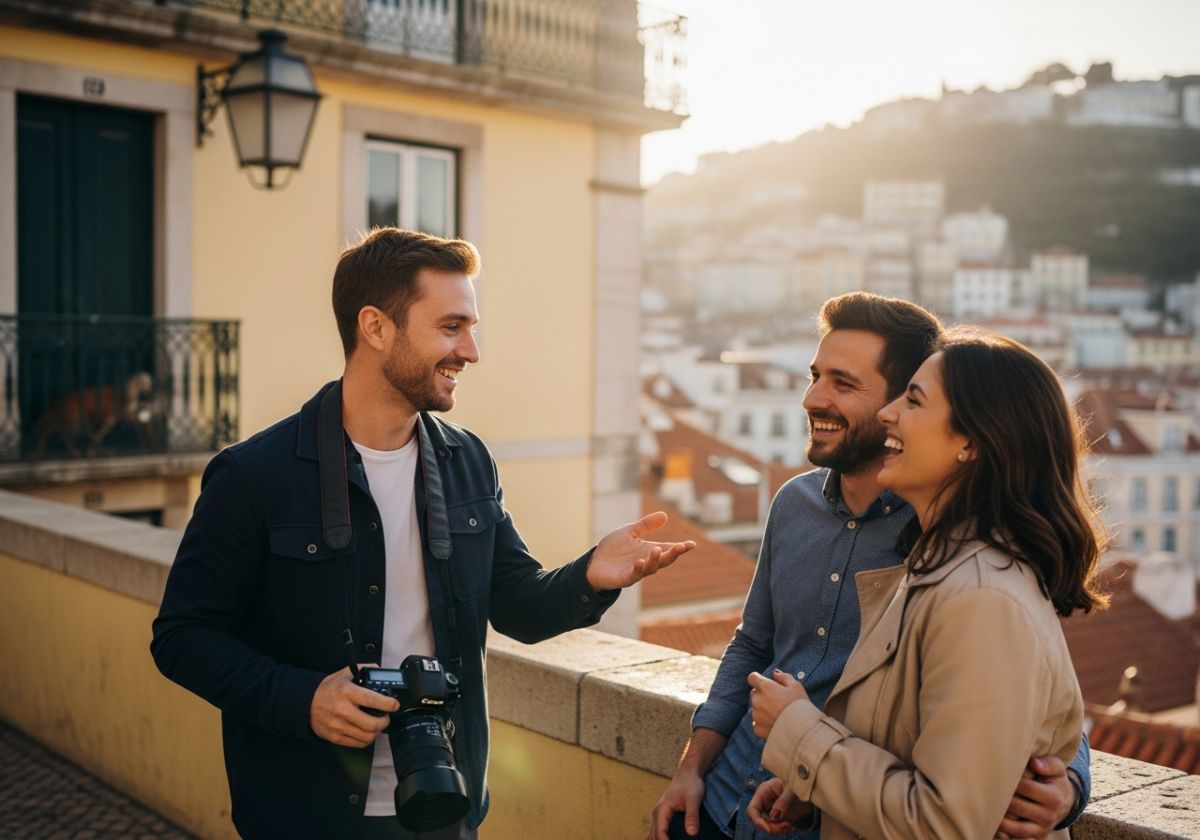
Nervousness dissolves when there is no audience watching you
Most people I photograph have never stood in front of a professional camera before. When you are already feeling slightly self-conscious about how to stand, what to do with your hands, or how your profile looks, having thirty strangers stop on a sidewalk to stare at you creates unnecessary tension. It makes you freeze, forces artificial smiles, and turns what should be an enjoyable morning into an endurance test. My role as a photographer is to make you comfortable during the shooting, and protecting your personal space is the primary step in that process.
At seven in the morning, there is no audience. The quiet surroundings create a private bubble where you and your partner can talk in normal tones, laugh at awkward moments, and adjust to the presence of my lens at your own pace. I provide clear guidance and subtle adjustments, but the absence of onlookers gives you the freedom to forget about performance. Within fifteen minutes, the initial stiffness fades away simply because there is nothing around to remind you that you are on display. What remains is genuine interaction, which produces photographs that look effortless and grounded.
[IMAGE_PLACEHOLDER: "A couple walking down an authentic cobblestone lane in warm sunrise glow, natural unposed body language, textured residential walls with hanging green plants, warm golden tones reflecting on the pavement"]A sunrise walk sets a natural, unforced tempo
I organize sessions around a gentle walking route rather than a rigid list of static poses. In the early morning, this approach feels like a calm exploration of Lisbon before the day demands your attention. We meet near a quiet vantage point, spend a few minutes talking through how the morning will unfold, and then wander slowly through quiet paths like Beco das Cruzes and Beco do Carneiro. If a particular doorway has beautiful texture or an unexpected beam of light catches a corner of the calçada, we pause there for a minute or two before moving on.
This gradual rhythm keeps the energy light and spontaneous. Because we are not competing with other photographers for specific viewpoints, there is no need to rush from one landmark to another. If you need a moment to adjust your coat or simply want to pause and listen to the silence of the city, the time is entirely ours. Through my approach to personal photography, I focus on capturing the small, unscripted gestures that happen between the guided frames: a hand resting on a shoulder, an instinctive laugh, or a quiet glance as we walk down a quiet flight of stone steps.
Practical logistics make the early wake-up straightforward
Setting an alarm for 6:15 AM while traveling can feel counterintuitive, but the logistical benefits far outweigh the temporary inconvenience. Lisbon traffic at dawn is non-existent, meaning a ride from your hotel or apartment takes a fraction of the time it would require during midday. Parking is accessible, rideshare pickups are immediate, and the city air is crisp and comfortable, especially during the warmer months from May through October when afternoon temperatures make walking up Alfama's steep hills exhausting.
Getting ready early also preserves your styling. Lisbon is known for afternoon coastal breezes and higher humidity near the water, which can quickly affect hair and make light clothing cling. At dawn, the air is typically still and cool, allowing your clothes and hair to stay clean and neat throughout our walk. Once our session wraps up around 8:30 or 9:00 AM, the neighborhood's traditional cafes are just setting out fresh pastries and steaming galões. You get to sit down for a quiet breakfast with the rest of your vacation day completely open ahead of you, having already secured the photographs you came for.