
Preparing for a couple photoshoot comes down to two practical decisions: choosing clothing that lets you move freely together and letting go of the urge to perform for the camera. Most couples arrive worrying about where to put their hands or whether they will look awkward under direct attention, but honest images happen when you treat the session as an uninterrupted walk through the city with an observant guide. When you strip away complicated shot lists and focus on staying responsive to each other, the visual story takes care of itself.
Coordinated tones create visual harmony without the stiffness of matching outfits
The most common wardrobe mistake couples make is trying to match each other piece for piece. Identical white shirts and blue denim flatten your individuality and make photographs look staged. Instead of matching, aim to complement each other through a cohesive color palette of three or four harmonizing tones. Muted earthy colors like olive, warm terracotta, oatmeal, stone gray, soft ivory, and slate blue work exceptionally well against the limestone and aged plaster of old urban neighborhoods. When one person wears a subtle pattern or a rich texture like linen, heavy cotton, or knitwear, the other should ground the frame with a clean, solid tone to prevent visual competition.
Footwear deserves just as much thought as the rest of your outfit, particularly in a city built on steep hills. In Lisbon, streets paved with traditional Portuguese limestone cobblestones, known as calçada portuguesa, are notoriously uneven and slick when polished by foot traffic. Wearing sharp high heels or rigid, unworn dress shoes immediately restricts where we can walk and forces tension into your shoulders and jawline. Choose comfortable footwear that allows you to walk with a natural stride, whether that means clean leather loafers, flat ankle boots, or understated lifestyle sneakers. If you want to wear formal shoes for specific portraits, bring them in a lightweight tote bag and we can easily swap them during brief pauses.
[IMAGE_PLACEHOLDER: "A couple dressed in complementary neutral earth tones, walking down a sunlit, narrow cobblestone residential alley with warm textured walls, captured naturally mid-stride without looking at the camera."]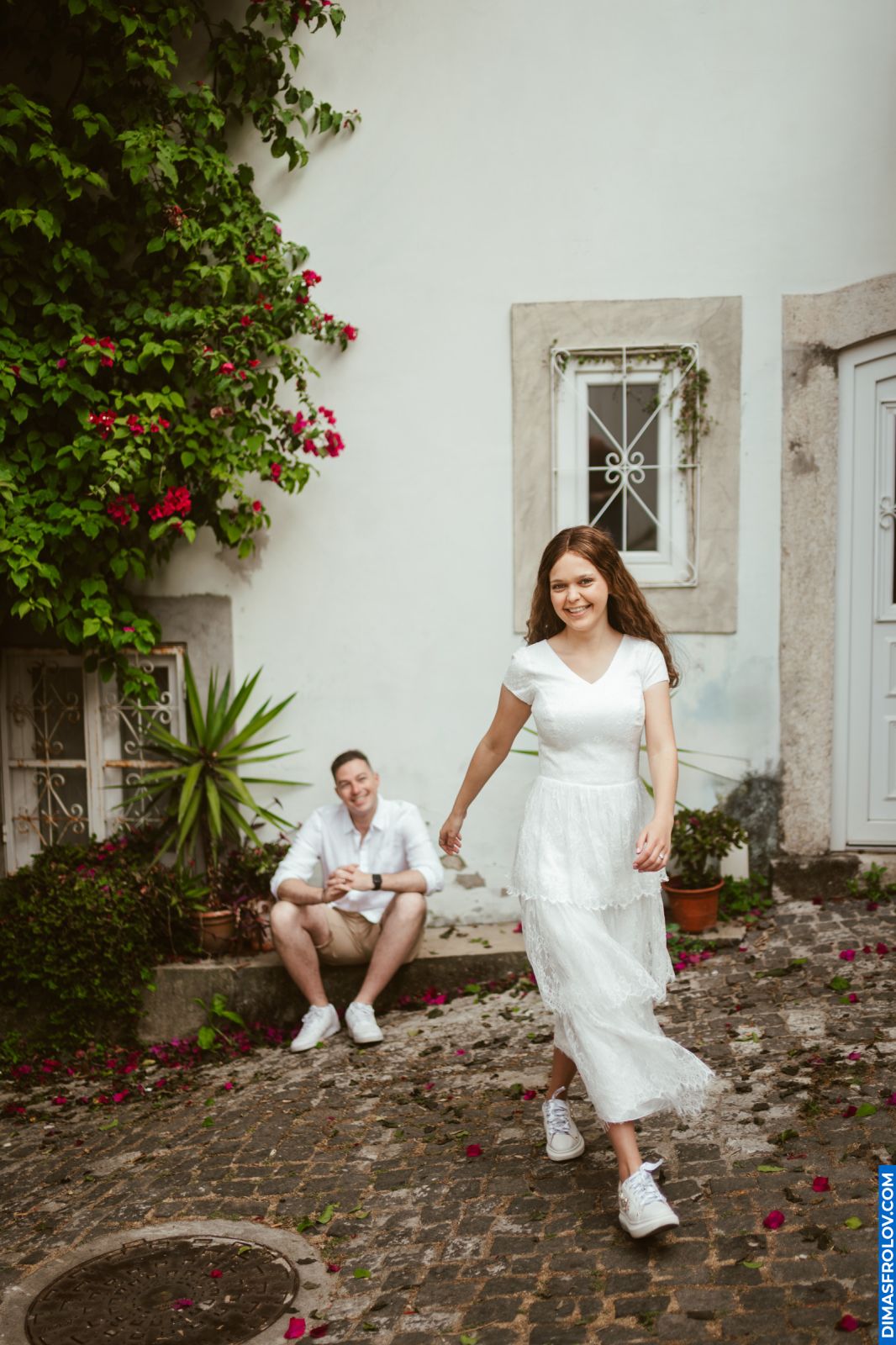
Location selection determines whether you feel watched or at ease
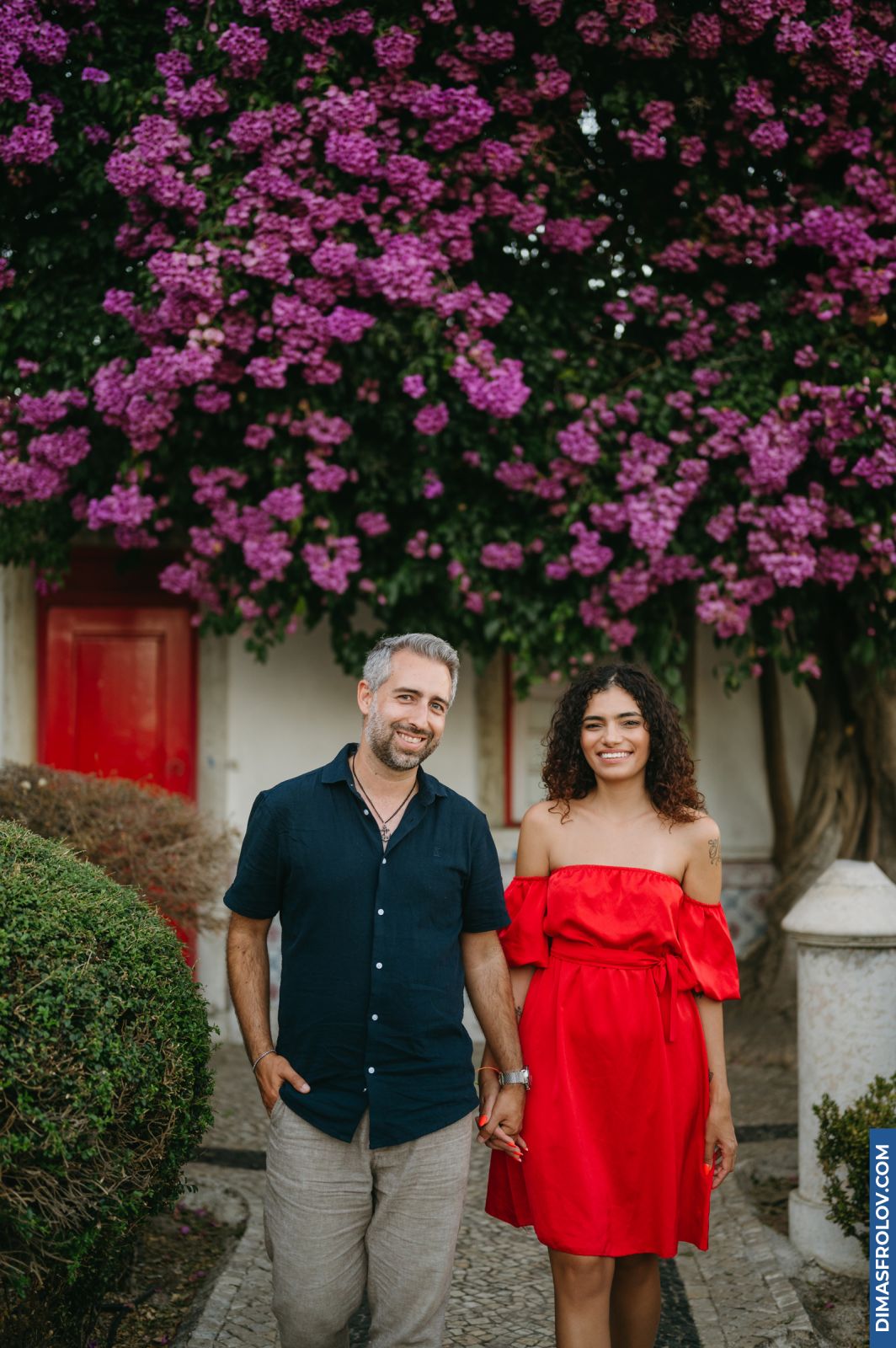
A successful photoshoot relies heavily on your comfort in the physical environment. High-traffic viewpoints like Miradouro de Santa Luzia or the central square in Chiado are saturated with tour groups, tripods, and street vendors. Trying to share a quiet, affectionate moment while dodging crowds creates unnecessary stress and self-consciousness. I prefer guiding couples toward quieter residential corridors, tranquil gardens, or tucked-away street corners where the background remains clean and the atmosphere stays calm.
Timing plays an equal role in establishing that privacy. Early morning, roughly around eight o'clock, offers the cleanest light and virtually empty streets in neighborhoods like Alfama or Mouraria, allowing you to walk without an audience. The early sun cuts softly between tall, narrow buildings, creating gentle contrast rather than harsh midday shadows. If morning schedules do not work, late afternoon sessions in quieter spots like the upper terraces of Graça or the shaded paths of Jardim do Torel offer soft, warm illumination while avoiding the heaviest foot traffic.
Guided movement solves the problem of not knowing what to do with your hands
Static posing is where awkwardness begins. When people are told to stand still, look into a lens, and hold a smile, their posture stiffens within three seconds. My approach during our couple photoshoots is built around continuous, small physical interactions. I do not place you in frozen tableaux; I give you simple, manageable tasks that draw your attention away from the camera and back to each other.
Instead of telling you to smile, I might ask you to slow your pace down a hill, adjust your partner's collar, or hold hands while turning a corner. These micro-actions naturally organize your hands, soften your shoulders, and bring out unprompted expressions. As a lifestyle photographer in Lisbon, my job is to observe your natural cadence and step in with clear, quiet direction before any uncertainty sets in. You will never be left wondering if you are doing something wrong, because I guide the rhythm continuously while giving your dynamic room to breathe.
[IMAGE_PLACEHOLDER: "Close-up portrait of a couple standing close on an open terrace during golden hour, the man softly tucking a strand of hair behind the woman's ear, with warm, out-of-focus city rooftops in the background."]Managing pre-shoot logistics keeps physical tension out of your frame
The hour before the session often determines the mood of the images. Rushing to find a taxi or arguing over metro directions directly before meeting will show up in the first twenty minutes of our work. Plan your transit to arrive ten to fifteen minutes early at the agreed meeting point. Grabbing a quick coffee or water at a local café gives you time to transition out of travel mode and settle into the day.
Physical baggage is another hidden source of distraction. Bulky smartphones, thick wallets, key rings, and sunglasses cases placed in trouser pockets create unflattering bulges in photos and ruin clothing lines. Large backpacks or heavy shoulder bags are cumbersome to drop and pick up every few yards. Travel as light as possible. Bring only your essentials, and if you have a jacket or a small bag, I am happy to carry it between setups so your movements remain unencumbered and fluid.
Balancing comfort for partners with different photography experience
In almost every couple I photograph, one person is enthusiastic about the session while the other agreed primarily to be supportive. It is very common for men, in particular, to dread being posed or scrutinized by a lens, a dynamic I see frequently in my work with individual portraits for men. When one partner feels pressured to produce a specific emotion or grin on cue, resistance builds quickly. I remove that pressure right from the beginning by acknowledging it openly. There is no expectation to perform, be overly romantic on demand, or look directly into the glass. The camera simply follows along while you walk and converse, which quickly normalizes the presence of the lens.
Shifting expectations from perfection to connection produces honest frames
The desire for flawless, symmetrical perfection usually works against great portraiture. When couples try to recreate an exact pose they saved on social media, they look disconnected from their own reality because they are acting out someone else's physical rhythm. The images that carry lasting value are rarely the ones where every hair is pinned in place or both faces are turned squarely to the sensor. The frames that endure are the ones that capture how your partner rests their chin on your shoulder, the quiet laugh between sentences, or the effortless way your hands fit together when you walk.
My role is to manage the technical foundation – the light direction, the background perspective, and the spatial balance – so that you can focus entirely on being present with one another. When the shoot is structured with clear guidance, manageable pacing, and an understanding of human comfort, the entire process feels easy. Years from now, the photographs will reflect not a staged performance for a camera, but an honest record of who you were together in that specific place and time.