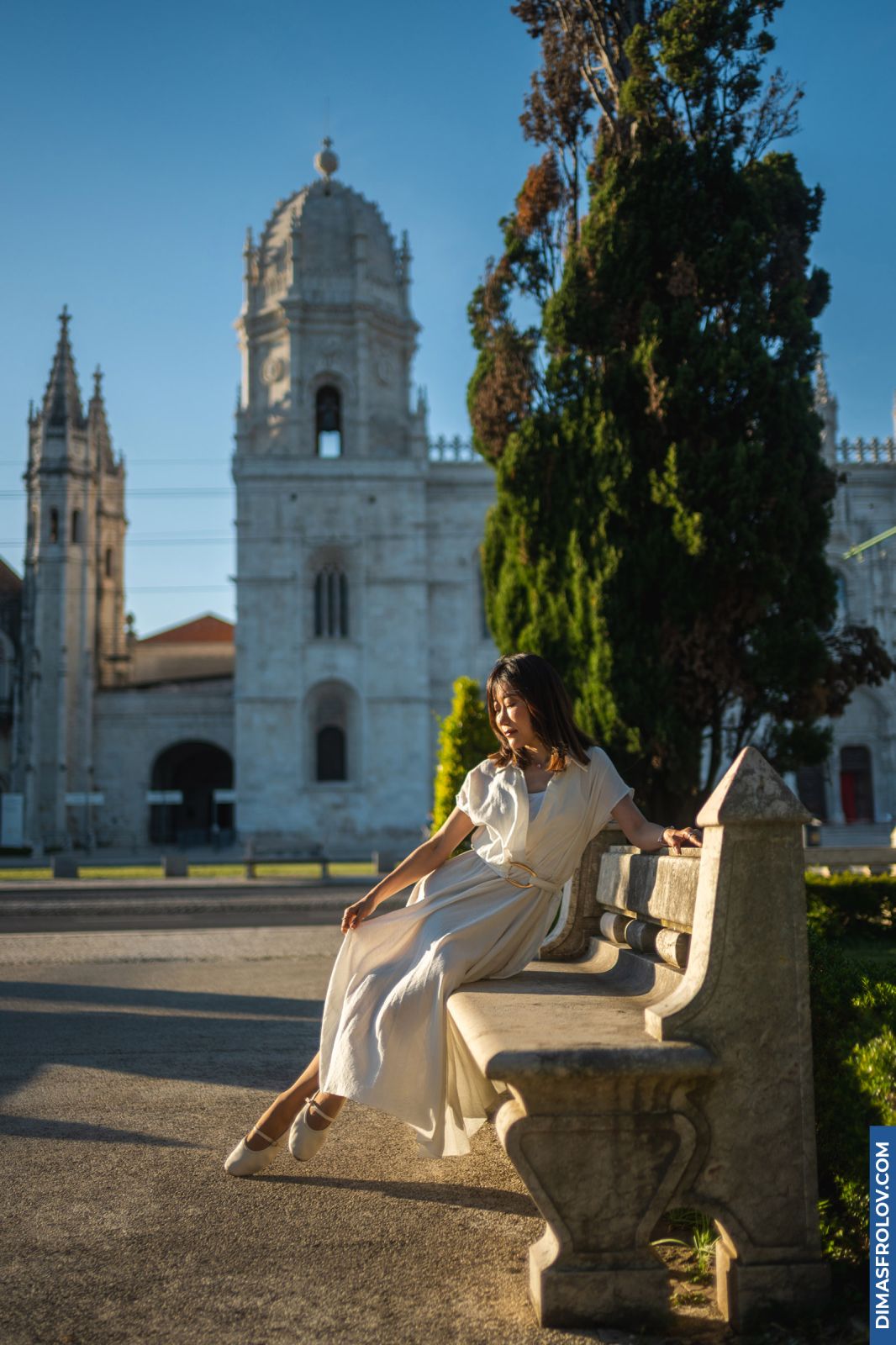
I photograph a lot of dating profiles – mostly men, in Lisbon, who have been on the apps for a while and are getting fewer matches than they think they should. Before the session I ask to see the current profile. The same mistakes come up so reliably that I can usually name them before the phone is turned round. Here they are, roughly in the order of how much damage they do, with what to do instead.
The ten mistakes, in order of damage
- A first photo that is not clearly, only you. Group shots, you in the distance, you half-turned away.
- Sunglasses, hats or a helmet in every frame. Nobody swipes right on a person whose eyes they have not seen.
- A photo that is more than two or three years old. It works until the first date, and then it works against you.
- The gym mirror, the car seat, the bathroom. The three most common backdrops on the apps, and the three that say least about you.
- Every photo taken from the same arm's length, at the same angle. Five selfies is one photo repeated.
- No full-length picture at all. Its absence gets read as hiding something.
- Heavy filters, smoothing, or the "beauty" mode left on. People can tell, and what they conclude is that the rest is edited too.
- A blurry, dark or low-resolution main photo. It reads as low effort, which reads as low interest.
- The fish, the car, the motorbike, the borrowed dog. Props that were meant to say "adventurous" and say "I could not think of anything about myself".
- A forced smile, or no expression. The single most common mistake in professional-looking photos, and the one that costs the most matches.
Below, why each one hurts and how to fix it. If you would rather skip to the fix, it is the same for most of them: take fewer photos, take them properly, and make sure each one says something different.

Why these mistakes cost matches
The first photo has one job
Someone looking at your profile gives the first picture under a second. In that second they need to answer one question – is this a person I want to look at longer? – and a group photo makes them answer a different one first: which one is he? Most people do not bother. Your main photo should be you, alone, from roughly the chest up, looking at or just past the camera, with your face lit and sharp. Everything else can be more relaxed. This one cannot.
Eyes, and why sunglasses fail
We decide whether we trust a face almost entirely from the eyes. Cover them and the viewer's brain has nothing to work with, so it defaults to caution. One picture in sunglasses on a beach is fine, because the others have already done the work. Sunglasses in the first photo, or in most of them, is the same as no photos at all.
Old photos are a loan against the first date
An older picture where you had more hair, less weight or a different face is not a lie exactly, but it sets up the first meeting as a disappointment before anyone has said hello. The people who look genuinely good on the apps are the ones whose photos look like them today. If the honest version of you is different from the one in the pictures, change the pictures, not the honesty.
Backgrounds say more than you think
A photo is you plus a place. The gym mirror says "I go to the gym", which is fine, but nothing else. The car seat says "I have a car". The bathroom says nothing at all, and the tiles are never as clean as you thought. Now compare that with you at a café table, or halfway up a Lisbon street with the river behind you, or on a train. Those backgrounds carry a small story – where you spend time, what a day with you might look like – and the story is what starts conversations.
Five selfies is one photo
An arm's length away, slightly from above, phone held in the right hand: the angle is so familiar that the viewer stops seeing you and sees "selfie". Vary the distance and the situation. A close portrait, a picture where you are doing something, a picture where someone else is holding the camera, one taken from further away. Each adds information the others do not have.
The missing full-length shot
People check for it, and when it is not there they assume there is a reason. Include one. It does not need to be flattering in the gym sense; it needs to be honest and relaxed – standing naturally, in clothes you actually wear, somewhere you actually go. It answers the question quietly, which is the whole point.
Filters are visible from across the room
Skin without pores, teeth without edges, a jawline that does not match the neck. Everyone on the apps has learnt to spot it, and once they have, they discount the rest of the profile too. Good light does what filters are trying to do, and it does it invisibly. Which is the next point.
Light is the whole difference
Almost every unflattering photo is unflattering because of light, not the face. Overhead light at midday puts shadows in the eye sockets; a ceiling lamp does the same indoors; a flash flattens everything. Turn to face a window, or stand outside in the hour after sunrise or before sunset, and the same face looks rested, open and three years younger. This is most of what a photographer is doing when a session "makes you look good".
Props and the fish
The fish, the fast car, the rented motorbike, somebody else's dog: these are stand-ins for a personality. They work on the rare profile where they are true – you fish every weekend, that is your bike – and on every other profile they read as exactly what they are. Show what you do. If what you do is cook, walk, read on the tram, sit in cafés, those are better than the fish, because they are yours.
The forced smile
Ask someone to smile and they will produce the mouth without the eyes. The muscles round the eyes only move when the smile is real, and everyone can see the difference without knowing what they are seeing. The fix is not to try harder. It is to be photographed while something is actually happening – a conversation, a walk, a joke from behind the camera – so the expression is caused rather than performed. Neutral, relaxed and looking slightly off-camera is also fine. Fake cheerful is not.

What a good set looks like
Four to six pictures, no more. A clear, well-lit portrait first. A full-length shot. One where you are doing something you actually do. One with a different mood or light – evening, indoors, somewhere with colour. Perhaps one with other people, clearly not first, where it is obvious which one is you. Each photo should add something; if two say the same thing, drop the weaker one.
Men in particular tend to under-shoot: one photo, or three near-identical ones. The profiles that do well are not the ones with the best-looking person. They are the ones where, after five pictures, you feel you have some idea of what a Tuesday evening with him would be like.
Doing it in Lisbon
The city makes this easy. Late afternoon at a miradouro gives you soft light and a view that is recognisably somewhere. The narrow streets of Alfama or Graça give shade and texture at any hour. A tram, a café terrace, the riverside at Cais do Sodré – all of them put you in a real place with light that flatters, which is exactly what the gym mirror does not do.
If you would rather have it done properly in an hour than spend a weekend trying, that is most of my men's portrait sessions and a good share of the women's ones: we walk, we talk, I handle the light and the moment, and you leave with a set built for a profile. I have written separately about why professional photos get more matches, and about why a dating photo and a LinkedIn photo should not be the same picture. Either way – fix the ten things above first. Most people only need to fix three.