
Author portraits need an environment that reflects depth, intellect, and narrative craft rather than a clinical studio setup. When a reader turns to the back jacket of a book, visits an editorial portfolio, or reads an essay online, they look for a visual presence that matches the weight and tone of the written word. In a city shaped by literary figures like Fernando Pessoa and José Saramago, author branding finds a natural home among aged wood, quiet archways, and warm morning light filtering through century-old reading rooms.
Creative portrait photography demands intellectual weight rather than corporate polish
The standard corporate headshot relies on uniform light, a neutral backdrop, and a practiced smile designed to project accessible competence. For a novelist, non-fiction author, screenwriter, or creative essayist, that aesthetic communicates the wrong message entirely. A writer's portrait needs texture, quiet introspection, and a sense of contemplative focus that gives the reader insight into the mind behind the work.
When I shoot editorial portraits for men and creative thinkers, my focus shifts toward posture, gaze, and the natural geometry of the face at rest. Writers rarely spend their days performing for a room; their craft happens in solitary concentration. Forcing an author to produce an energetic, outward grin feels unnatural and results in stiff, artificial frames. Instead, we aim for composure, quiet confidence, and an unhurried visual rhythm that mirrors the discipline of writing.
Achieving this level of authenticity means taking time to settle into the session. The first fifteen minutes are never about capturing the final frame. They serve as an adjustment period where we talk through the themes of your upcoming book, the tone of your essays, or the audience you want to reach, allowing your shoulders to drop and your facial muscles to relax naturally.
[IMAGE_PLACEHOLDER: "A focused author sitting at a dark solid wood reading table surrounded by tall, floor-to-ceiling bookshelves in soft morning daylight, holding a fountain pen thoughtfully over an open notebook, cinematic atmospheric light with shallow depth of field"]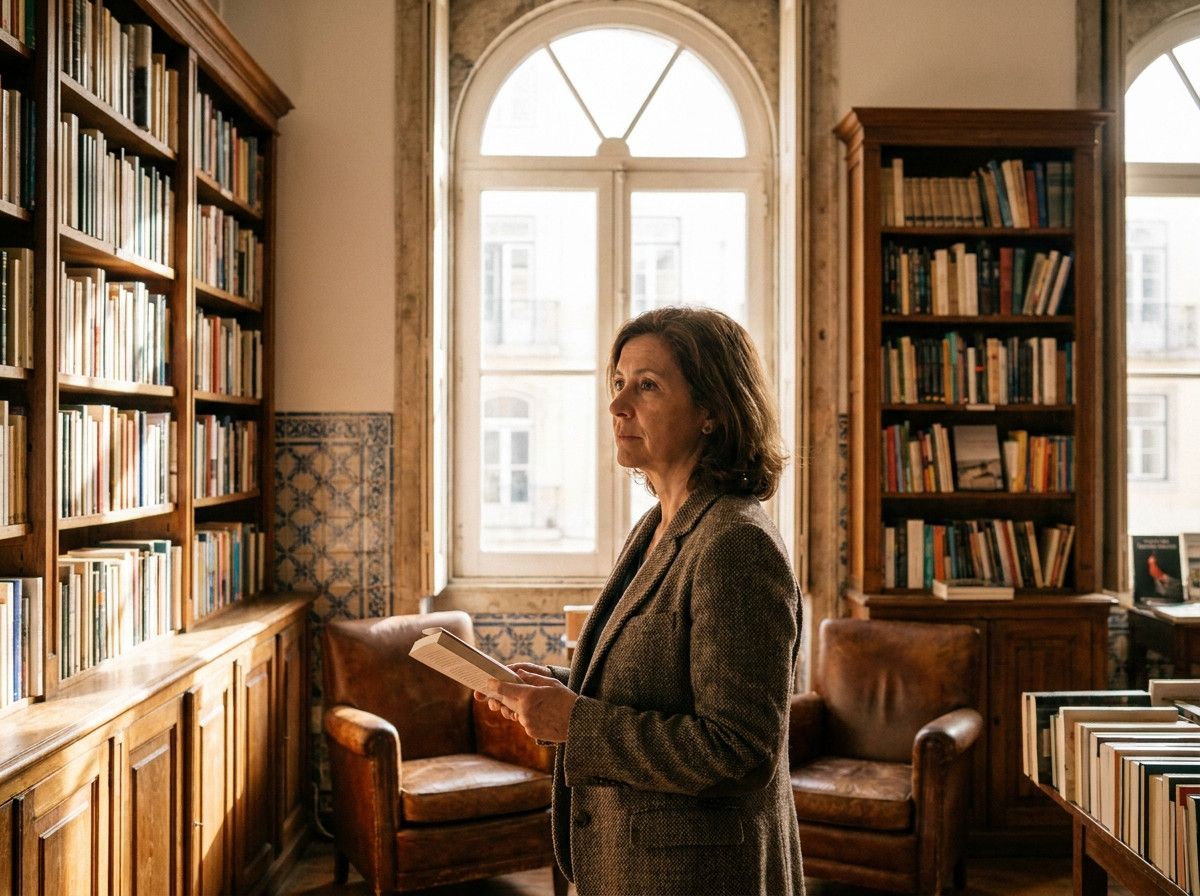
Historic literary corners in Chiado provide quiet character without cliché
Lisbon holds a rare literary geography where historic bookshops and traditional cafés remain functioning public spaces rather than museum displays. Livraria Bertrand in Chiado, officially recognized as the world's oldest operating bookstore, offers an extraordinary visual foundation with its vaulted ceilings, dark timber shelving, and arched entryways. Working in a space steeped in centuries of print instantly grounds writer branding photos in a tradition of craft and history.
A few paces away, the classic tiled walls and dark wood paneling around the Chiado district offer textured outdoor alternatives that capture Lisbon's specific intellectual ambiance. While A Brasileira remains a famous reference point for its historical connection to Lisbon's modernist poets, we often focus on the quiet corners nearby where the morning light hits weathered limestone and wrought iron balconies. These architectural elements offer depth and context without turning the photograph into a generic tourist portrait.
Working in these spaces requires arriving early, usually around nine in the morning just as shopkeepers draw up their iron shutters and the first coffee service begins. The early morning light in Lisbon is directional and gentle, casting long, soft shadows across cobblestone alleys and illuminating bookstore windows without the harsh glare of midday.
Physical tasks dissolve the tension of standing before a lens
Most writers feel profoundly uncomfortable in front of a camera because their daily routine involves observing others rather than being observed. Handing an inexperienced subject a blank instruction to look natural almost always produces the opposite result. True ease comes from purpose and physical occupation.
During a library photoshoot Lisbon, I introduce simple, grounded actions that direct your focus away from the lens. We work with manuscripts, worn notebooks, proof copies of your book, or a fountain pen you genuinely use. When your fingers are occupied with turning a page or adjusting your notes, your posture naturally realigns. The physical act of reading pulls the analytical mind inward, producing genuine micro-expressions of focus and curiosity that cannot be faked on command.
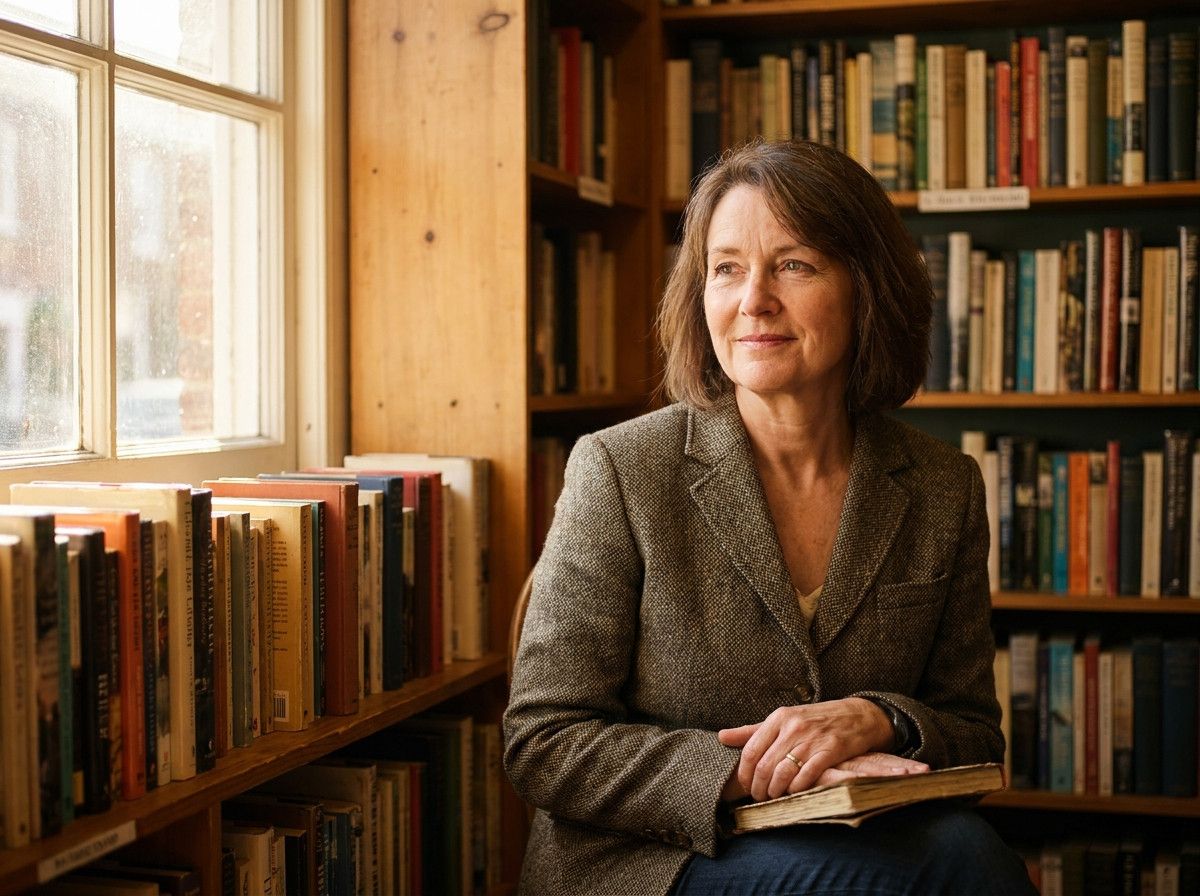
I frequently photograph creative women and independent researchers who prefer working within quiet domestic interiors or specialized private collections. In those spaces, we alternate between seated portraits by deep window casements and wider environmental frames where the physical space frames the subject as part of their creative world. My role is to observe these quiet transitions and capture the split seconds between structured poses when your natural posture takes over.
[IMAGE_PLACEHOLDER: "A writer standing by a large recessed stone window in a historic European study, holding a bound manuscript with both hands, soft side-lighting highlighting the profile and natural linen clothing texture"]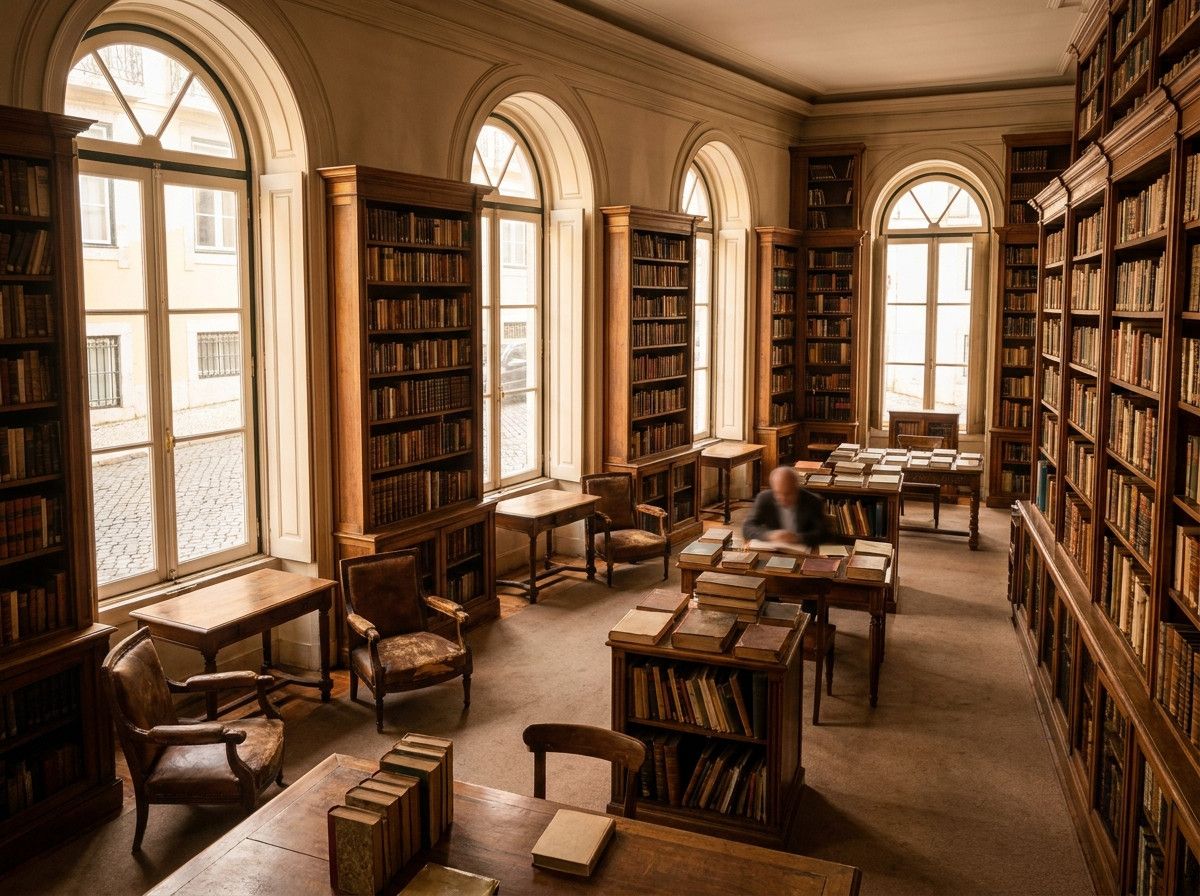
Wardrobe choices should prioritize tactile fabrics over formal styling
The clothes chosen for author headshots must support the narrative rather than draw attention to themselves. In an editorial or literary setting, synthetic fabrics and glossy textures tend to catch artificial reflections and flatten under natural light. Heavy, tactile materials behave in a completely different way, absorbing shadows and providing a rich, organic feel to the image.
Natural fibers such as washed linen, coarse wool, unstructured cotton blazers, and fine-gauge knitwear work exceptionally well against the backdrop of Lisbon's limestone and polished timber. These materials drape naturally and move with your body, eliminating awkward folds or tension lines when you sit, lean, or shift weight. Deep tones – charcoal, navy, olive, raw cream, and warm taupe – harmonize with old library woodwork and avoid competing with your face.
Accessories should remain minimal, intentional, and personal. If you wear glasses daily, we keep them on; attempting to photograph someone without their habitual eyewear alters their natural facial gestures and makes them feel ungrounded. Vintage leather satchels, a personal fountain pen, or a tailored coat slung over a chair add quiet realism to the scene without looking like props placed by a stylist.
Discreet logistics protect the calm atmosphere required for honest portraits
Working inside active bookshops, private heritage libraries, or classic reading rooms in Lisbon requires careful etiquette, patience, and compact equipment. Bulky studio lighting setups and large softboxes disrupt the quiet environment and instantly make clients feel self-conscious under an artificial spotlight. My approach relies entirely on prime lenses and available ambient light, preserving the peaceful mood of the room.
When selecting indoor locations, we prioritize quieter independent collections, cultural foundation reading spaces, or private studio corners in Príncipe Real where staff welcome low-profile creative portrait photography. If a specific bookshop requires advance notice or a quiet window before opening hours, we arrange those logistics beforehand so your time on set remains uninterrupted and focused solely on your comfort.
A successful lifestyle portrait session should never feel like a high-pressure commercial production. By keeping the technical footprint minimal and the shooting pace relaxed, the session becomes an organic conversation set against the backdrop of one of the world's great literary cities. The final portraits serve as a quiet, authoritative introduction to your work, offering readers a visual presence that feels as genuine, considered, and enduring as your writing.