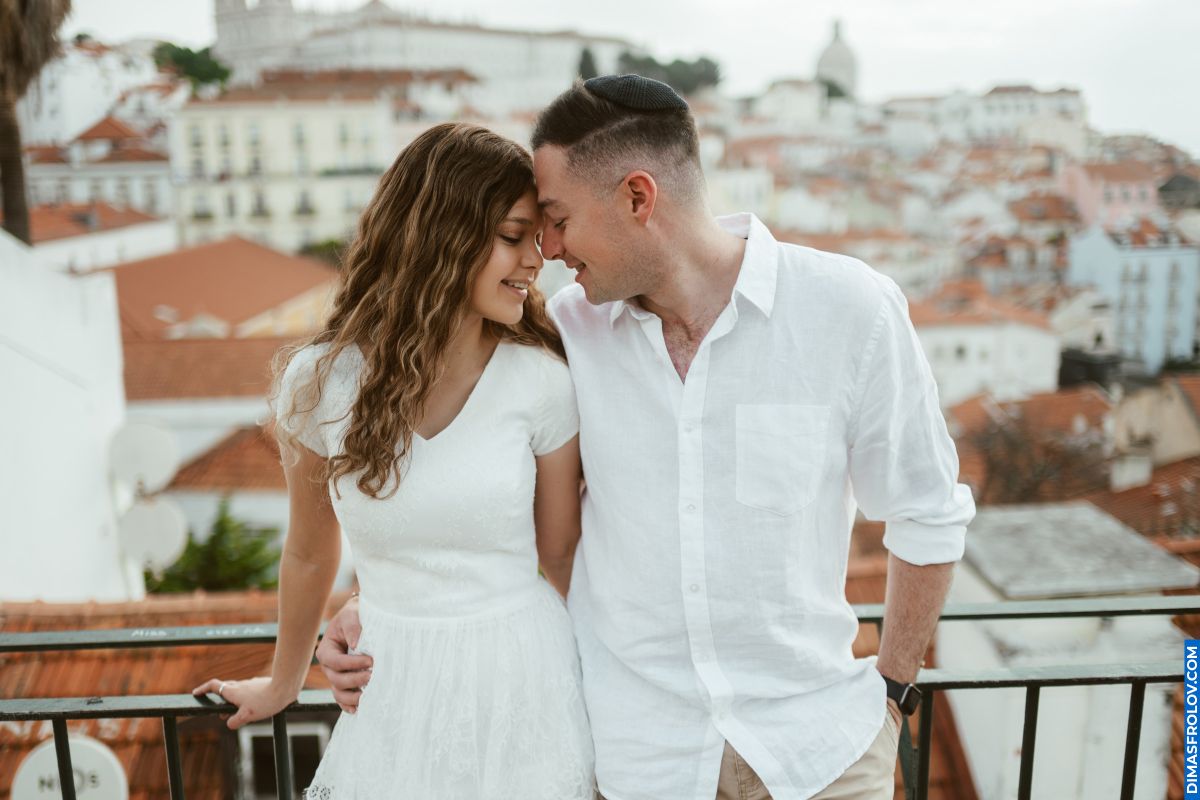
"Romantic" in a photograph is not a pose. It is a reaction one person has to the other, and it only happens when neither of them is thinking about the camera. Couples arrive with a picture in mind – the dip, the lingering look, the kiss with the sunset behind – and those frames can be made. But they are made the way a film scene is made, and they look like it. What makes a couples photograph worth keeping is something else, and it cannot be performed on request. This is the difference, and how a session is run so that the real thing has room to happen.
What acting looks like on camera
Asked to "be romantic", two people do the same three things: they stop talking, they arrange their faces, and they hold the position until the shutter goes. The result is technically a couple embracing and emotionally a photograph of two people waiting. Eyes go flat. Hands become careful. The kiss is a shape rather than a kiss. The picture is not bad – it is just not of them. Everyone can see this, including the couple, which is why so many people say their engagement pictures "look nice but don't look like us".
What connection looks like
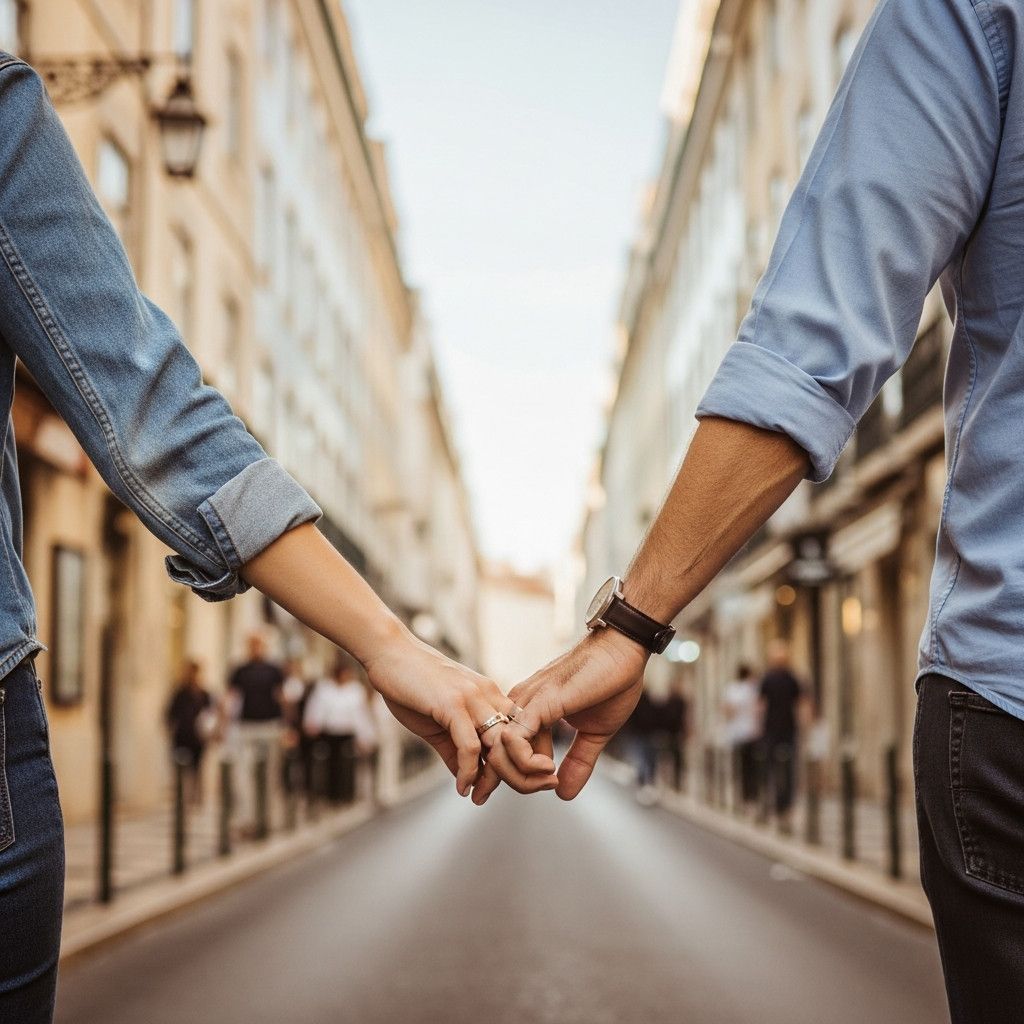
Smaller than people expect. His hand finding hers when they step off a kerb. The face she makes at the joke he has told four hundred times. The half-second after a laugh when both of them are still looking at each other. Her fixing his collar without being asked. Someone leaning without noticing they have leaned. None of these can be requested, and all of them happen constantly when two people are doing something together and have forgotten they are being watched.
How the session makes room for it
Something to do. The single most useful decision is to give the two of you an activity rather than a position. Walk down this street and tell each other about the worst flat you ever lived in. Order a coffee. Find the tram stop. Cross the square. Two people with a task behave like themselves; two people asked to stand together behave like a photograph.
Prompts, not poses. When I do step in, it is with a sentence: whisper something you have never told them; look at the thing they are pointing at; tell him what you thought the first time you saw him. The prompt produces a reaction, the reaction is the picture, and the prompt itself is forgotten.
Distance. I shoot most of a couples session from several metres away with a longer lens, partly for the look and partly so the camera is not in the moment. Closeness on the couple's side comes from them, not from me standing next to them.
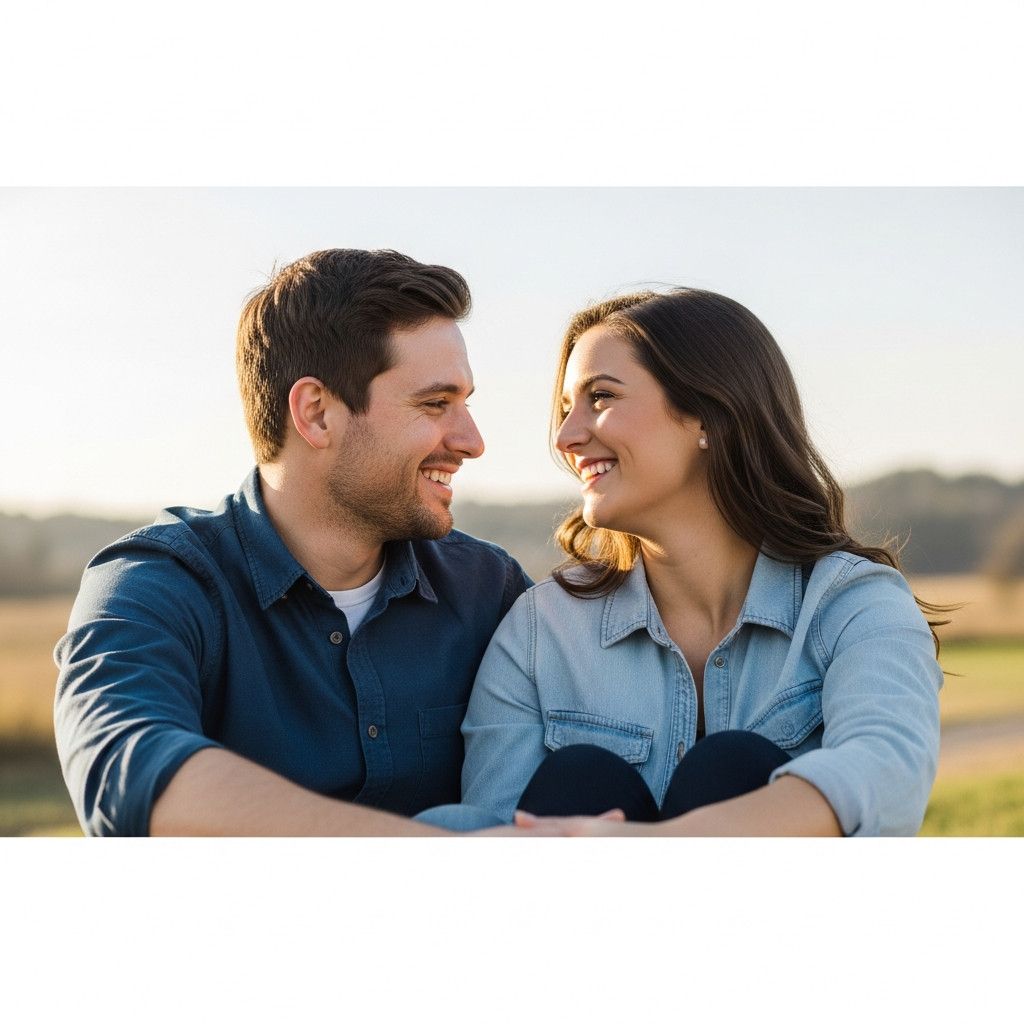
Time and the first twenty minutes. Nobody is relaxed at the start, and I do not photograph much then. We walk, I talk, the first location is somewhere quiet. By the second location the camera has stopped being an event, and that is where the pictures people frame come from.
Where the posed frames fit
They have a place. An engagement announcement wants one clear picture of two faces and a ring; a wall print wants the two of you in front of the view, looking like you meant to be there. So every session includes a few minutes of it – at the end, when both of you are at ease, and briefly. Ten frames of that in a gallery of a hundred is the right proportion. Ninety of it is the film-scene session that nobody recognises themselves in.
What this means for how to prepare
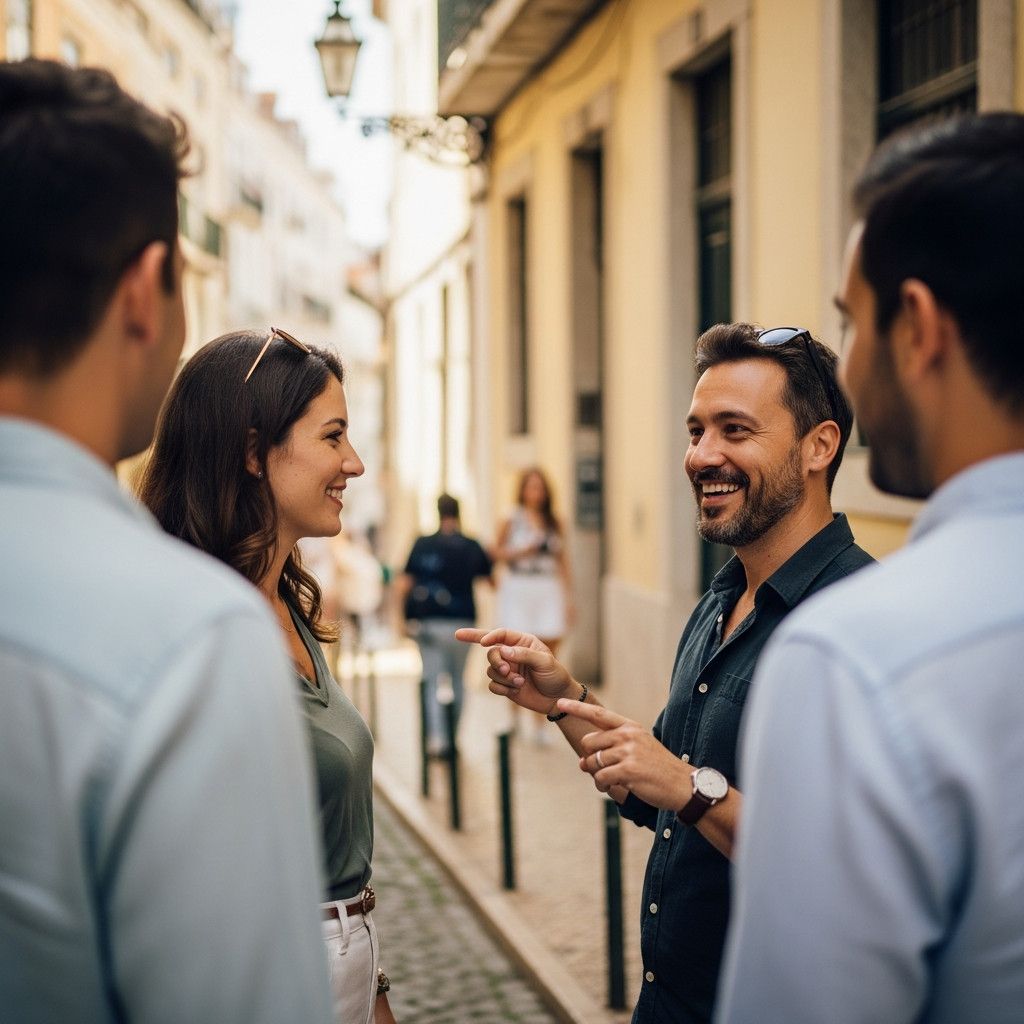
Do not practise poses. Do not look up "couple photo ideas". Bring, if anything, a route you like and a story or two – where you met, the argument about the tiles – and expect to spend two hours walking around Lisbon with someone asking questions. If either of you is worried that you are not demonstrative in public, say so; the prompts are chosen to fit the couple, and the quiet version of connection photographs as well as the loud one. What to wear is the other real question, and how to coordinate outfits as a couple answers it.
The couples session is built this way from the first message. If you are choosing between it and an engagement session, the difference is explained here – they are the same afternoon with a different brief, and neither of them involves being asked to act.