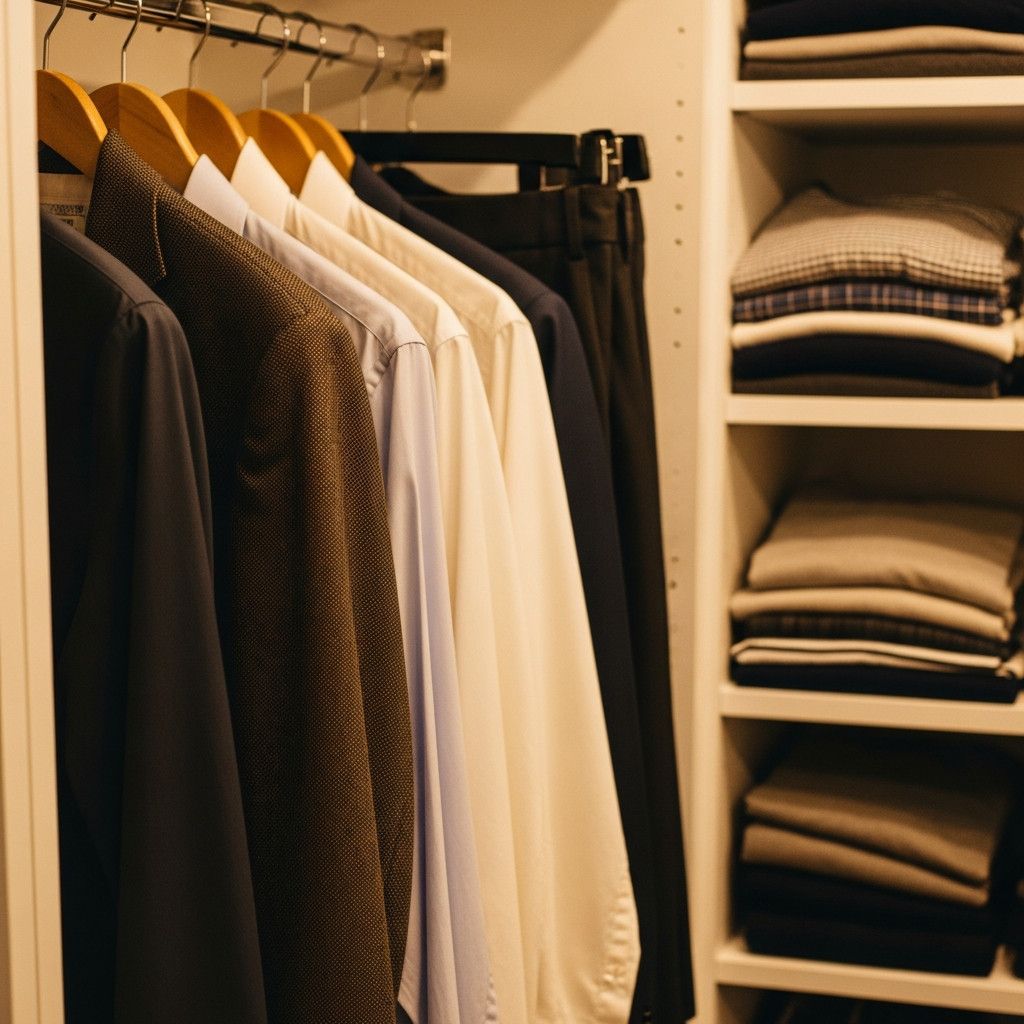
The right clothing for a men's portrait session consists of well-fitted layers in neutral tones that match how you look on your best everyday days, rather than an uncomfortably stiff suit or an oversized casual piece. When you look at your finished portraits a year from now, the focus should land on your eyes, your jawline, and your posture, not on a distracting graphic print or fabric that pulls awkwardly across your shoulders. Selecting what to pack comes down to understanding how natural light interacts with textures, how cut defines your shape, and how practical comfort translates directly into confidence in front of the lens.
Fit and fabric structure define how confident you look on camera
The camera sees structure before it registers details. If a garment is slightly too tight, it creases around the buttons and bunches up at the armpits as soon as you turn your torso. If it is too loose, natural side lighting fills the excess fabric with shadows, making you appear broader and slouchier than you actually are. A well-tailored silhouette maintains clean lines regardless of whether you are walking down a street in Príncipe Real or sitting on a bench with an espresso.
Fabric weight is just as critical as cut. Flimsy, ultra-thin t-shirts cling to the chest and rarely hold a sharp line at the collar, while a heavyweight cotton t-shirt (around 220 to 280 GSM) sits flat, holds its neckline, and separates cleanly from your neck. The same principle applies to shirts and trousers. Dense linens, structured cotton oxfords, brushed twill, and lightweight wool hold their shape throughout an hour of movement, giving you a sharp edge without making you feel stiff or overdressed.
[IMAGE_PLACEHOLDER: "Medium shot of a man in his early 30s standing outdoors against a warm textured limestone wall, wearing a structured navy overshirt over a crisp off-white heavyweight crew-neck t-shirt, relaxed shoulders, natural soft daylight."]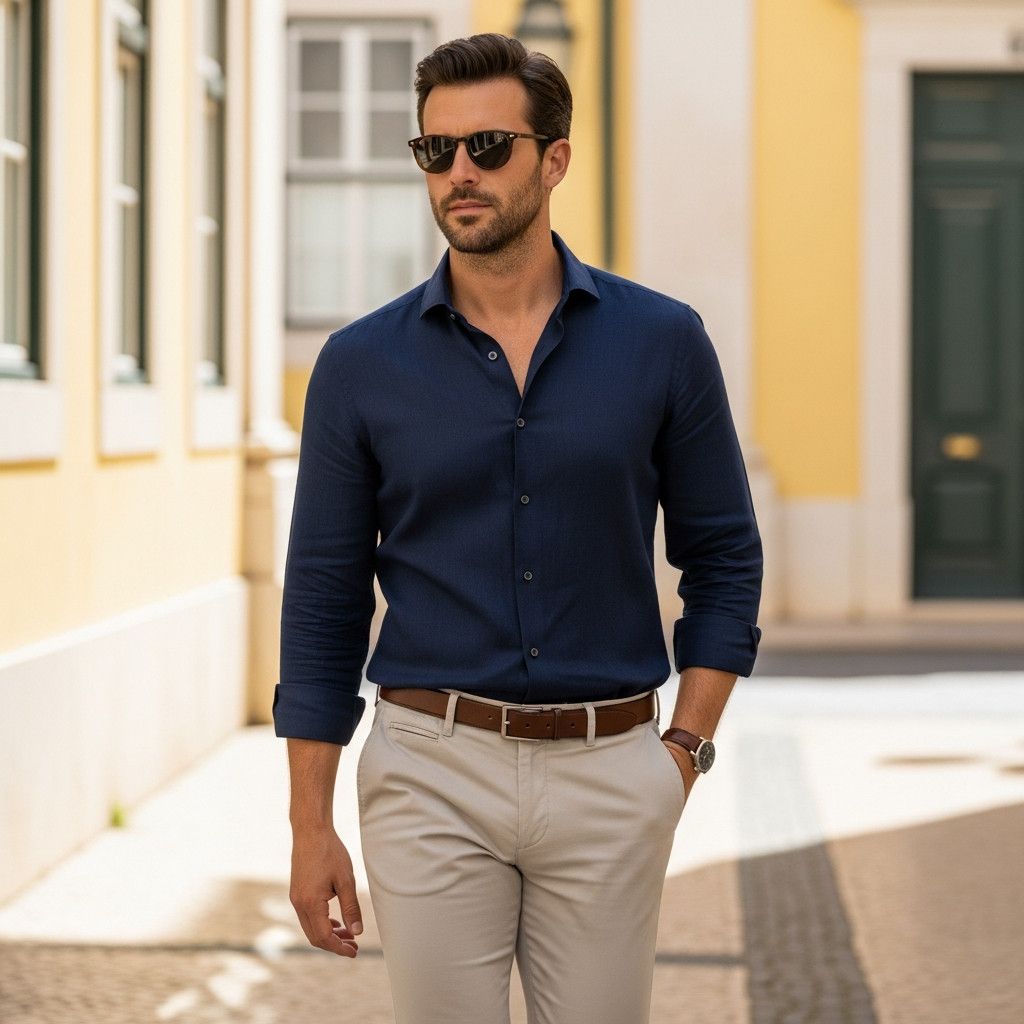
Muted palettes keep the attention strictly on your expression
Your clothes should frame your face, not compete with it for visual dominance. Highly saturated colors, neon hues, and high-contrast patterns draw the viewer's eye straight down to your torso, pulling focus away from your expression. When preparing for a dedicated session of portraits for men, I always suggest building around navy, charcoal, olive green, warm stone, off-white, and earthy brown. These shades work harmoniously with human skin tones rather than reflecting unnatural color casts back under the chin.
Thinking about your environment also prevents you from blending into the background or clashing with it. If we are walking through the historic alleys of Lisbon, the surrounding architecture already carries rich yellow limestone, aged terracotta roof tiles, and weathered plaster. Neutral tones anchor your presence in that space without fighting the environment. Solid fabrics almost always outperform micro-patterns, as tiny checks and tight houndstooth can cause moiré distortion in digital cameras, creating strange shimmering lines across the screen.
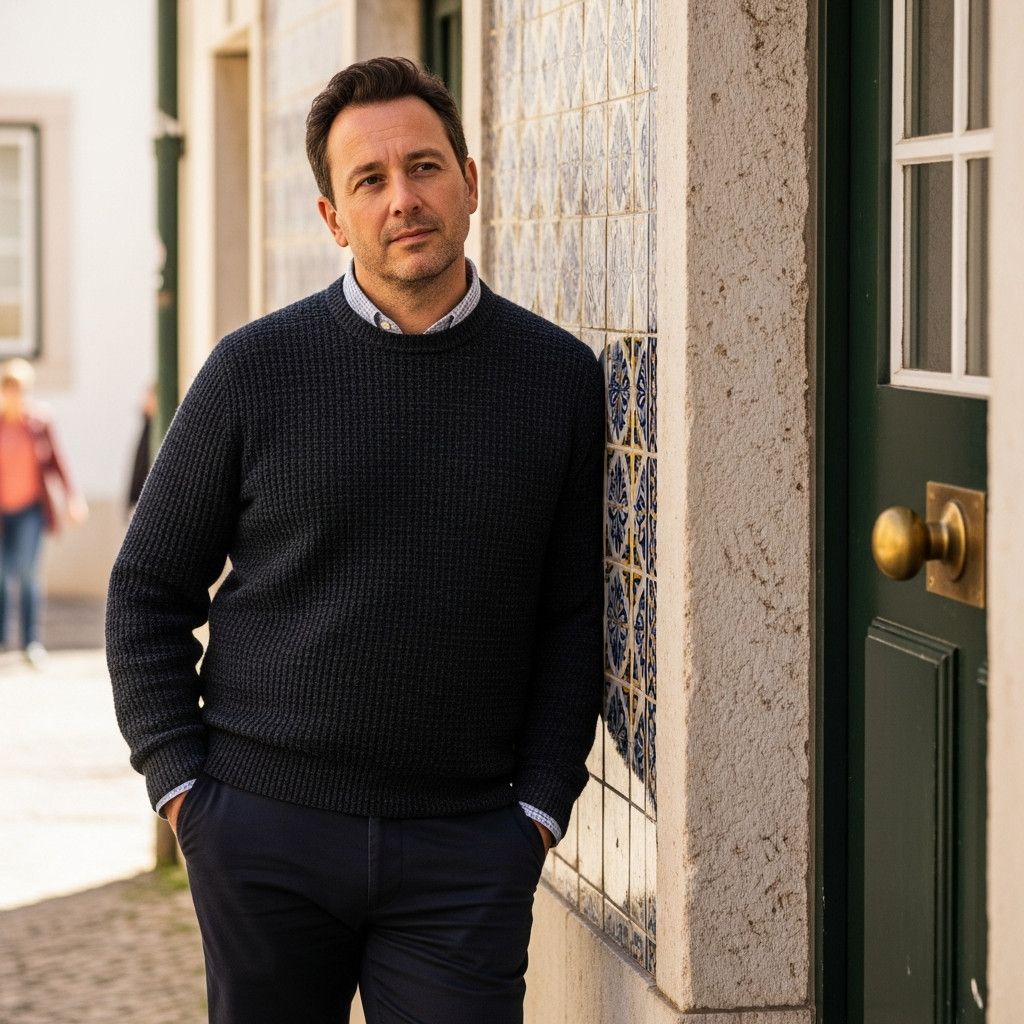
Layering provides depth and instantly simplifies posing
Layering is the most effective visual tool you have for an outdoor portrait session. A single t-shirt against jeans often feels flat and leaves you wondering what to do with your hands, whereas adding an open overshirt, a chore jacket, a lightweight bomber, or an unlined blazer introduces vertical lines that visually elongate the torso. It also adds tactile depth, contrasting smooth cotton against wool, suede, or denim.
Beyond the visual depth, layers give your body something intuitive to work with while we shoot. Simply sliding one hand into the pocket of an open jacket, adjusting a cuff, or catching the lapel creates relaxed, natural hand positions without needing rigid direction. If the temperature shifts or we want to alter the mood between setups, removing a top layer instantly delivers a second look in thirty seconds without having to hunt for a changing room.
[IMAGE_PLACEHOLDER: "Full-length outdoor street photo of a man walking casually past minimal urban architecture, wearing dark tapered trousers, clean white leather sneakers, and an olive green field jacket over a charcoal knit sweater."]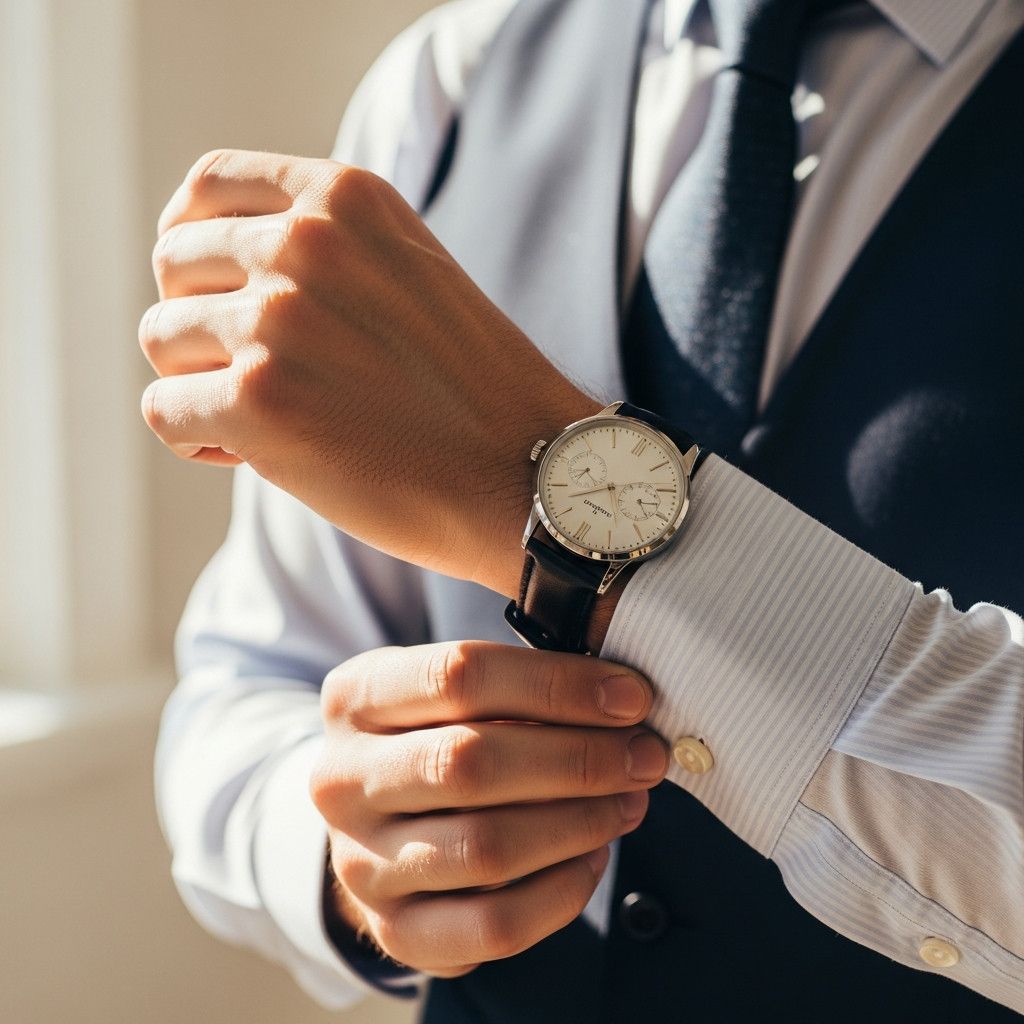
Footwear anchors your posture and determines your mobility
Your shoes set the baseline for your posture and influence the entire pace of our shoot. If you are wearing brand-new, stiff dress shoes that pinch your heels, that physical tension translates directly into your face and shoulders within fifteen minutes. Furthermore, navigating the steep calçada portuguesa pavements across Lisbon requires footwear with adequate grip and stability, especially when moving between different pockets of light in the late afternoon.
Clean, minimalist leather sneakers in white, black, or dark brown work seamlessly with tailored trousers and dark denim alike. If your aesthetic leans slightly more formal, a broken-in pair of suede Chelsea boots, chukkas, or leather loafers will ground your outfit with quiet authority. Make sure shoes are clean and conditioned before the shoot, because camera lenses capture scuffed toes and dirty soles much more prominently than you might notice in a bathroom mirror.
Bringing two deliberate options maximizes variety without unnecessary complexity
Bringing too many outfits leads to indecision, wrinkled clothes, and wasted shooting time spent changing. The most efficient approach during my work in lifestyle photography in Lisbon is to prepare two distinct, cohesive setups: one elevated casual outfit and one slightly sharper alternative. This combination gives you a broad range of images suited for professional profiles, editorial features, and personal use without rushing.
The elevated casual foundation
This setup works best for capturing an approachable, everyday presence. It typically consists of well-fitting dark denim or relaxed tailored trousers, a solid crew-neck or clean merino knit, and a durable overshirt or utility jacket. It feels natural for walking shots, leaning against stone balustrades, or sitting outside a local café. You feel completely unrestricted, which allows you to forget about the camera quickly.
The structured smart-casual transition
For this look, swap the casual jacket for an unconstructed blazer, an overcoat, or a crisp button-down shirt paired with tailored chinos. You do not necessarily need a tie or a three-piece suit unless your specific line of work demands it daily. A soft-shouldered blazer worn open over a clean t-shirt or an open-collar linen shirt projects authority without coming across as corporate or detached.
Preparing small details ahead of time eliminates day-of friction
Wrinkles that look minor at home become stark when raked by low-angle sun. Hang your selected shirts and jackets on sturdy hangers the evening before, and steam or iron them thoroughly so they are ready to wear immediately. If you plan to wear a watch, choose a classic timepiece over a bright smartwatch that lights up with notifications and interrupts the flow of our conversation. Keep your pockets entirely empty during the shoot; phones, bulky keyrings, and wallets ruin the clean lines of tailored trousers and pull jackets off-center.
When you eliminate physical distractions and wear clothes that fit your build naturally, the process becomes effortless. You do not need to perform or adopt an unfamiliar persona for the camera. We take a measured, thoughtful walk through quiet streets, work with the natural light as it shifts, and let your authentic personality carry the frame.