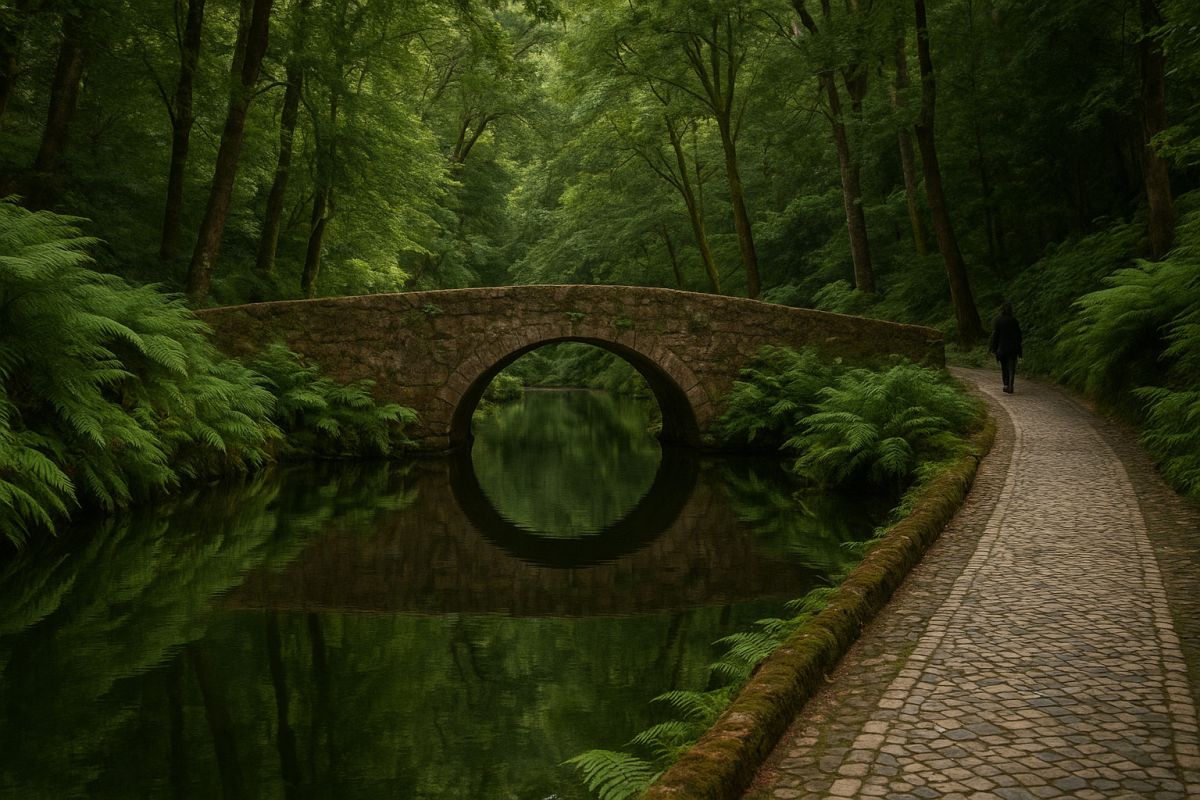
The Valley of the Lakes inside Pena Park is Sintra's most reliable sanctuary from the suffocating crowds that pack the palace terraces above. Located at the lower southwestern border of the royal estate, this sequence of five quiet reservoirs sits framed by giant tree ferns, moss-covered granite boulders, and towering North American redwoods. It offers one of the few places in Sintra where you can step into deep, undisturbed greenery without having other visitors constantly walk through your frame.
Most visitors bypass the lower park entirely
Almost every traveler arriving at Pena Park shares the exact same objective: getting to the colorful palace at the top of the hill as fast as possible. Shuttle buses drop crowds off at the main entrance, and ninety percent of those people follow the paved road straight up the incline. The Valley of the Lakes, known locally as Vale dos Lagos, sits in the opposite direction, descending quietly along the valley floor. Because reaching it requires walking away from the primary monument, large tour groups rarely make the trip.
This geographic filter creates a completely different atmosphere from the rest of Sintra. While the terraces around the palace are filled with selfie sticks and noise, the path around these lakes is quiet enough that you can hear water trickling between stone basins and wind moving through the tree crowns. For anyone who has found Pena Park too busy, this lower perimeter provides immediate relief. We can work along the edge of the water for thirty or forty minutes without needing to dodge passersby or wait for a crowd to clear.
The absence of people changes how you stand and move. When people realize they are not being watched by an audience of strangers, their shoulders drop and their facial expressions loosen up naturally. That shift alone transforms a portrait session from an awkward performance into a calm walk through ancient woodland.
Sintra's microclimate creates natural diffusion across the water
Lisbon's midday sun between May and October is notoriously hard, casting sharp shadows under the eyes and washing out colors in open plazas. Sintra operates under an entirely different meteorological system. The Serra de Sintra traps moisture rising from the Atlantic Ocean, creating a humid microclimate that frequently blankets the hills in a thick layer of mountain mist. Down in the valley, this moisture combines with a dense forest canopy planted in the nineteenth century, forming a natural overhead diffuser.
Harsh overhead light simply does not reach the ground here. Instead, the sunlight is filtered through layers of broad leaves and evergreen branches, turning soft and uniform. The dark water of the lakes acts as a subtle, natural reflector, bouncing soft ambient tones back upward onto faces. This environment makes portraits here look rich and dimensional even during hours of the day when open-air photography in Lisbon would be practically impossible.
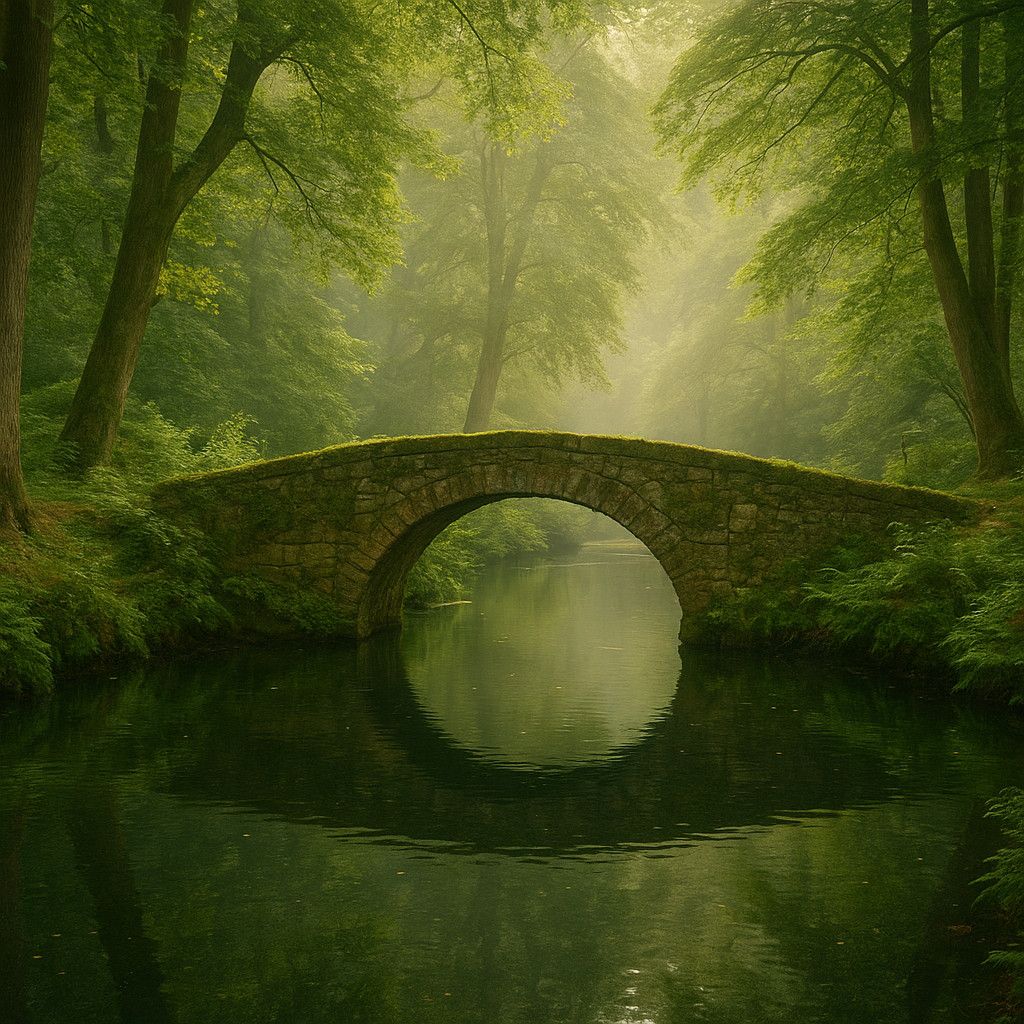
When the mist rolls down from the peaks, the background falls into soft gradients of slate gray and deep green. You do not need artificial lighting gear or reflective panels to balance the scene. The natural atmosphere does the work, allowing us to move freely along the water's edge without carrying cumbersome equipment that draws unwanted attention.
Structuring movement along uneven woodland trails
Shooting in the Valley of the Lakes requires an understanding of the terrain. The paths around the reservoirs are made of packed earth, winding stone stairs, and wet granite cobbles. King Ferdinand II designed this park as an immersive romantic landscape, which means walkways curve unpredictably around tree trunks, rock faces, and small stone bridges. It is not an environment for high heels or restrictive clothing, and trying to force rigid, formal postures here looks completely out of place.
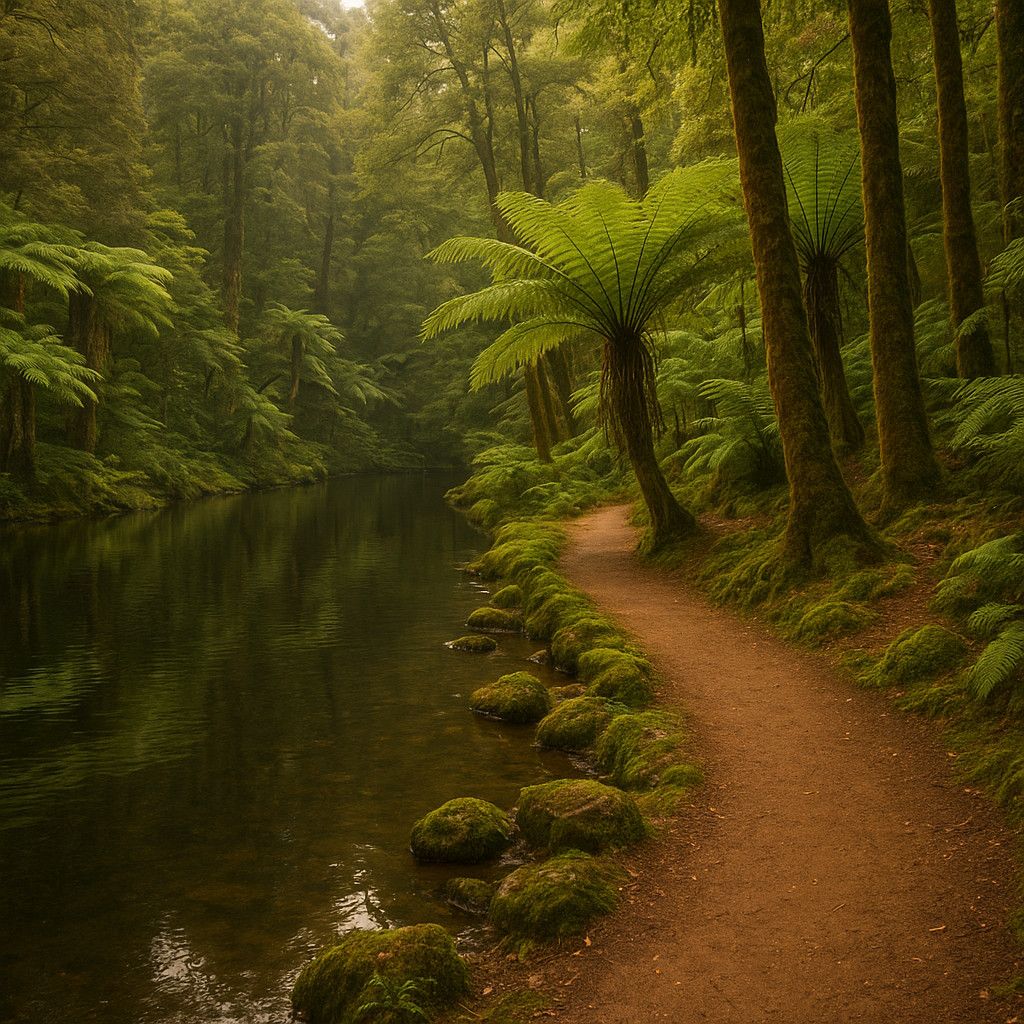
When I work with clients, especially during sessions for women who want natural portraits that feel grounded rather than staged, we treat the shoot as a deliberate downhill route. Walking downhill preserves energy, keeps breath steady, and prevents the tired, flushed appearance that happens when climbing Sintra's steep hills. We move at a measured pace, stopping near moss-covered stone edges or beneath the massive fronds of Australian tree ferns where the background depth is greatest.
I give clear, simple direction on where to step and where to place your weight, but I keep the movements functional. Leaning against a damp wooden handrail or pausing on a flat granite stone to look out across the lake creates an authentic posture that feels unforced. My role is to observe how you naturally balance and carry yourself in that space, stepping in with small adjustments only when the light catches an angle awkwardly.
The psychological value of privacy for inexperienced clients
Most of the people I photograph have never stood in front of a professional camera before. The biggest hurdle is almost never how someone looks; it is the self-consciousness of feeling exposed. In central Lisbon, shooting on a scenic viewpoint like Miradouro de Santa Luzia means having twenty people standing behind the photographer watching your every movement. That pressure makes even confident adults freeze up and default to tense, artificial smiles.
The Valley of the Lakes removes that pressure entirely. When I photograph couples along these paths, the isolation allows them to focus entirely on each other rather than the lens. They can speak at a normal volume, laugh without feeling judged, and take a moment to breathe. The sound of running water from the lake cascades drowns out distant road noise, creating a small sensory bubble where it feels like nobody else exists on the mountain.
That privacy is essential for honest portraits. When you look back at your photos years down the line, you should not remember feeling stressed about onlookers or being rushed to clear the path for a tour group. You should remember the damp smell of pine needles, the coolness of the air, and the quiet rhythm of the morning.
Logistics and timing to keep the visit effortless
Pena Park operates on a ticketing system where you can purchase entry to the park grounds without paying extra for the interior of Pena Palace. For photography, the park-only ticket is the smarter choice. The interior of the palace is an overcrowded, one-way queue through furnished rooms where tripods and deliberate portraits are entirely prohibited, whereas the surrounding 200 hectares of forest give you total creative freedom.
Timing your arrival around the shuttle schedules makes a noticeable difference. The morning rush hits the upper gates around nine-thirty as tour buses arrive from Lisbon. If we schedule our session for the early morning, we can enter through the secondary gates closer to the bottom of the park or walk straight down into the valley while the crowds are bottlenecked at the ticket scanners above. By the time the casual tourists finish their palace visits and wander down toward the lower gardens, our session is already finished.
Another strong window is mid-afternoon, roughly two hours before the park gates close. The day-trippers head back toward the Sintra train station to catch their connections, the light drops lower through the tree canopies, and the lake surfaces become completely mirror-like. Details on how I organize sessions around these practical light windows across the region are outlined on my homepage, where timing is always prioritized over checking off tourist landmarks.
Choosing quiet landscapes over crowded monuments
A memorable portrait does not depend on having a famous castle tower in the background. In fact, prominent tourist landmarks often distract from the person in the frame, turning what could be an intimate portrait into an impersonal holiday snapshot. The textured foliage, historic stone architecture, and deep water of Pena Park's hidden spots give images a timeless, organic quality that does not age or feel dated.
When an environment feels peaceful, the entire process of being photographed slows down to match it. You don't have to worry about looking like a model or knowing what to do with your hands. In a quiet landscape like the Valley of the Lakes, simply being present, walking slowly along the water, and letting the forest do the heavy lifting visually produces the most honest and enduring results.