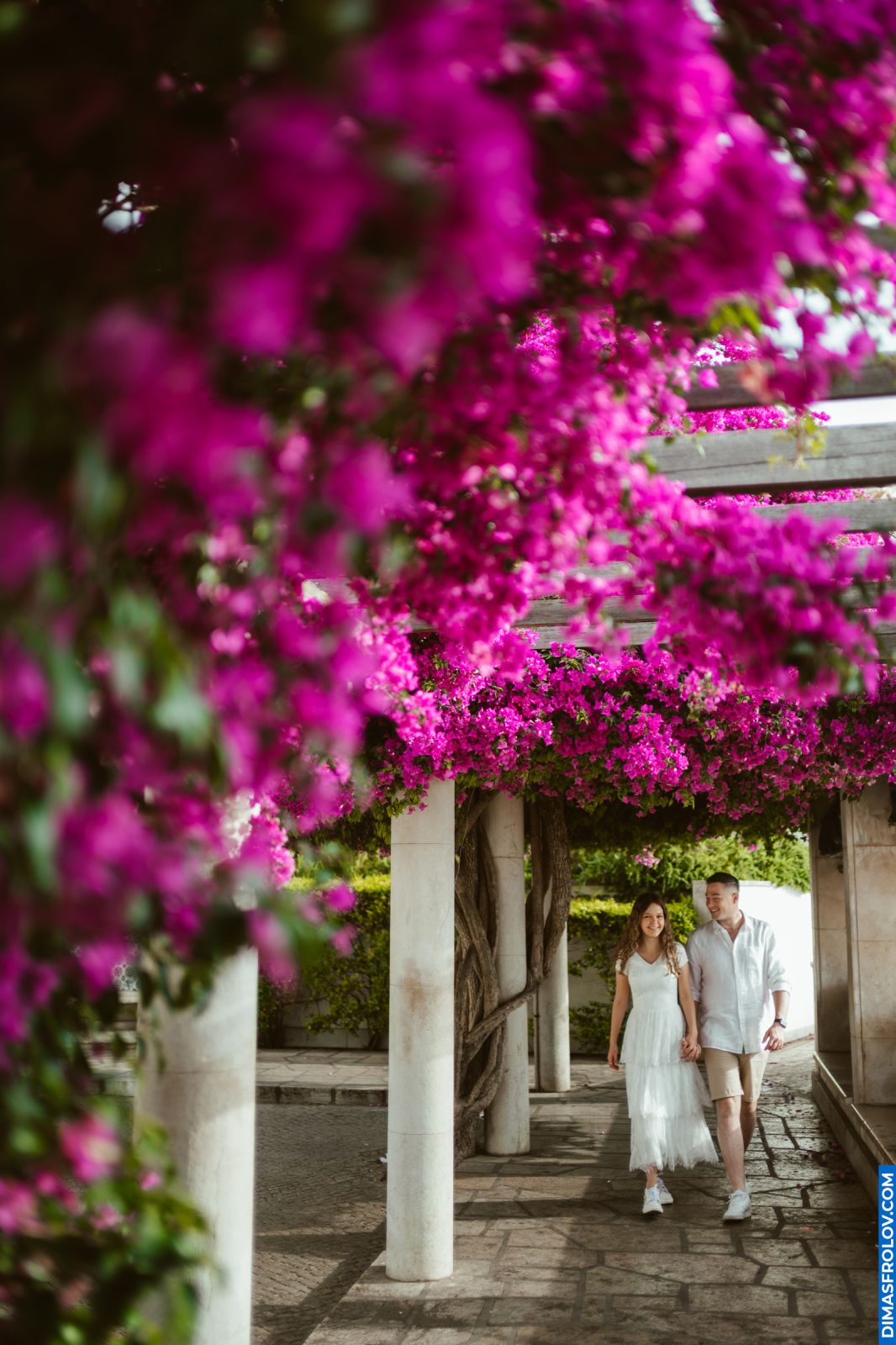
Standing side by side and smiling directly at the lens produces an identification record, whereas interacting with each other creates a photograph that carries genuine emotional weight. Most couples arrive at a shoot expecting to perform, believing their job is to freeze on cue, turn their torsos at forty-five degrees, and hold an expression until the shutter clicks. In practice, this static posture stiffens the shoulders, locks the neck, and forces a smile that rarely survives more than a few frames. True visual chemistry never comes from facing me; it happens in the physical dialogue between the two of you, where touch, weight distribution, and shared attention do the work naturally.
Static posing locks the body while mutual attention dissolves tension
When you stand shoulder-to-shoulder staring straight into a camera lens, your brain automatically switches into self-evaluation mode. You wonder what your chin looks like, whether your smile looks forced, and what you should do with your hands. That self-consciousness translates immediately into physical rigidity. The shoulders creep upward, the jaw tightens, and the entire body becomes defensive. When two people stand together in this state, they often appear as two separate individuals occupying the same physical space rather than a bonded pair.
The dynamic shifts entirely the second you turn toward each other. When your visual focus moves from a glass element pointed at your face to your partner's eyes, the performance anxiety drops away. You are no longer performing for an observer; you are sharing a private moment in an open environment. During a couple photoshoot, this shift from external presentation to internal connection allows breathing to slow down and facial muscles to soften. Instead of managing how you look to the world, you simply manage how you relate to the person beside you.
[IMAGE_PLACEHOLDER: "A couple standing closely on an old limestone staircase in soft morning light, the woman lightly resting her forehead against the man's temple while he smiles with downcast eyes, their hands interlaced naturally without posing for the camera."]
Intentional touch communicates intimacy far better than simple proximity
Proximity is merely geography, but touch is communication. Two people can stand three inches apart and look completely disconnected if their physical contact lacks intention. When people feel uncertain in front of a camera, they tend to make tentative contact, such as stiffly placing a flat hand on a waist or resting a single arm across a shoulder. This hesitant touch looks unnatural in photographs because it reflects hesitation in the body.
Authentic interaction relies on weight and grip. A hand resting on a neck with genuine support conveys security. Fingers lightly grazing an arm during a shared sentence convey gentleness. When I direct couples through physical interactions, I watch how hands behave. Relaxed hands that curve naturally around an elbow or slip into a partner's coat pocket tell an observer that these two people know each other intimately. You do not need to invent dramatic poses; you only need to touch each other with the same unthinking certainty you use at home on the sofa.
Men often struggle more with hand placement than women do, instinctively keeping their fists clenched or resting awkwardly at their sides. Guiding a man to simply pocket one hand or loop a thumb casually into a belt loop immediately drops the tension in his upper frame, a principle I use frequently when photographing men in portraits. Once one partner feels grounded, the other can lean in without throwing the entire balance off.

Movement creates honest micro-expressions that cannot be rehearsed
Static poses rely entirely on holding still, which is the most unnatural thing a human body can do under observation. Movement breaks that paralysis. When a couple walks together along the uneven limestone pavers of Alfama at eight in the morning, the body must adjust to the terrain. That physical adjustment distracts the conscious mind, pulling focus away from the camera and directing it toward walking, balancing, and pacing each other.
As you walk, your bodies naturally sway, bump together, and recalibrate. These micro-movements generate fleeting expressions that cannot be staged on command. A sudden stumble on a cobblestone produces a genuine burst of laughter, followed immediately by an instinctively protective reach of an arm. Those micro-seconds are precisely what I wait for. The photograph taken mid-stride, when you are simply keeping pace together on an empty morning street, will always feel infinitely more alive than five minutes spent trying to arrange your feet in a perfect diagonal line.
[IMAGE_PLACEHOLDER: "A candid full-length capture of a couple walking away down a peaceful residential street with pale yellow plaster walls, the man glancing back over his shoulder at his partner while their arms brush against each other in mid-step."]
Direction works best when it offers boundaries instead of rigid instructions
The problem with traditional posing guides is that they treat human beings like mannequins. Telling someone to turn their wrist precisely three inches to the left or tilt their chin down by two degrees produces nothing but mechanical compliance. My approach at my photography practice in Lisbon is to establish a clear boundary, give you a simple physical task, and then step back to let your natural habits fill the space.
Instead of telling you to stand side by side and hold hands, I might ask you to walk three paces ahead, stop near a shadowed doorway, and tell your partner what you actually thought of the breakfast you had an hour ago. The exact topic does not matter; what matters is that your voice activates your face. Your partner responds to the tone of your voice, their shoulders drop, and the conversation creates a natural rhythm between your bodies. My camera documents that rhythm. The resulting image feels spontaneous because the emotional reaction was real, even if the general location was chosen by me.
The transitional moments between setups carry the deepest value
Some of the most honest photographs happen when couples believe the camera is down. After completing a walk down a sunlit street, as we pause to cross an intersection or let a local resident pass, the formal posture evaporates. The man reaches over to tuck an errant strand of hair behind the woman's ear. She rests her chin on his collarbone for three seconds simply to rest her feet. These instinctive gestures happen entirely without prompt.
When you stand together posing for a picture, you are thinking about how you look to others. When you interact with each other, you are simply experiencing the company of the person you chose. A decade from now, a picture of you both staring obediently into a lens will tell you what clothes you wore that morning. A picture of your partner laughing quietly into your shoulder while you navigate a steep Lisbon hillside will bring back exactly how that morning felt.