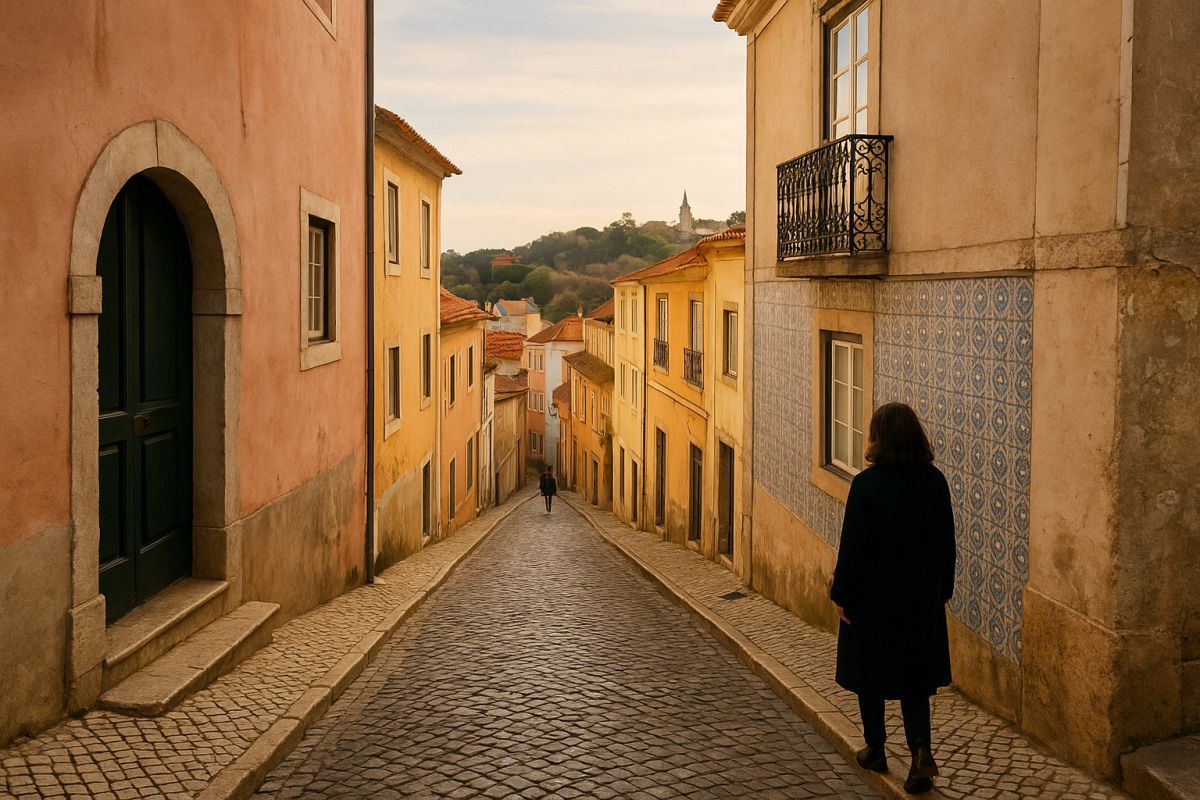
Avoiding crowds during a surprise proposal in Sintra requires abandoning the famous Pena Palace terrace, buying the earliest 09:00 AM garden entrance slot, and choosing sprawling, botanical spaces over rigid architectural monuments. Most couples imagine an empty royal terrace overlooking the mist, but the reality between 10:00 AM and 5:00 PM involves tour groups, loud megaphone directions from guides, and security guards rushing people along narrow paths. To create a private, unhurried moment, you need a setting where sound carries softly and no stranger is standing two feet behind you waiting for you to move.
Pena Palace terraces ruin intimacy before you drop to one knee
The iconic yellow and red battlements of Pena Palace look breathtaking on postcards, yet they are practically unworkable for a private proposal. By mid-morning, the entrance gates bottle up hundreds of visitors arriving from Lisbon on early trains, and everyone funnels into the same tight parapets. Attempting to drop to one knee here means kneeling on worn stone in front of dozens of people holding smartphones directly in your direction. The noise level is high, and the wind along the upper ridge regularly drowns out spoken words.
If you have your heart set on the grounds of Pena, the vast forested park below the palace is completely different from the main building. The Valley of the Lakes and the winding paths around the Chalet of the Countess of Edla stretch across hundreds of hectares where casual tourists rarely wander. The ancient trees block out the highway sounds below, and the walking trails allow two people to walk side by side without brushing shoulders with strangers. Moving just fifteen minutes downhill from the palace summit gives you the space to breathe and focus on what you actually came to say.
[IMAGE_PLACEHOLDER: "A man and woman standing together along a quiet, misty gravel path surrounded by towering ferns and moss-covered trees in an ancient woodland park, soft natural morning light filtering through the fog"]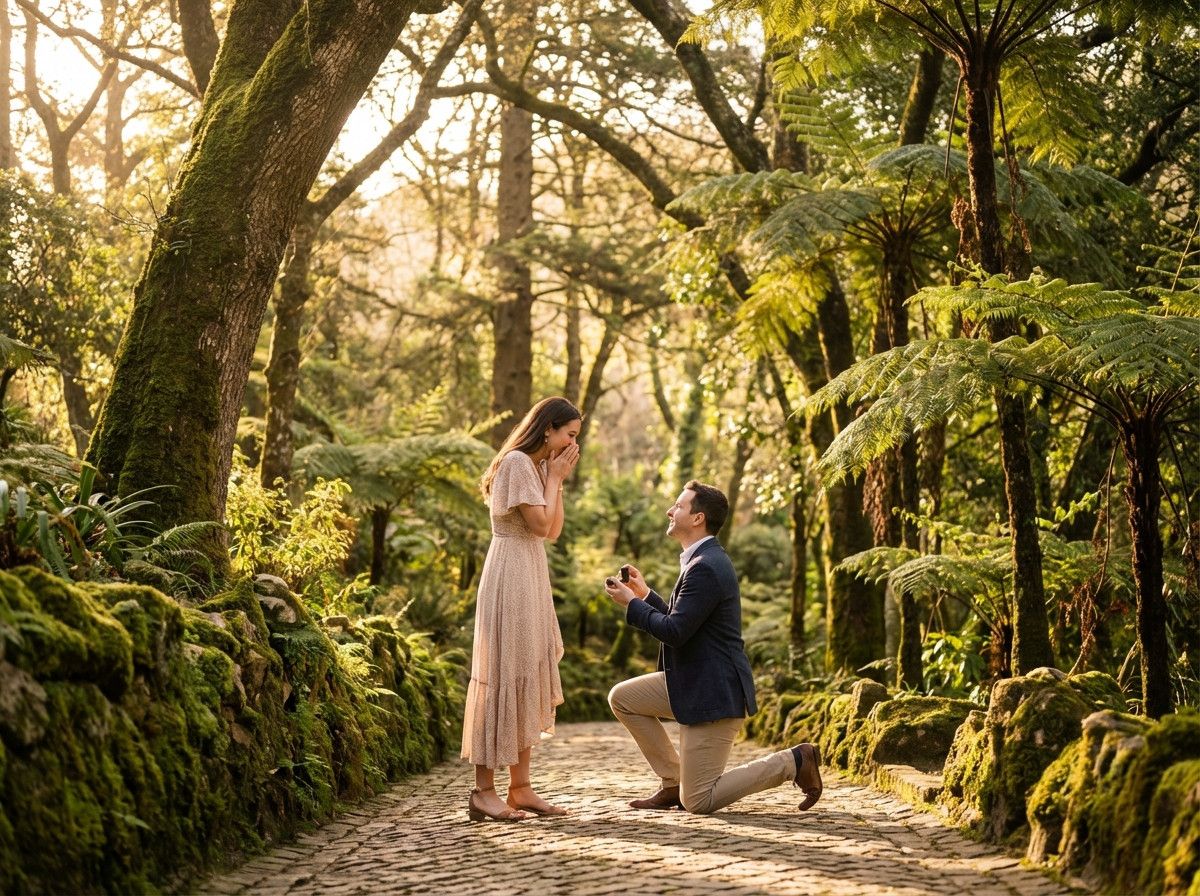
Parque de Monserrate offers sheltered paths and quiet mornings
Monserrate is by far my preferred recommendation when couples ask for lush architecture combined with natural tranquility. Unlike the crowded summit palaces, Monserrate sits slightly lower along the mountain road, keeping large tour buses away due to tighter turns and limited parking. The palace itself is an intricate blend of Gothic and Moorish design, but the true prize is the surrounding botanical collection.
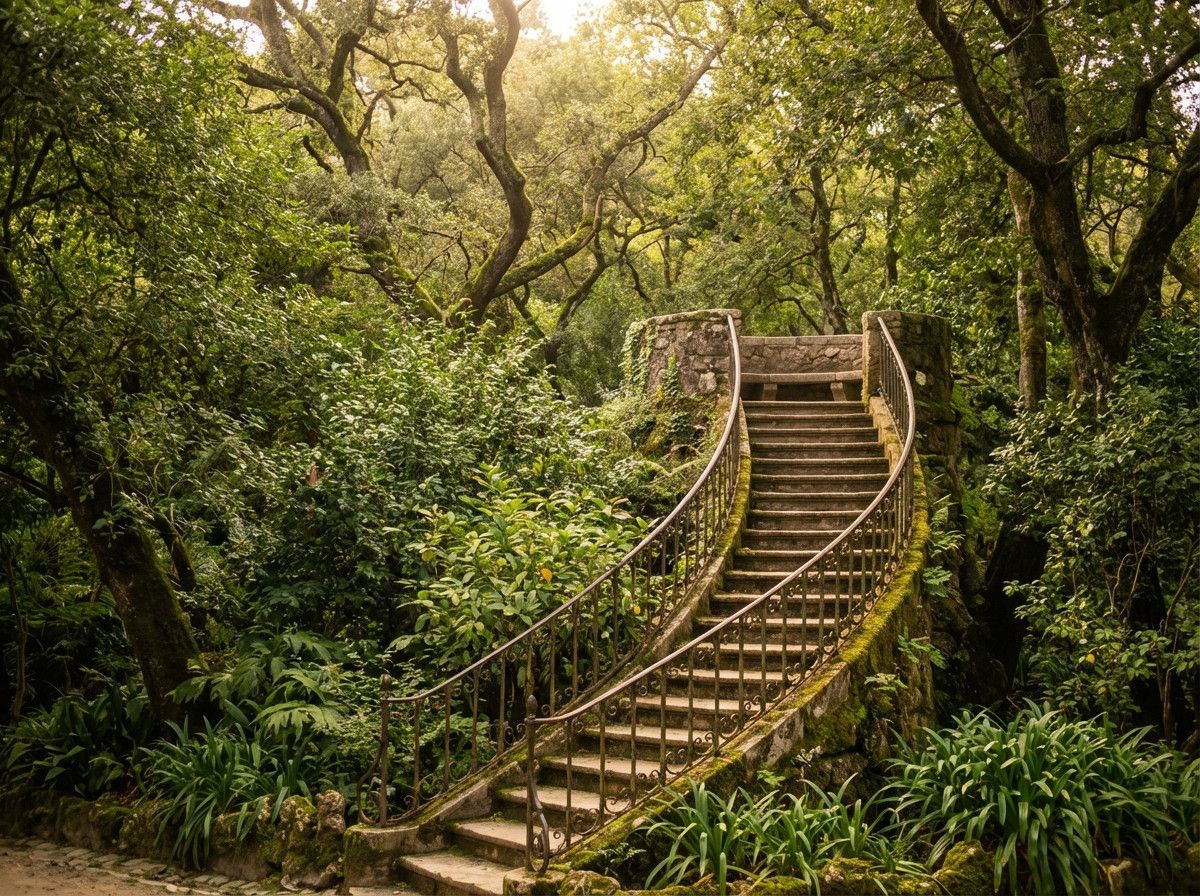
When the gates open at 09:00 AM, the expansive front lawn is almost always empty, damp with morning dew and quiet except for local birds. Walking deeper into the park leads you toward the mock Gothic chapel ruins, where native Portuguese trees and climbing ficus roots have reclaimed the arches over decades. The light falling through the ruined roof structure creates a natural, secluded frame for a private moment. Booking a slot here early in the day gives you roughly forty minutes of pure stillness before independent travelers arrive.
Working in these gardens allows us to transition directly from the proposal into an effortless couples session without needing to change locations. Because the pathways wind through Mexican agave gardens, Australian tree ferns, and tranquil ponds, we can walk naturally while I photograph genuine reactions rather than forcing awkward pauses on crowded staircases.
Santuário da Peninha trades ticket gates for dramatic ocean winds
If you prefer raw nature over manicured historical estates, the Peninha Sanctuary sits on a high rocky crest on the western edge of the Sintra hills. There are no ticket turnstiles, no admission desks, and no commercial tour operators lining up mini-vans. Access requires a cautious drive up a narrow, partially unpaved forest road, which naturally filters out the casual tourist crowd looking for a quick five-minute selfie.
The sanctuary consists of a small, weather-beaten baroque chapel perched atop towering granite boulders, looking out toward Cabo da Roca and the Atlantic Ocean. The atmosphere here changes by the minute: thick ocean mist can blanket the trees one moment, and bright coastal sun will clear the horizon the next. It feels wild, slightly untamed, and deeply personal. On weekday mornings, you will frequently find that you have the entire granite ridge completely to yourselves.
The wind along this coastal crest can be fierce, so you must prepare your clothing and expectations accordingly. Hair will move, coats will rustle, and the elements become part of the visual story. For couples who value rugged coastlines and expansive horizons over royal corridors, Peninha delivers an emotional weight that manicured tourist sites simply cannot match.
[IMAGE_PLACEHOLDER: "A couple standing on a high, rocky granite outcrop overlooking an expansive Atlantic coastline under soft, dramatic cloud cover, windswept hair and candid joyful laughter"]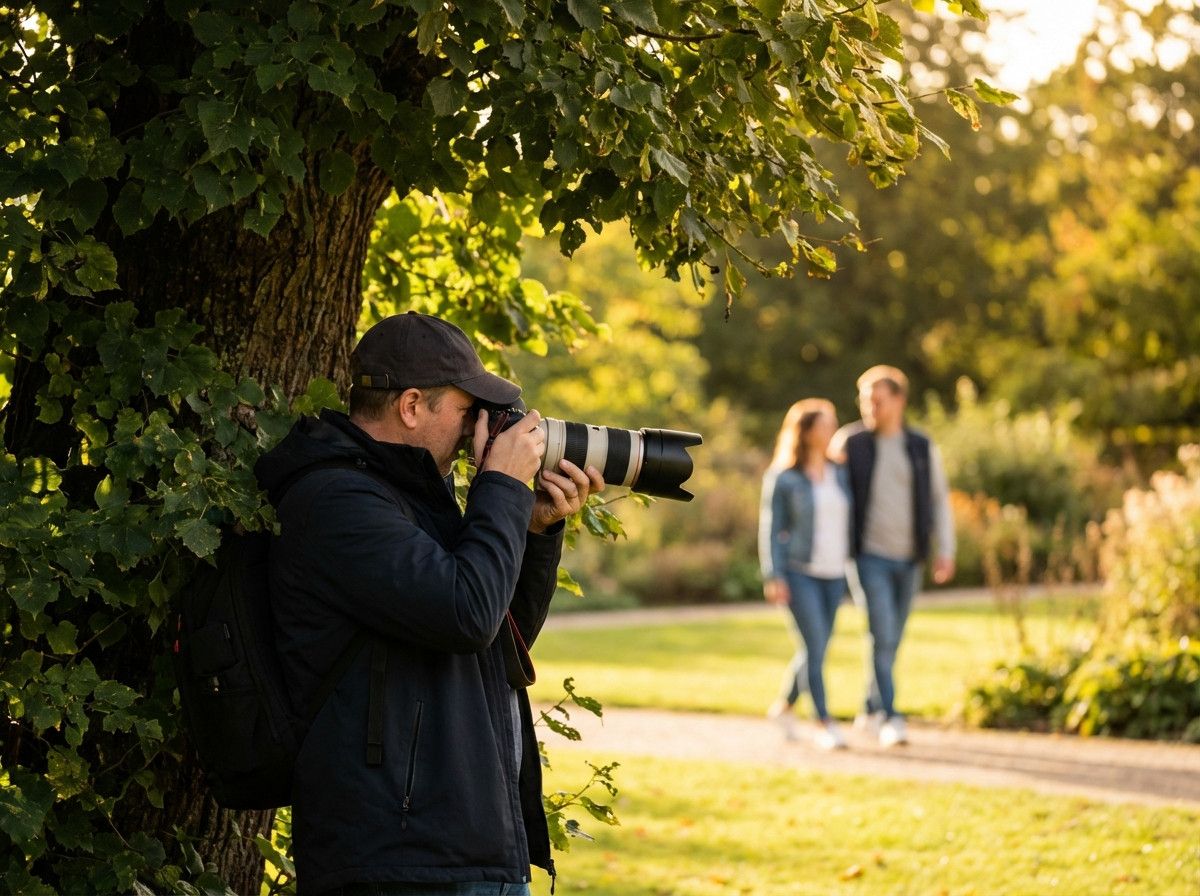
The logistical reality of Sintra transport requires a precise timeline
The single biggest mistake people make when planning an engagement in Sintra is underestimating local transit bottlenecks. Sintra's mountain roads were laid out centuries before modern vehicles existed, meaning a single stalled bus or delivery truck on the Estrada da Pena can cause forty minutes of total standstill. If you tell your partner you are heading to a casual morning walk at 10:00 AM, and you get stuck in bumper-to-bumper traffic until noon, anxiety will take over and spoil the mood.
The most dependable approach is leaving central Lisbon by taxi or private driver before 08:15 AM. Taking an Uber or Bolt directly to the outer estates like Monserrate avoids the confusion of the central Sintra train station, where aggressive tuk-tuk operators compete loudly for passengers. Arriving fifteen minutes before the estate doors open gives you a calm buffer to adjust your jacket, check your pockets, and shake off travel fatigue.
Sensible footwear is equally non-negotiable. Sintra's cobblestones and garden paths are frequently damp from overnight sea fog, creating slick walking conditions on inclines. Having your partner wear comfortable walking shoes for the initial walk, with dress shoes carried discreetly in a small daypack to swap out right before the big moment, avoids complaints about sore feet and slippery stairs.
Setting up the camera position without alerting your partner
A surprise proposal only works when your partner feels zero pressure and suspects nothing out of the ordinary. When you work with me, I do not hide behind bushes like an amateur detective; that behavior draws attention from everyone nearby and feels unnatural. Instead, I arrive at the agreed location twenty minutes early, dressed as a standard visitor working with professional portrait photography equipment on landscape shots.
We establish a visual anchor point in advance using a shared location pin or a specific bench, stone fountain, or courtyard arch. When you arrive, you simply steer the walk toward that marker. I will already be in place, observing from a natural distance that keeps the frame clear. When you stop, look around, and begin the proposal, you have all the time you need to speak without looking over your shoulder to see where my lens is pointed.
Once the ring is on and the shock turns into smiles, I step over, introduce myself, and let the reality sink in. The initial adrenaline rush always leaves people laughing, sometimes tearful, and universally relieved that the secret is finally out. From that point forward, we take a leisurely stroll through the surrounding paths, capturing genuine interactions while the morning light is still soft and flattering.
[IMAGE_PLACEHOLDER: "A close-up shot of hands holding each other gently, showcasing a newly placed engagement ring with soft, out-of-focus forest greenery and warm morning daylight in the background"]Managing Sintra microclimates and shifting morning weather
Sintra possesses its own microclimate that often bears no resemblance to the weather in downtown Lisbon. You might leave a sunny, dry hotel room in Chiado only to climb into dense, rolling coastal fog once your driver enters the Sintra mountains. This damp air is not a ruined forecast; it is the exact atmospheric quality that makes Sintra famous, softening harsh sun glare and making mossy forests look rich and cinematic.
Planning for this environment means choosing outfits made from textured fabrics like wool, heavy cotton, or linen blends rather than light synthetic silks that cling when damp. Muted, neutral tones like deep greens, navy, warm beige, and charcoal blend harmoniously with Sintra's stone architecture and dense vegetation. Vibrant synthetic colors tend to clash violently with the historic masonry and distract from the human connection we want to focus on.
Having a flexible twenty-minute window allows us to work with passing clouds. If a heavy drift of mist rolls over the ridge, we duck under stone loggias or beneath centuries-old tree canopies until the clearing opens up. When you approach the morning with patience rather than an inflexible minute-by-minute itinerary, Sintra rewards you with moments that feel completely detached from the busy world below.