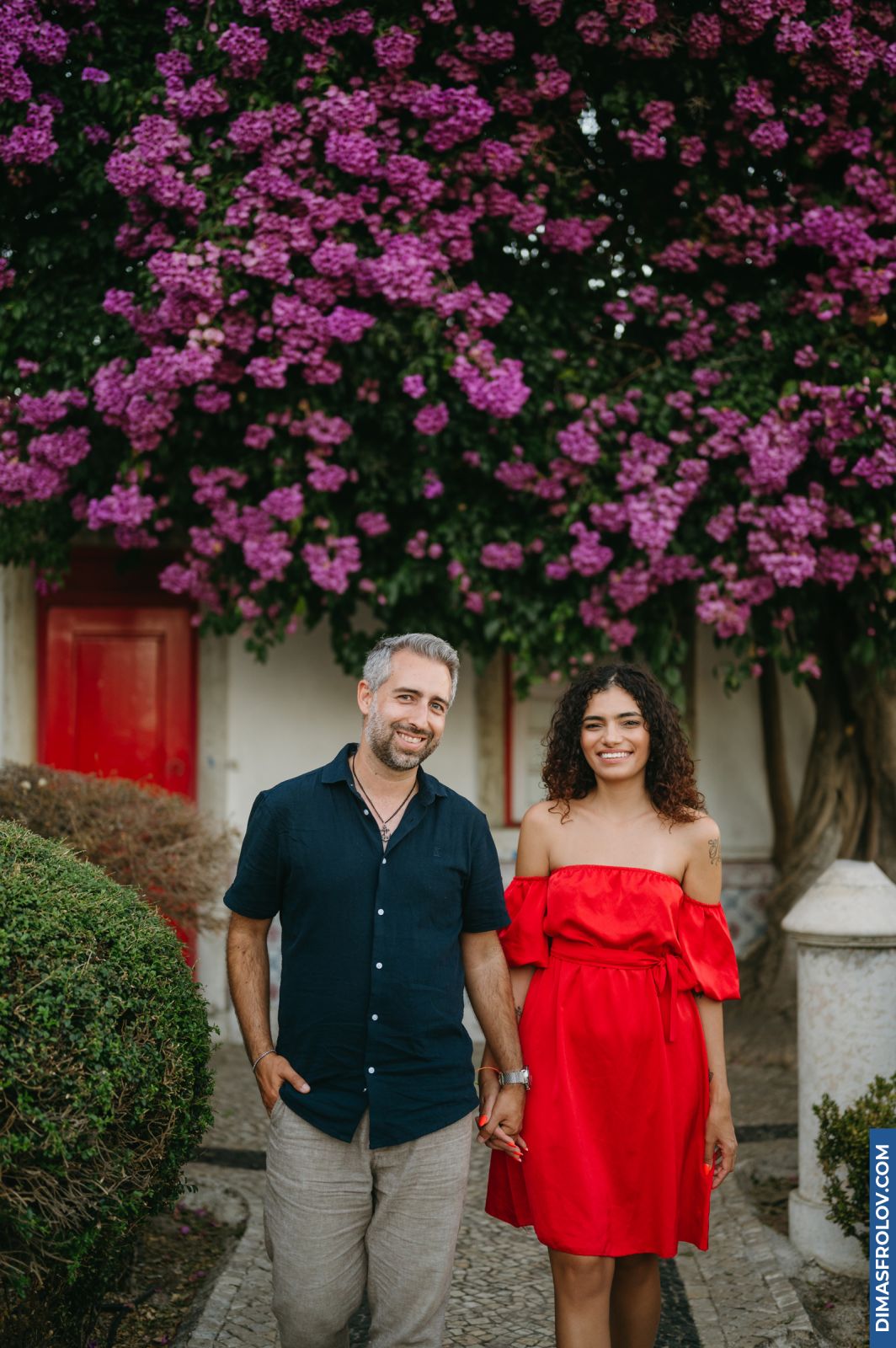
Solo photos look awkward for four physical reasons – the distance, the stance, the hands and the eyes – and a directed portrait changes all four. None of it is about being photogenic. The same man who looks stiff and slightly apologetic in a picture he took of himself looks like someone you would want to talk to in a picture taken twenty minutes into a session, and the difference is mechanical. Here is what goes wrong, one thing at a time, and what direction does about each.
Distance: the arm's-length problem
A selfie is taken from roughly seventy centimetres, slightly above, and the lens is wide. At that distance a wide lens pushes the nose forward and the ears back, narrows the shoulders and makes the head large for the body. It is the least flattering distance a human face can be photographed from, and it is the distance almost every solo photo is taken from. A portrait is made from two to four metres with a longer lens: the face flattens into its real proportions, the shoulders come back, and the picture stops looking like a document.

Stance: standing square to the camera
Left alone, people stand facing the lens straight on, weight even on both feet, arms at the sides – the way you stand for a passport. It is the widest, flattest, most defensive way a body can be arranged. The correction is small and it is everything: weight onto one foot, the other slightly forward or to the side, shoulders turned a few degrees off the lens, one hand doing something. Nobody arrives knowing this; it takes one sentence from behind the camera and it is fixed for the rest of the afternoon.
Hands: the question everyone asks
"What do I do with my hands" is the most common question in a solo session and the most visible problem in a solo photo – hands clasped in front, gripping each other behind, or hanging with the fingers curled. The answer is never a position. It is an object or an action: a coffee, a jacket hooked over a shoulder, a hand in a pocket with the thumb out, a railing, a wall to lean on, a bag strap. Given something to do, hands stop being a problem in the same second. This is one reason a session moves through cafés and streets rather than standing in one spot: the city supplies things to hold.
Eyes and expression: the held smile
Alone with a phone, you compose, check, hold the expression, and press. By the time the shutter fires the smile has been held for three seconds and has died from the inside; the eyes stopped participating at second one. In a directed session you are not holding anything. I talk, you answer, and the frames are taken during the answer – the expression is a reaction, it lasts a moment, and it is caught rather than performed. Looking slightly off camera, at something real, is also allowed; most people's best pictures are not the ones where they look at the lens.

What "direction" actually sounds like
It is not "give me sexy" and it is not "smile". It is: walk to the end of the street and come back at your own pace. Lean there. Look at the tram. Tell me about the thing you mentioned earlier. Weight on the back foot. Chin down a fraction. Most of it is not about you at all – it is about where you are relative to the light, which is something no one can judge from inside their own head and which changes a face more than any pose.
The part that is not mechanical
Nobody is at ease in the first twenty minutes, and I do not photograph much in them. Confidence in a portrait is not something you bring; it is something that happens once the camera has stopped being an event and you have been walking and talking for a while. The pictures people keep come from the second half of a session, and that is planned for. A men's portrait session – where this problem is most common, and where most of the people who hate being photographed end up – is built around exactly that curve, and so is the women's one.
If the worry is specifically about not knowing how to arrange yourself, forced smiles versus natural expressions deals with the face and what a first session actually involves deals with everything else. The short version of all three articles is the same: you are not supposed to know what to do. That is the other person's job, and the awkwardness in your solo photos is what it looks like when nobody was doing it.