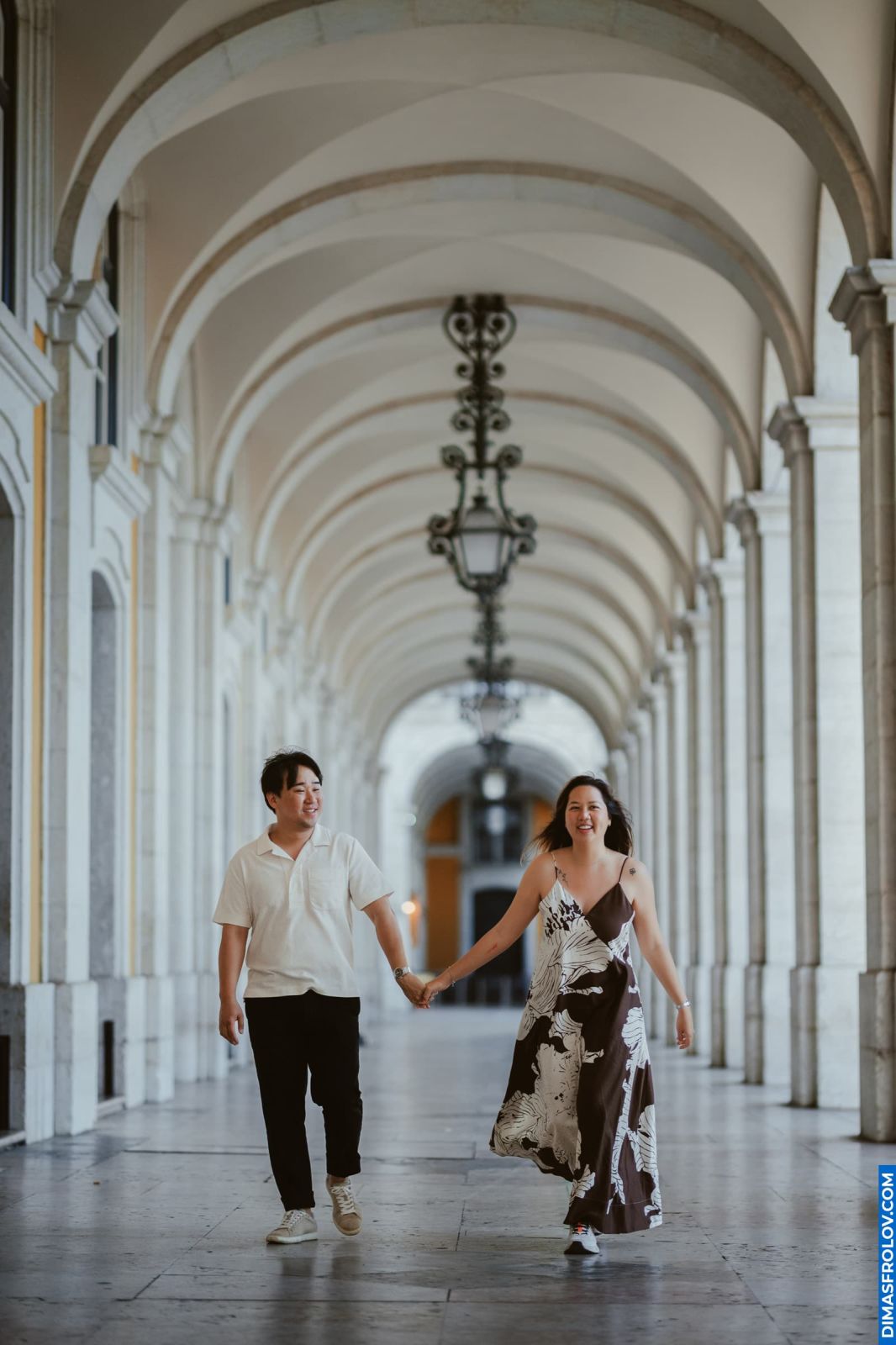
Lifestyle photography in Lisbon works only when you balance the city's harsh Atlantic light with unhurried movement through its architectural gradients. The magic is not a photographic trick or a cinematic filter, but the deliberate choice to shoot early in the morning when the pale limestone calcada reflects soft illumination into every alleyway, allowing someone who has never stood in front of a camera to look composed, grounded, and entirely natural.
Preparation dictates how relaxed you feel on Lisbon cobblestones
A successful photo shoot in Lisbon never starts with an artistic concept; it starts with the physics of the streets. The hills of Alfama, Graca, and Bica are steep, paved with polished, slick limestone that punishes heels and stiff soles. When you arrive in footwear that demands constant caution, your posture tightens, your shoulders rise, and that physical tension registers instantly in your face. Preparing for a session means deciding to walk comfortably between setups, changing into specific shoes only when we stop at a particular courtyard or scenic terrace.
Pacing is the second practical variable. Most people worry that a session will feel like an audition where they must perform for two straight hours. In reality, a genuine lifestyle portrait session in Lisbon is seventy percent deliberate walking and thirty percent actual shooting. We map a route that minimizes uphill climbs, starting at higher elevation points such as Miradouro de Santa Luzia or Portas do Sol before descending naturally through the quiet alleys toward the river. This rhythm keeps your energy steady and stops fatigue from settling into your facial expressions.
[IMAGE_PLACEHOLDER: "A young woman walking down a shaded Lisbon alley with pale yellow plaster walls and stone pavers, captured mid-stride in soft morning side light, wearing a casual linen trench coat and comfortable loafers"]
Natural portraits come from managed movement rather than stiff poses
Standing still in front of a lens feels unnatural to almost everyone who does not model for a living. When I work with clients, I never tell them to hold a freeze-frame smile or position their hands according to rigid technical rules. Stiff posing creates guarded body language, especially for those booking their first session. Instead, I give you a physical action that fits the surroundings: leaning your shoulder against a sunlit archway, turning around as you step off a curb, or simply settling into a quiet cafe chair with an espresso.
My role is to manage the micro-angles so you do not have to worry about how you look. I watch how your coat hangs, whether the light catches your jawline cleanly, and if your hands look relaxed in your pockets or resting on a railing. When shooting individual outdoor portrait sessions, I focus on gentle transitions rather than sudden adjustments. This allows you to stay in your thoughts rather than overthinking your chin or your shoulders, resulting in images that look like candid glimpses of your actual day.

Morning light on pale limestone solves the harsh contrast problem
Lisbon is known for its intense luminosity, but midday sun is the enemy of portraiture. Between eleven in the morning and four in the afternoon, the sun bounces off white walls and polished stone, casting severe downward shadows under the eyes and nose while forcing everyone to squint. Chasing dramatic views during peak sunlight produces harsh, high-contrast results that feel exhausting rather than timeless. Real visual softness happens in the first two hours after sunrise.
At seven or eight in the morning, the light enters Lisbon horizontally, cutting across the east-facing alleys of Alfama and Mouraria. The limestone pavement acts as an expansive, natural reflector, filling in shadows with warm, diffused tones that flatter skin tones without requiring heavy flash equipment or reflectors. The streets are also empty of delivery vans, tour groups, and commuter crowds, giving us the uninterrupted space needed to compose wide, atmospheric frames.
[IMAGE_PLACEHOLDER: "A quiet residential street in an old European district during golden hour, with warm morning sunlight casting long shadows across textured walls and aged wooden doorways, entirely free of tourists"]
Subtle wardrobe choices balance the chaotic city textures
Lisbon's architecture is visually dense, covered in detailed tilework, chipping ochre paint, laundry lines, and wrought-iron balconies. If your wardrobe features bright neon colors, busy geometric patterns, or large brand logos, your portrait becomes visual noise. The city will fight with your presence in the frame instead of serving as your backdrop. What works best are muted, tactile materials that harmonize with southern European architectural tones.
Textiles that catch the light
Heavy linens, textured wool, washed cotton, and matte silks create depth in a photograph without shouting. A neutral palette built around cream, beige, navy, muted olive, slate, and charcoal allows your face to remain the visual center of each image. When working on dynamic men's lifestyle shoots, a well-cut overcoat, an unbuttoned overshirt, or a simple knit sweater provides structured lines that contrast cleanly with the organic wear-and-tear of centuries-old stone corridors.
Practical outfit adjustments
Layering allows us to create two or three distinct visual tones without interrupting the flow of the morning with full wardrobe changes in public bathrooms. Removing a blazer, switching an outer jacket for a relaxed cardigan, or simply unrolling sleeves shifts the tone of the photograph from formal to casual in seconds. These small adjustments provide variety while keeping the shooting process effortless and focused on your comfort.
Real connection requires quiet corners away from the tourist rush
You cannot look serene or intimate when dozens of people are watching you from a crowded viewing terrace. While famous lookouts offer panoramic sights, they are rarely the places where honest portraiture occurs. The real texture of Lisbon lives twenty paces off the main avenues, in the residential lanes where elderly neighbors chat across balconies and morning shadows linger on terracotta roofs.
Finding these pockets allows people to drop their public defenses. When photographing intimate couples sessions, privacy is essential. Standing close to someone, sharing a quiet private joke, or holding hands along a narrow lane requires psychological safety. When we work in secluded courtyards or down quiet residential stairways, you forget the camera because you are not managing the gaze of strangers passing by. The session becomes a quiet morning walk through the city, and the photographs simply document that shared calm.
The memory outlasts the visual composition
Years from now, technical perfection in a photograph matters very little if the experience of taking it was stressful. You will not care about the geometry of the background or the grain structure of the file if looking at the image reminds you of feeling rushed, awkward, or staged. The photograph should preserve the atmosphere of a specific morning: the coolness of the Portuguese stone, the quiet sound of the river in the distance, and the realization that being photographed can be completely painless.
My approach is built on steady organization, calm technical command, and giving people the space to simply be themselves. When the foundation is handled properly – the light, the route, the pace, and the guidance – the resulting lifestyle images feel honest, unforced, and entirely true to who you are.