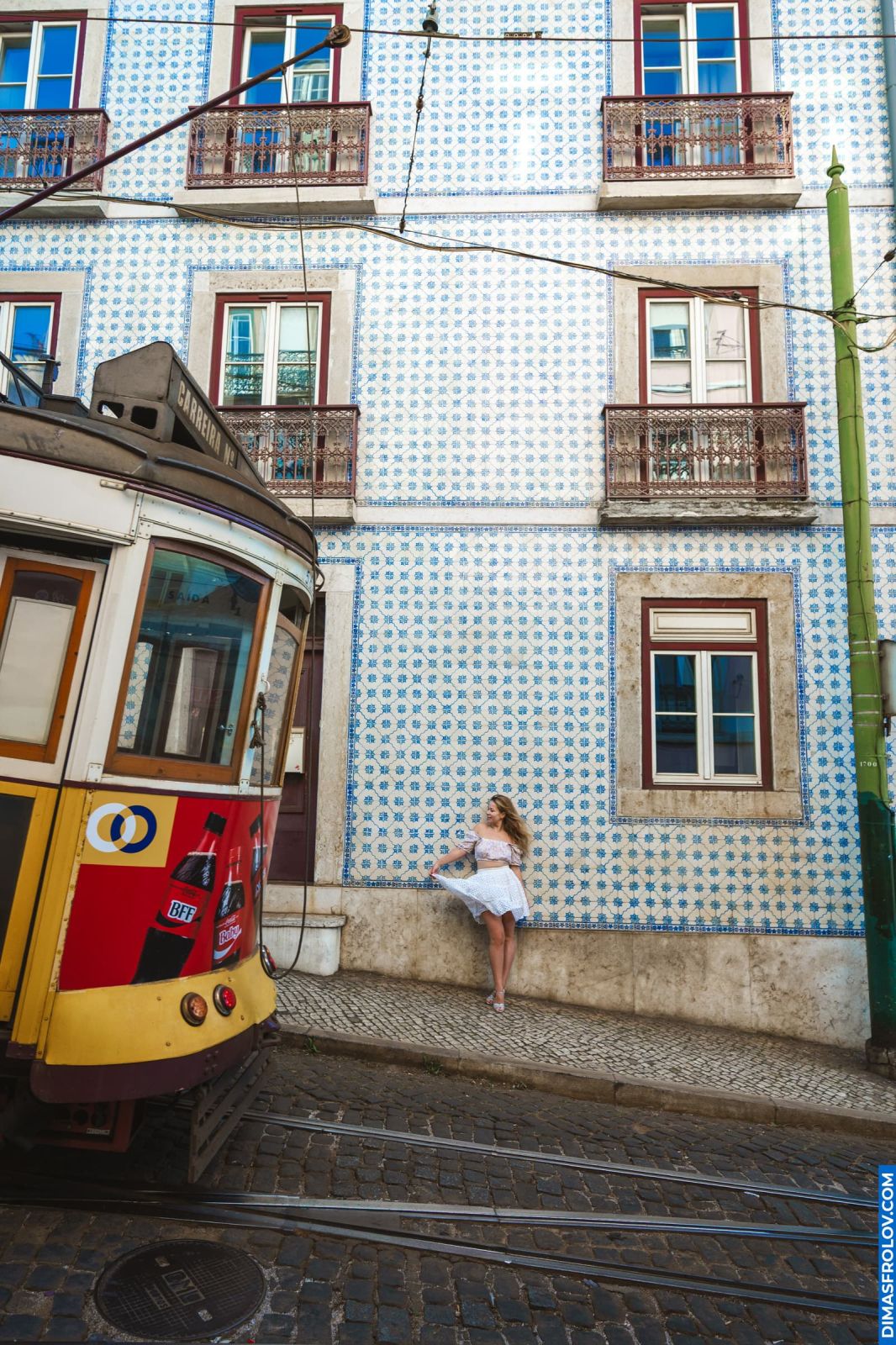
"Real presence" in a portrait is not a mood or a philosophy. It is a set of decisions about light, retouching and direction – and you can ask for each of them by name. Most women who write to me before a session mention one of three things: a feature they dislike, a fear of looking posed, or a worry that the pictures will be smoothed into someone else. This article is the practical answer to all three: what I do, what I refuse to do, and what you are allowed to ask for.
What "beauty standard" means on camera, specifically
It means three technical habits, not an ideology. Retouching that removes skin texture until the face looks like a rendering. Light from directly in front that flattens every feature into the same plane. And a fixed catalogue of poses – chin down, hip out, hand on hip – that make every woman in every studio in Europe look like the same woman. Each of these is a choice a photographer makes, and each can be made the other way.

What I do not do
I do not resurface skin. Colour is corrected, a blemish that will be gone in a week is removed if you ask, a stray hair across the face is taken out. Pores, lines, freckles and the texture that makes a face a face stay. The picture should look like you on a good day, not like you after a filter.
I do not reshape bodies. No liquify, no slimming, no lengthening. If you want to look a particular way in the picture, that is done with the camera – where I stand, which lens, how you are positioned in the light – not afterwards in software. The difference is that the camera version still looks like you.
I do not use the catalogue. You will not be asked to put a hand on a hip or turn three-quarters and look over a shoulder. You will be asked to walk, to sit, to look at something, to talk to me, and the frames come from that.
What I do instead
Light does the flattering. Soft light from the side – a north-facing wall in shade, a window, the hour before sunset – models a face instead of flattening it, and it does more for skin than any amount of retouching. Almost every "unflattering" photograph a woman shows me is an unflattering light, not an unflattering face. Lisbon's narrow shaded streets are, for this purpose, a very large studio.
Direction, not posing. I tell you where the light is and give you something to do in it. Expressions come from the doing. A woman walking towards me down a street in Alfama looks like herself; the same woman told to stand still and smile looks like a woman being photographed.
Time. Nobody is at ease in the first twenty minutes and I do not photograph much in them. The pictures that matter come after the camera has stopped being an event.
What you can ask for
A side. Most people prefer one side of their face; say which, and it will be the side towards the light for the pictures that matter.
A feature to handle. A double chin is a camera-height problem; a nose is a lens-choice problem; arms are a sleeve-and-angle problem. Tell me once, at the start, what you would rather not see emphasised, and it will be handled with the camera without either of us mentioning it again. This is not the same as pretending you look different. It is photographing you well.
A specific edit. A scar or mark you would like softened, a bruise, a breakout that arrived that morning – say so and it is done, on that picture, for you. What I will not do is apply it to a whole gallery without being asked, because that is how a set of portraits stops looking like a person.

Why this is worth insisting on
Because the pictures are for later. A portrait smoothed to a standard looks fine for a week and strange in five years, when the person in it never existed. A portrait of you in good light, moving, with your own face, is the one you will still recognise at fifty and the one your family will keep. That is the whole argument for presence over standard, and it is a practical argument rather than a sentimental one.
The women's portrait session works exactly this way, and the first thing we talk about is what you would rather the pictures did and did not do. If the worry is more about what to wear than what you look like, what to wear for a women's portrait session covers that; if it is the camera itself, forced smiles versus natural expressions explains why nobody will be asked to say cheese.