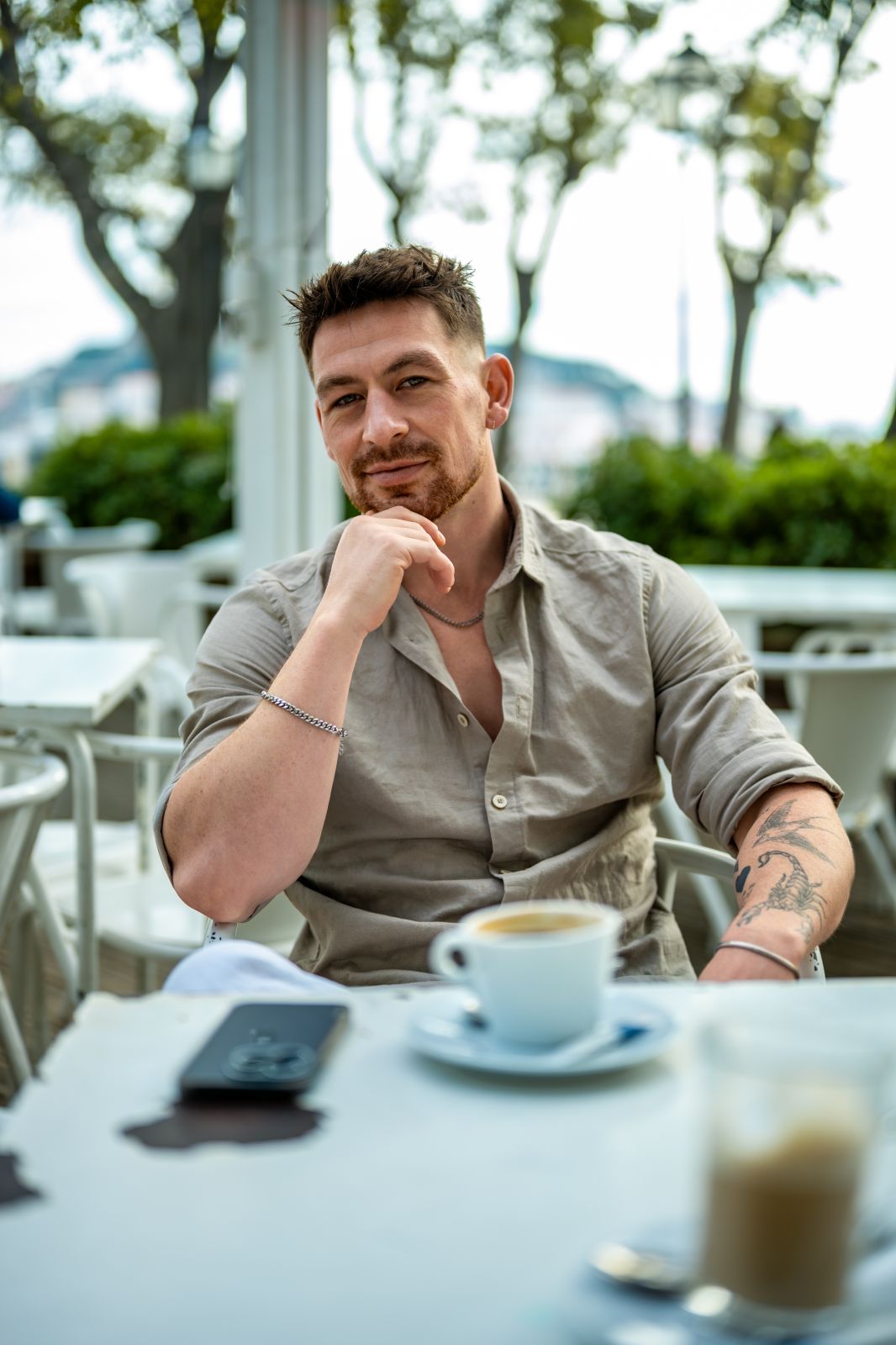
Almost every man who stands in front of my camera starts with the exact same disclaimer: he hates being photographed, he never looks good, and he has no idea what to do with his body. The tension usually shows up immediately in the shoulders, which creep toward the ears, and in the hands, which suddenly feel like heavy, useless weights. That reaction is completely normal when you are expected to perform for a lens without any clear direction. Looking relaxed on camera is not an innate talent, and it certainly does not come from someone telling you to "just act natural."
The Paradox of Trying to "Act Natural"
The moment someone tells you to act natural, your brain does the exact opposite. You become hyper-aware of your posture, your facial muscles freeze, and you start wondering if your smile looks like a hostage negotiation. The secret to looking natural is not pretending the camera does not exist, because you know it is there. Instead, the goal is to replace self-consciousness with simple, deliberate physical mechanics. When you give your body a concrete job to do, the mental tension dissipates, and the frame immediately settles into something believable.
What to Do with Your Hands
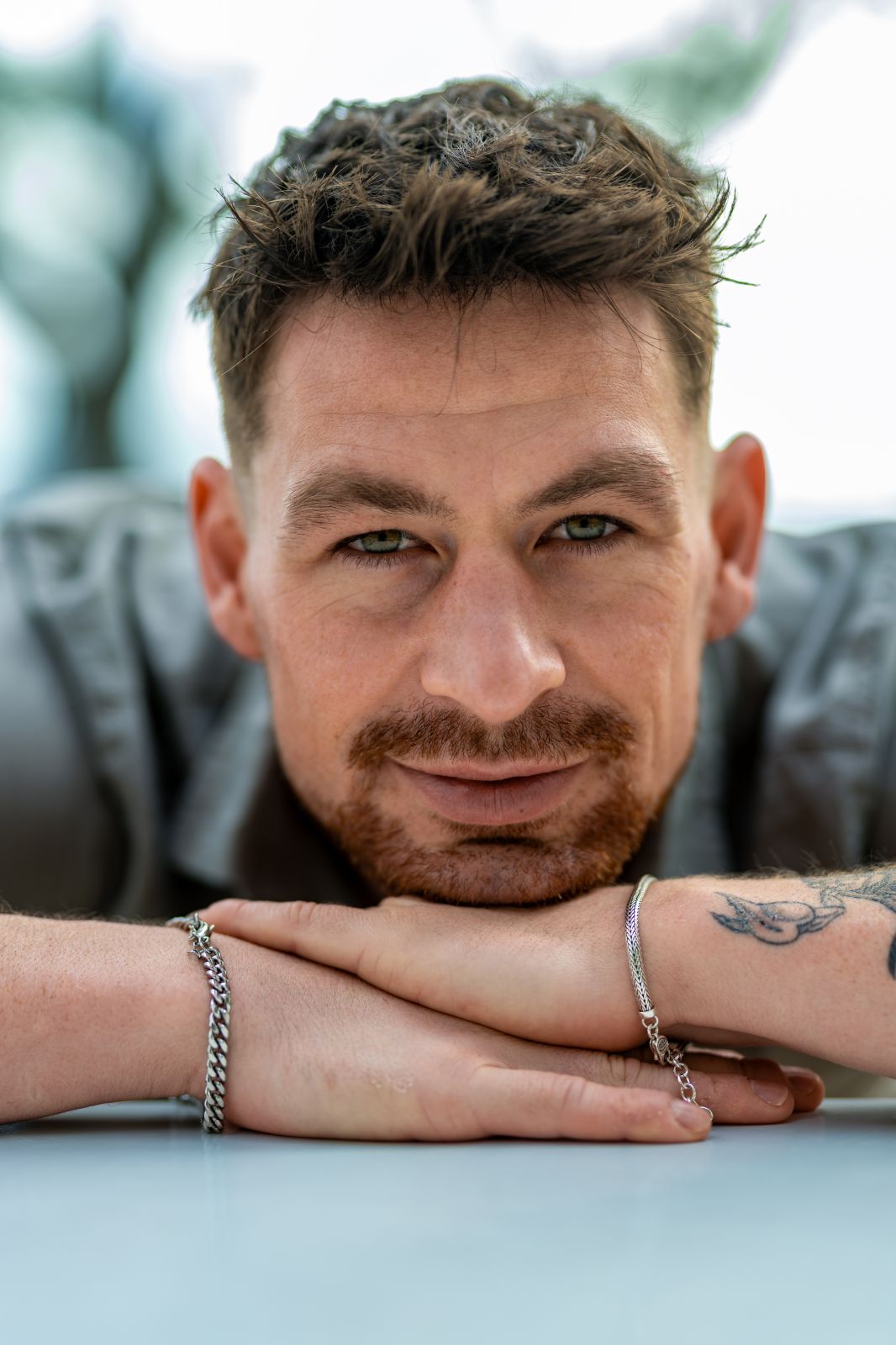
The hands are always the first problem area because an empty hand tends to ball into a fist or hang rigidly by your side. The most reliable fix is to give at least one hand a structural anchor. That does not mean shoving both hands deep into your pockets, which cuts off your silhouette and makes your posture look defensive. Instead, hook a single thumb into a pocket, adjust your watch strap, or lightly hold the edge of your jacket collar. If you are seated, resting your forearms on your knees or leaning forward over a table instantly solves the hand problem while projecting an open, grounded presence.
Movement Breaks Static Tension
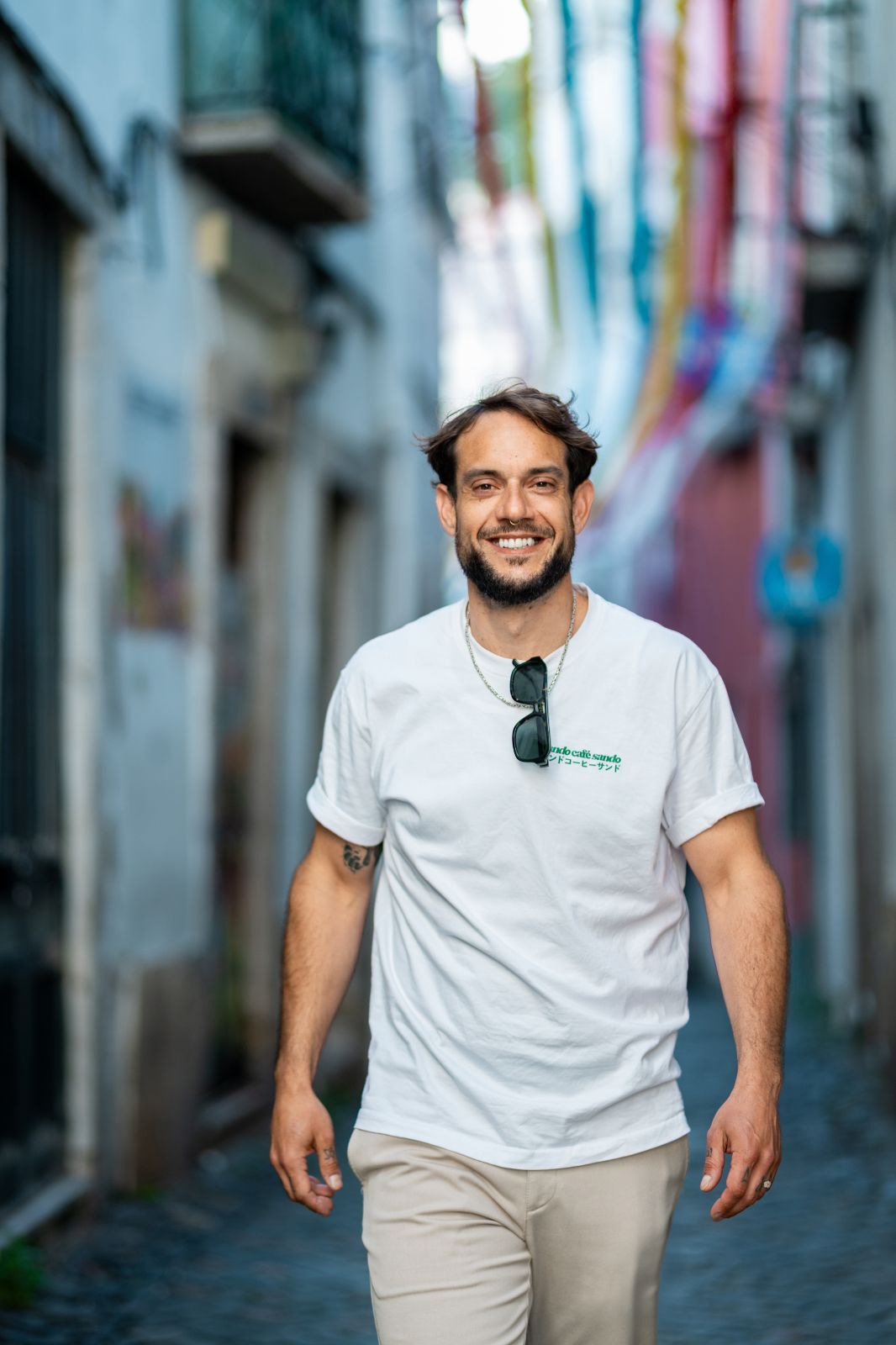
Nobody looks comfortable when they freeze in one spot waiting for a shutter to click. Static poses build tension with every passing second, which is why candid-looking portraits rely almost entirely on controlled movement. Rather than holding an arbitrary position, I usually ask a client to take three slow steps forward, turn his head over his shoulder, or adjust his weight from his back foot to his front foot. That brief micro-motion resets your muscles and resets your expression. The camera catches the transition between movements, which is where honest, unforced portraits actually happen.
Building Better Images for Dating and Life
A dating profile that works always comes down to credibility and warmth, neither of which comes from rigid studio lighting or over-edited poses. People spot forced photos instantly; they can sense when someone is trying to project a persona rather than simply showing up. Your profile does not need six identical headshots with the same flat smile. It needs a rhythm of different moods: an engaged look straight into the camera, a relaxed moment laughing at an off-camera comment, and a quiet shot taken mid-walk where you look completely comfortable in your own skin.
Eye Contact and the Unforced Expression
You do not have to stare down the barrel of the lens for an hour. Direct eye contact creates intensity, which works well in moderation, but looking slightly off-camera often creates a much more approachable image. When it comes to smiling, trying to hold a grin on command is what produces that stiff, tight jawline everyone dreads seeing in their photos. A genuine expression usually lasts less than half a second. A skilled photographer waits for you to react to a thought, a pause, or a brief conversation, capturing the authentic relaxation in your eyes before your conscious mind has time to tense up again.
Standing in front of a camera does not require you to become an actor or learn a catalogue of complex poses. When the process is set up around simple physical cues and realistic movement, looking good in pictures stops feeling like an uphill battle and becomes a straightforward technical process that anyone can navigate.
Most of the men I photograph arrive saying exactly what this article opens with, and a men's portrait session is built around that curve – walking, talking, and direction that gives you something to do rather than a way to stand. Why solo photos look awkward goes into the mechanics; forced smiles versus natural expressions into the face.