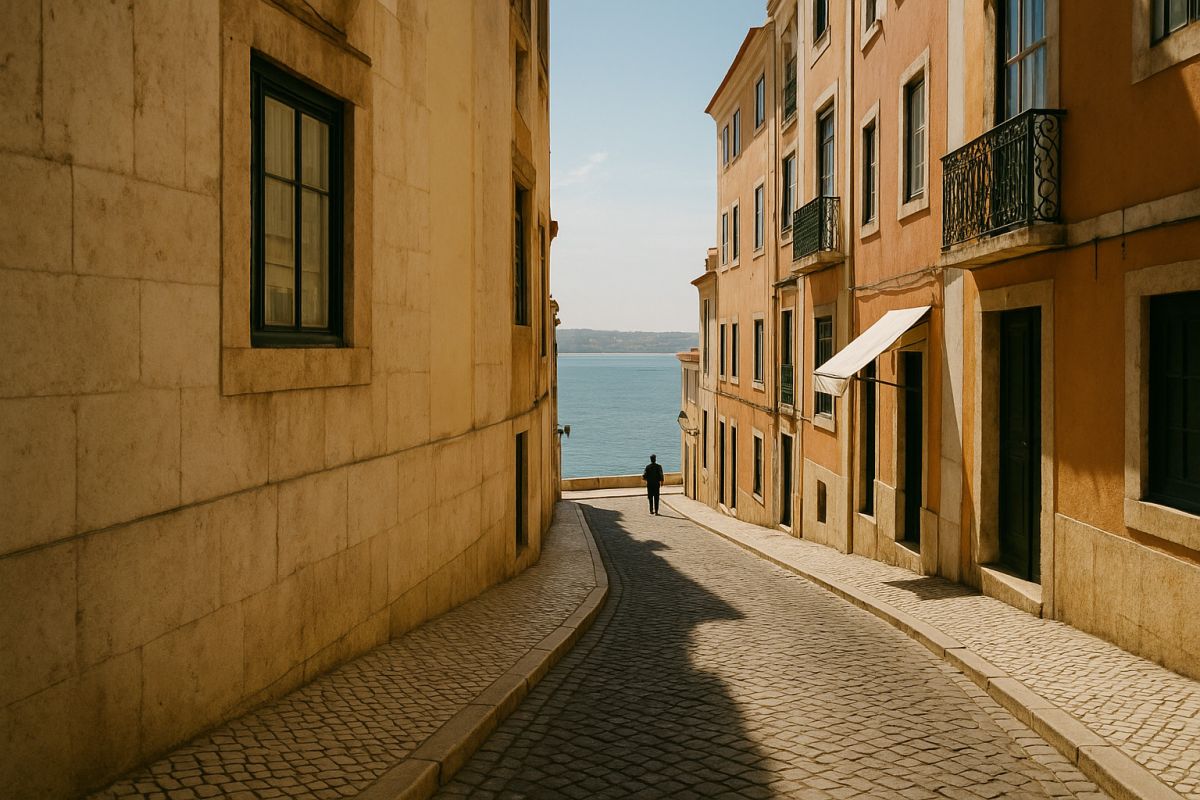
A summer photoshoot in Lisbon succeeds or fails entirely on timing, because the city turns into an open-air solar reflector by midday. The limestone cobblestones bounce direct sunlight from below, the steep hills turn casual walking into a workout, and the high summer sun washes out skin tones while casting sharp shadows under your eyes. When scheduled correctly at the edge of the day, however, summer offers the cleanest, warmest light and an effortless atmosphere that no other season can replicate.
The summer sun in Lisbon behaves differently due to the white limestone pavement
Lisbon is famous for its light, but in July and August that light becomes exceptionally harsh between 11:00 and 17:00. The white limestone cobblestones, known as calçada portuguesa, act as a massive ground-level reflector. While a reflector is usually a photographer's tool, an uncontrolled blast of intense midday light from below forces you to squint, creates odd highlights beneath your chin, and makes natural eye contact with the camera almost impossible.
The Atlantic atmosphere also plays a distinct role during the hot months. The air is generally dry and crisp rather than humid, which creates sharp, high-contrast edges in direct sunlight. If we shoot when the sun is high, every doorway and awning creates a pitch-black shadow set against blindingly bright stone walls. That contrast is far too aggressive for flattering portraits. To work around this, I map out our routes so that the architectural geometry works for us, keeping the light soft across your face rather than punishing.
[IMAGE_PLACEHOLDER: "A portrait of a person sitting on shaded stone steps in an old Lisbon alleyway, soft diffused morning sunlight touching the architectural wall in the background while the subject remains in comfortable, even shade."]

Sunrise sessions solve both the July heat and the crowd problem
Meeting at 07:00 in Alfama or Mouraria is the most reliable way to get calm, collected portraits during peak summer. At that hour, the temperature hovers around eighteen degrees Celsius, the stone walls have cooled down from the previous night, and the narrow residential alleys are completely silent. You are not dodging scooters, tuk-tuks, or delivery vans, which immediately lowers your guard if you are naturally nervous around a camera.
The morning light enters Lisbon sideways from across the Tagus River, creating long, delicate shadows and a gentle glow that flatters every skin tone. In my work with individual portrait sessions, morning light allows us to work at a steady, unhurried pace where you never feel rushed to clear the way for tourists. We can stand in the middle of a cobblestone street, try three different angles, and wait for a passing tram without anyone breathing down our necks. By 09:30, the city begins to wake up and the temperature rises, but our session is already finished, leaving your entire day open.

Late afternoon golden hour requires careful location choreography
If getting up before dawn does not suit your schedule, the late evening window between 19:30 and 21:00 is the alternative. Lisbon has exceptionally late summer sunsets, which means you have plenty of time to wind down from your day before we start shooting. The evening light has a distinctly rich, amber tone as the sun drops toward the Atlantic ocean, wrapping the terracotta rooftops and pastel facades in a warm tone that feels warm and classic.
The challenge with evening sessions is that everyone else in Lisbon wants to watch the sunset, too. Popular miradouros like Santa Luzia or Portas do Sol become packed shoulder-to-shoulder with people drinking beer and listening to buskers. I avoid those congested gathering spots entirely. Instead, during a shoot for couples in Lisbon, I guide you through quiet residential pockets near Campo de Ourique or the quiet garden edges of Príncipe Real, where the light falls just as beautifully through the trees without fifty people standing two feet away from my lens.
You also have to account for the Nortada, the cooling north wind that often sweeps through Lisbon in the late afternoon. It drops the temperature comfortably, but it can quickly turn loose hairstyles into a constant distraction. I always factor wind direction into how I position you along open view terraces so your hair blows back naturally rather than across your eyes and mouth.
[IMAGE_PLACEHOLDER: "A couple standing on an open stone terrace overlooking pastel buildings during golden hour, the low evening sun illuminating their profiles while a gentle ocean breeze lifts their light linen clothing."]

Wardrobe choices decide whether you look relaxed or overheated
What you wear during a summer shoot impacts your physical comfort far more than how the clothes look on the hanger. Synthetic fabrics like polyester or nylon trap body heat, show sweat marks within fifteen minutes of walking uphill, and stick to your skin under direct sun. Breathable, natural materials are mandatory for staying composed throughout the session.
Linen, open-weave cotton, and lightweight silk work best because they breathe and move with the summer wind. Soft neutrals, earth tones, olive, warm navy, and muted pastels complement the faded yellow, blue, and terracotta tones of Lisbon's architecture. Stark pure white can easily blow out under bright sunlight, while solid jet black tends to look heavy and absorb unnecessary heat. Loose, structured silhouettes photograph significantly better than tight clothing because they create natural movement when you walk, preventing the images from looking rigid.
Footwear requires equal consideration. Lisbon's cobblestones are polished slick by centuries of footsteps, and walking on steep inclines in stiff leather soles or high heels is dangerous. I encourage comfortable, understated flat shoes, supportive leather sandals, or clean minimal sneakers while moving between locations. If you want to wear specific formal shoes for a subset of the portraits, we simply carry them in a canvas tote and swap them on when we stop at a specific frame.
Managing energy and movement keeps portraits natural in high temperatures
Physical discomfort immediately shows up in your jaw, shoulders, and eyes. If you feel overheated, exhausted from climbing stairs, or stressed about your appearance, no amount of coaching from me will create an authentic, relaxed photograph. This is why I structure summer routes to move almost exclusively downhill or along flat ridge lines like the route between Rato and São Pedro de Alcântara.
My approach across my portrait photography work is grounded in keeping the atmosphere quiet and controlled. I do not ask you to run around or hold strenuous, artificial poses in thirty-degree heat. We walk for two minutes, find an alcove with clean ambient light, take a few frames while you catch your breath, and then pause at a traditional kiosk for a chilled sparkling water or an espresso. The shoot feels like a quiet walk through the neighborhood rather than an intense commercial production.
Because I work primarily with people who have never been photographed professionally before, pacing is everything. When the ambient temperature is warm, taking your time between setups gives you space to settle your breathing, reset your posture, and get used to having a camera nearby. The best frames usually happen in the seconds right after you forget the camera is there, resting naturally against a cool garden wall or leaning back on a shaded wooden park bench.
Summer in Lisbon offers an incredible atmosphere when respected. By dodging the midday glare, embracing the quiet early mornings or the late ocean-cooled evenings, and dressing with the climate in mind, you end up with portraits that feel completely unforced, honest, and rooted in the genuine feeling of the city.